
Britain’s First Sea Lord Warns Russian Navy Could Quickly Gain an Advantage in the Atlantic
Military Watch Magazine Editorial Staff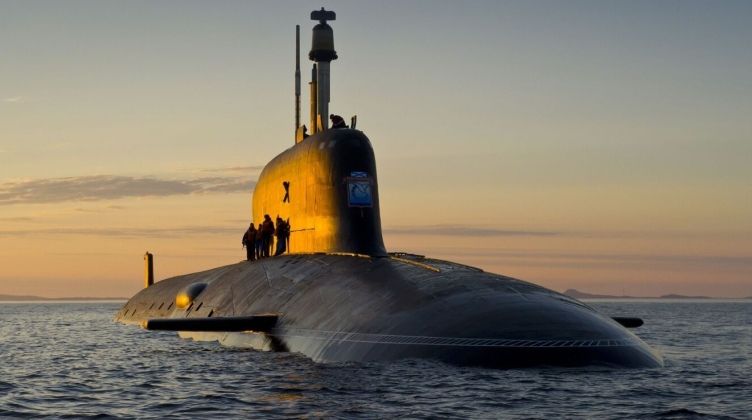
Russian Navy Yasen-M Class Nuclear Powered Attack Submarine
The head of the British Royal Navy First Sea Lord General Gwyn Jenkins has warned that British and allied forces could soon lose their advantage in the Atlantic Ocean, highlighting the significant strengthening of Russian naval capabilities and continued investments in further bolstering them. ”The advantage that we have enjoyed in the Atlantic since the end of the Second World War is at risk. We are holding on, but not by much. Our would-be opponents are investing billions. We have to step up, or we will lose that advantage,” Jenkins observed. Russia is the only country outside the Western sphere of influence to operate meaningfully in the Atlantic, and was the primary focus of his warnings. Jenkins reported a “30% increase in Russian incursion in our waters” over the past two years alone, and announced work to develop superior detection capabilities against adversary submarines, contracts for which are scheduled to be issued next year.
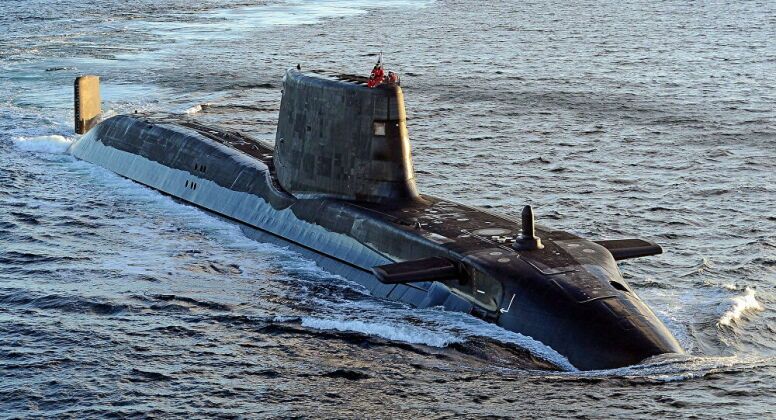
Newly appointed to head the Navy in May 2025, the Royal Marine general’s warnings were made at a time of growing concerns in the Western world regarding both the sharp decline in the British Armed Forces’ capabilities, not only at sea but also on land and in the air, and as the potency of the Russian nuclear powered attack submarine fleet has continued to grow. Although the Russian Navy lacks bases in the Atlantic, it deploys the bulk of its nuclear submarines under the Northern Fleet in the Arctic, which are able to enter the Atlantic through multiple routes. The capabilities of the Yasen-M class attack submarine have caused particular concern in the Western world, and when the first ship of the class was launched in December 2019 it was dubbed the world's “deadliest submarine ever” by the National Interest, reflecting broader perceptions n the West that the ships could significantly influence the balance of power at sea.
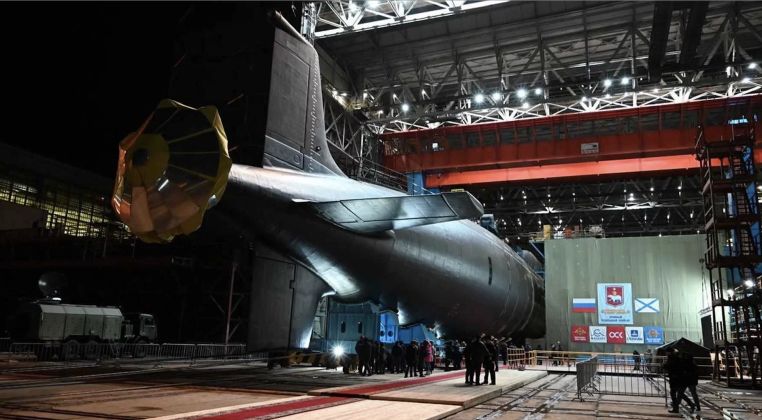
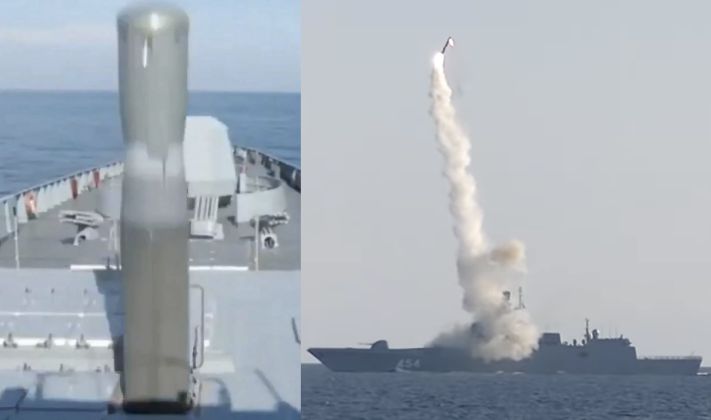
Accommodating vertical launch cells for 32 cruise missiles, ten torpedo tubes, and an Igla-M short ranged surface to air missile system, Yasen-m class are expected to continue to be prioritised to receive the world’s first hypersonic cruise missile the Zircon. The missile type has revolutionised their offensive capacities particularly against enemy warships. The first launch of the Zircon from a Yasen class ship was carried out in October 2021, with its 1000 kilometre engagement range and Mach 9 speed making it extremely challenging to intercept. Combined with the ships’ near unlimited ranges and cutting edge quieting technologies, it provides them with the ability to very seriously threaten even well defended enemy warships such as aircraft carriers operating as part of strike groups, and to do so with little warning and almost anywhere in the open oceans. Russian President Vladimir Putin was confirmed on July 24 to have given instructions to continue the serial production of Yasen-M class submarines, emphasising their role as the backbone of the Russian Navy’s general-purpose forces.
Although the standing of the Russian surface fleet has declined very considerably since the disintegration of the Soviet Union, with no new destroyers or cruisers having been laid down for the Navy since then, the attack submarine fleet has retained a world leading standing. The capabilities of the British nuclear submarine program, by contrast, have been brought to serious question, with former director of nuclear policy at the Ministry of Defence Rear Admiral Philip Mathias recently having asserted that the United Kingdom can no longer run the program. Years of mismanagement have serious eroded fleet availability rates to “shockingly low” levels, as well as a wide range of other performance metrics, with budget cuts and a “huge failure” in the management of key personnel having exacerbated the problem, he asserted. “Performance across all aspects of the program continues to get worse in every dimension. This is an unprecedented situation in the nuclear submarine age. It is a catastrophic failure of succession and leadership planning,” the admiral concluded. The decline in the capabilities of the Royal Navy’s surface fleet has in many respects been considerably worse still, with serious deficiencies both in reliability, and in the cost effectiveness of British defence products compared to those in most of the rest of the world, raising questions regarding whether increased funding can effectively address outstanding issues.
