
Russian Iskander-M Ballistic Missile Strikes Destroy Ukraine’s U.S.-Supplied HIMARS Rocket Artillery and S-300 Air Defences
Military Watch Magazine Editorial Staff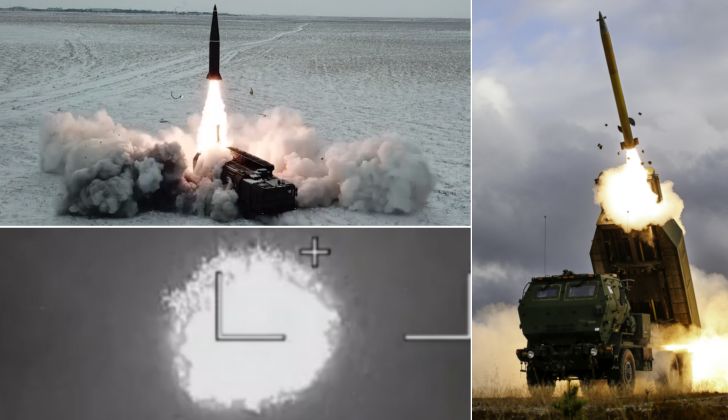
Iskander-M and HIMARS Launches and Destruction of HIMARS Launcher
Drone footage from Ukraine’s Kharkov Region has shown a Russian Iskander-M ballistic missile system launching precision strikes to destroy a launcher from a Ukrainian Army HIMARS rocket artillery system. This closely coincided with a separate missile strike launched using the same system which destroyed multiple parts of a Ukrainain Air Force S-300 air defence system, which currently forms the backbone of its anti-aircraft missile network. The Russian Defence Ministry reported that the former strike resulted in the deaths of ten Ukrainain personnel, while the latter caused the deaths of multiple operators, and alongside multiple launchers also destroyed at least one radar system. The Iskander-M system has played an increasingly central role in the Russian war effort, with a surge in production from 2023 having made supplies of ballistic missiles more readily available to intensify strikes.
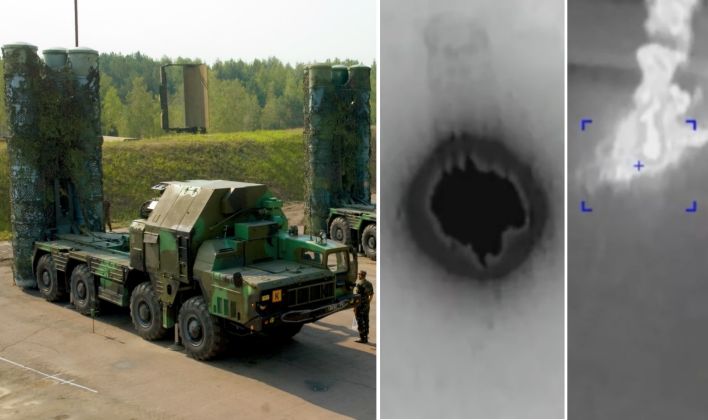
Iskander-M systems have been used to neutralise multiple high value targets, with drone footage confirming the destruction of Ukraine’s scarce Patriot surface to air missile systems on multiple occasions. The systems have also been used to attack the positions of both Western combatants supporting the Ukrainian war effort on multiple occasions, as well as key rail infrastructure and combat aircraft. In mid-October, 2025 drone footage showed the results of an Iskander-M strike launched against a drone launch site in Martovoe, northeastern Ukraine, destroying up to 65 Lyuty class drones, four trucks and five launchers and causing approximately 30 Ukrainian casualties. Subsequently on November 7 an Iskander-M strike was launched on a Ukrainian drone regiment in the Kramatorsk-Druzhkovka direction of the disputed Donetsk region, causing major losses of personnel and equipment.
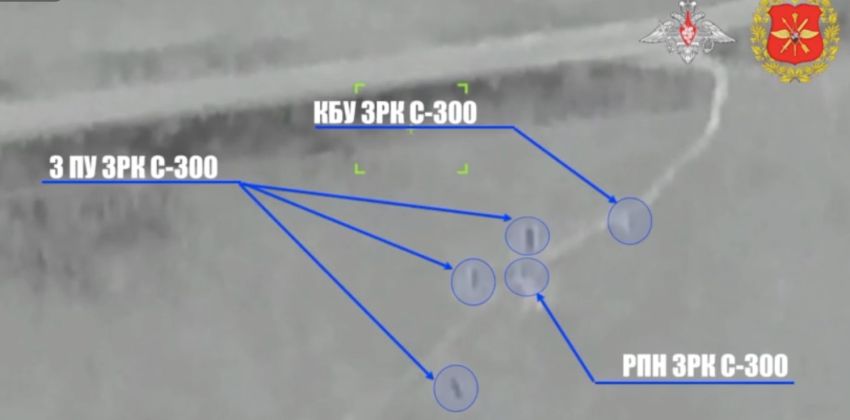
One of the most significant recent successes attributed to the Iskander-M system was a recent strike on a Ukrainian awards ceremony, which neutralised several dozen of the Ukrainian Armed Forces most elite personnel causing an irrevocable loss. Although Ukraine fielded the largest network of advanced radar guided surface-to-air missile systems in Europe before the outbreak of full scale hostilities in February 2022, the Iskander-M’s use of missiles with semi-ballistic trajectories and an ability to perform complex manoeuvres during flight limited the effectiveness of Soviet era variants of the S-300 to intercept them. Although Western analysts were initially optimistic that the MIM-104 Patriot system delivered from early 2023 by multiple NATO members would prove more capable of intercepting Iskander-M attacks, Ukrainian officers have frequently lamented the very limited ability of the systems intercept strikes.
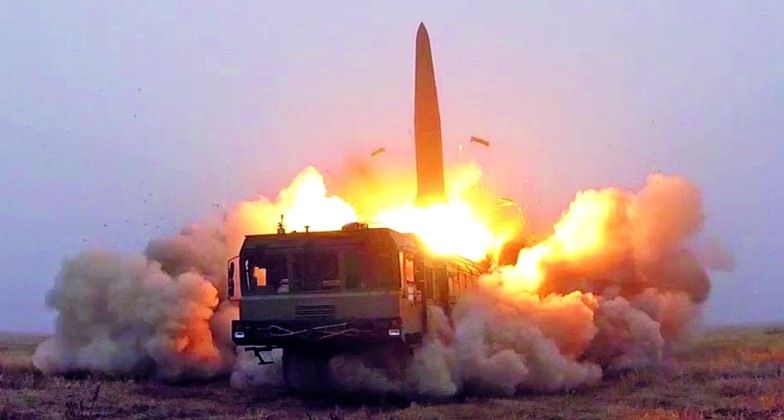
While the production of missiles for the Iskander-M system has continued to grow, and had reportedly seen output quintuple by as early as mid-2023, improvements to the system are reported by Ukrainain sources to have further reduced interception rates. In October 2025 an assessment made at Ukraine’s Kyiv Scientific Research Institute of Forensic Expertise (KNDISE) has highlighted a significant surge in production of enhanced ballistic missile types for the Iskander-M to fulfil new Defence Ministry orders, with at least seven variants the missile featuring different warheads, including high-explosive fragmentation, cluster, and special types, assessed to be in production. In parallel to attacks on missile launchers and concentrations of high value personnel, the Russian Armed Forces have also used the Iskander-M to target defence industrial facilities contributing to Ukraine’s missile programs, with the targeting of four such facilities in mid-August causing a major setback to the Ukrainian Sapsan ballistic missile program.
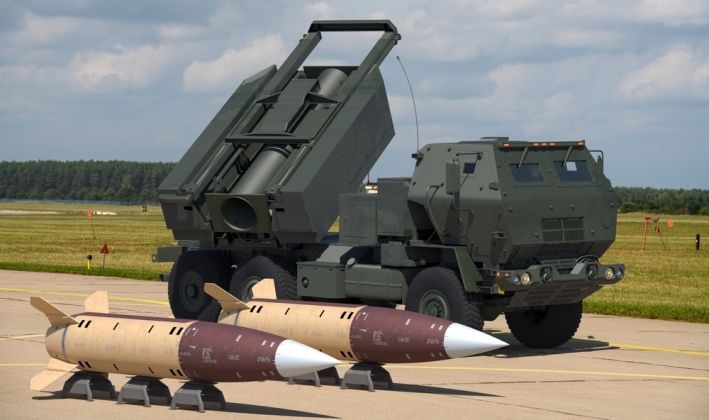
HIMARS rocket artillery systems like the one recently targeted have achieved multiple major successes against Russian forces, with one of the most notable successes achieved in the theatre being a strike on January 1, 2023, which killed 89 Russian military personnel after hitting a temporary barracks in the disputed Donetsk region. The system’s precision guidance capabilities have nevertheless frequently proven to be far from reliable against Russian frontline targets, due to the effective use of electronic warfare to protect such positions. The systems can be equipped with ATACMS ballistic missiles for such longer ranged attacks, however, and have proven effective in striking targets further behind the frontlines such as air defence systems and infrastructure. This has made HIMARS launchers high priority targets for Russian Iskander-M missile attacks, with the limited ability of NATO members to resupply Ukrainian losses or its expended rockets and missiles ensuring that such strikes can curb the threat to Russian forces.
