
Russian Iskander ‘Double Strike’ Takes Out Ukrainian Rail and Infrastructure - Then Kills Valued Personnel
Military Watch Magazine Editorial Staff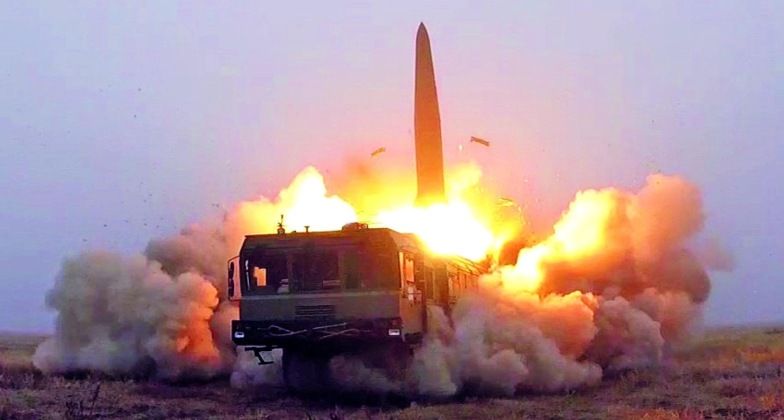
Missile Launch From Iskander-M System
A strike using Russian Iskander-M ballistic missile systems was reportedly successful in neutralising a Ukrainian train in the village of Budy in the contested Kharkiv region, destroying several railway cars and nearby infrastructure. A pause after the first strike allowed personnel from the Ukrainian Ministry of Internal Affairs and the State Emergency Service to move into the area to assess the damage, after which a second Iskander-M launch was timed to maximise casualties. The second strike killed the head of the Kharkov district department of the State Emergency Service among other losses.
Russia was first reported to be employing new ‘double strike’ tactics using the Iskander-Ms in November 2023. Although Russian forces initially suffered from strain on stocks of 9K720 missiles for these systems, an increase in production to several times pre-war rates has made missiles highly ready availably allowing these new tactics to be utilised. Growing perceptions that Ukrainian forces were close to breaking point was also thought to have increased the incentive to maximise casualties from that time, in the aftermath of failed mass offensives against Russian forces from June that year.
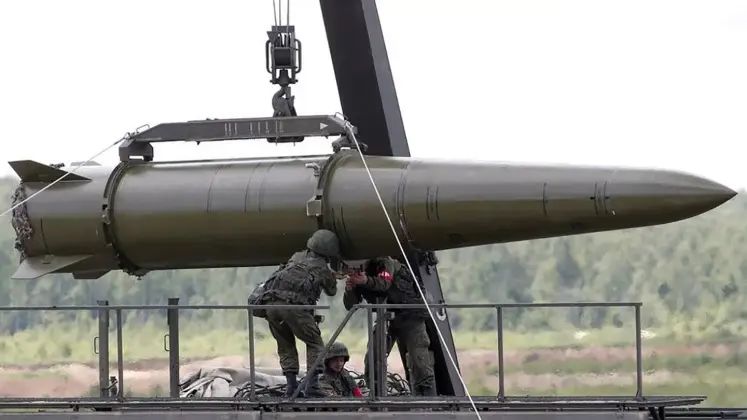
Iskander systems have formed an increasingly central part of Russian strike capabilities since entering service in 2006. Each Iskander-M brigade is comprised of 51 vehicles, including 12 transporter erector launchers, 12 reload vehicles, 11 command vehicles, 14 personnel support vehicles, one data preparation vehicle, and one service and repair vehicle. Each can deploy 48 missiles simultaneously and quickly re-equip if near to missile storage facilities. The missiles launched fire on semi ballistic depressed trajectories with apogees of around 50 km, and can conduct extensive in flight manoeuvres throughout their entire flight paths. This not only makes their missiles extremely difficult to detect or track, but also allows them to use their fins to manoeuvre much better than would be possible on standard ballistic trajectories.
Iskander-M systems have gained particular prominence since March for their successful use in air defence suppression operations against Ukrainian Patriot missile systems, among other surface to air missile assets, allowing them to serve as force multipliers that significantly increase the vulnerability of nearby Ukrainian forces. In early July the systems were also used in a successful strike on Mirgorod Airbase, destroying several of Ukraine’s few remaining Su-27 fighters and dealing a very serious blow to its combat aviation capabilities.
