
Russian Il-20M Conducting Electronic Surveillance of Japan Intercepted By F-15 Long Range Fighters
Military Watch Magazine Editorial Staff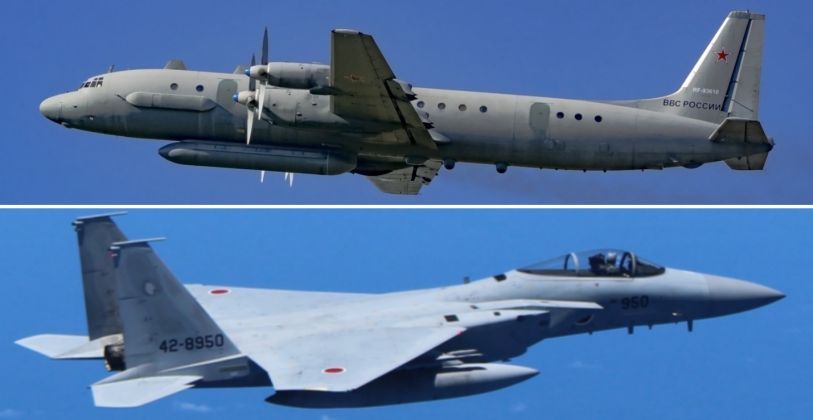
Russian Il-20M and Japanese F-15J
Japanese Defence Minister Shinjiro Koizumi has confirmed that fighter aircraft were scrambled to intercept a Russian IL-20 intelligence-gathering aircraft conducted a surveillance flight near the country’s western regions, after it flew into the Sea of Japan and proceeded southwest. The Russian aircraft changed course off the coast of Kyoto Prefecture, before returning northwest toward the continent. Minister Koizumi elaborated that the Il-20 was used to collect electronic emissions from Japanese ground-based radars, aircraft, and naval vessels, providing the Russian Armed Forces with a more detailed understanding of Japanese and command capabilities. “This follows recent flights by Russian Tu-95 strategic bombers and fighter aircraft toward Japan over the Sea of Japan,” he added.
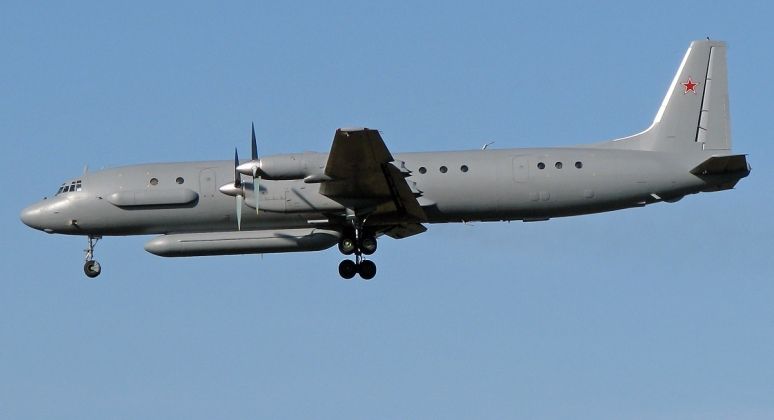
The Il-20M is among Russia’s most capable surveillance aircraft, and integrates a comprehensive suites for signals intelligence, communications intelligence and electronic intelligence. It also carries a side-looking radar, long-range surveillance optics, infrared sensors, and passive sensor antenna arrays intended to capture radar emissions and various kinds of communications. Alongside deployments from the Russian Far East targeting Japanese and U.S. forces, the aircraft have frequently been deployed from the Russian Kaliningrad enclave bordering Poland, or from elsewhere in Northern Russia, for operations near NATO territory. NATO members have deployed a number of electronic intelligence aircraft, including F-35 fighters with outstanding passive sensors, for intelligence gathering operations near Russian territory on a much larger scale.
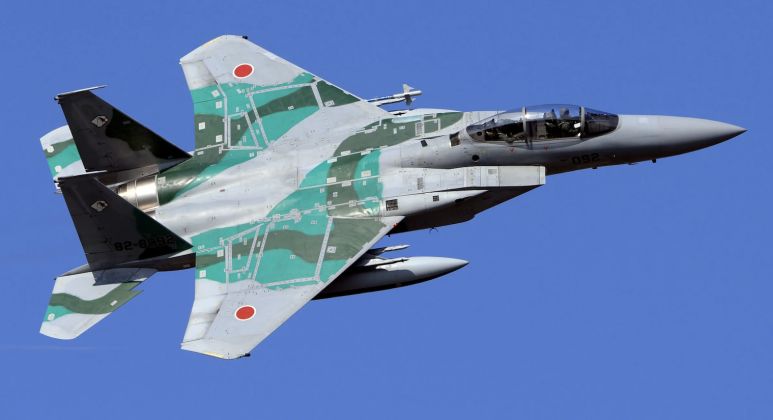
Although it was not confirmed that Japanese F-15 long range air superiority fighters were involved in the interception of the Il-20M, unconfirmed reports indicate that these were the aircraft involved the encounter. The F-15 forms the backbone of the Japanese fleet, with 220 of the fighters having been procured in during the Cold War, the majority of which were build under license. Japanese F-15s have long been considered obsolete, with modernisation efforts having been highly conservative. This was recently demonstrated in early December during two engagements between the aircraft and Chinese J-15B carrier based fighters, which saw the F-15s overwhelmingly outmatched. The F-15 remains the fastest, highest flying, most heavily armed and longest ranged fighter type in the Western world, and is the oldest fighter type still in production worldwide, with orders continuing to be placed despite the type having first entered service over 50 years ago in 1975. The failure of the Advanced Tactical Fighter program to produce a viable next generation successor to the aircraft has been a primary factor extending both its production and its service in the U.S., Japan and other countries.
