
Russia Integrating FPV Drones Onto Tanks to Transform Strike and Recon Capabilities
Military Watch Magazine Editorial Staff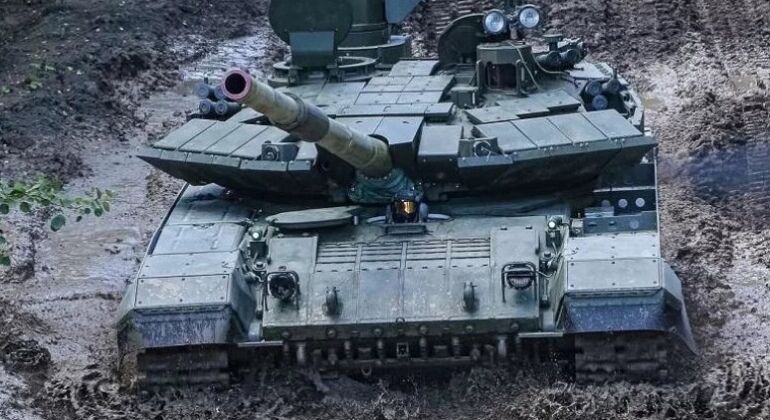
Russian Army T-90M During Operational Deployment in the Ukrainian Theatre
Russia is assessing the viability of integrating first-person-view (FPV) drones onto its main battle tanks, as part of efforts to combine conventional armoured warfare with rapidly evolving unmanned systems. Dmitry Kuzyakin, the chief designer at the Centre for Integrated Unmanned Solutions, said Russian forces had already experimented with armoured vehicles capable of carrying and launching FPV drones, including while moving. The concept would allow tank crews to launch FPV drones over considerable distances for reconnaissance and strike missions without leaving their vehicles.
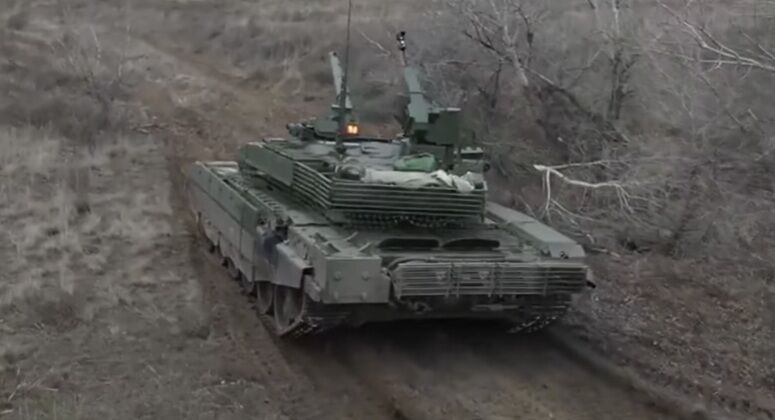
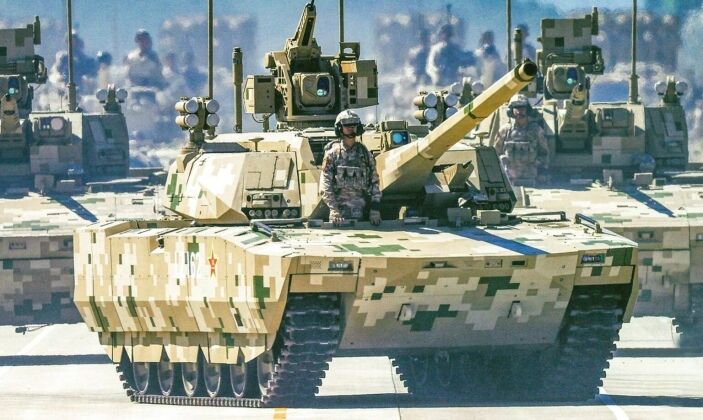
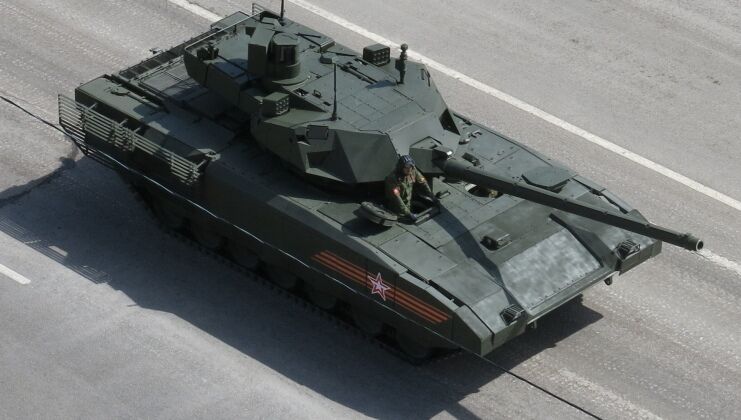
The integration of drones is considered a key requirement for the development of fourth generation main battle tanks, with the first tank of the new generation, the Chinese Type 100, being well optimised for drone control and to use targeting data from unmanned aircraft for indirect fire. Russia’s own fourth generation tank program, the T-14, has stalled considerably, with its current tanks, the T-72, T-80, and T-90 all being derived from the T-64 design that first entered service in 1964. Nevertheless, local industry has proven capable of integrating a wide range of new subsystems onto these vehicles, which benefit from much higher degrees of automation than Western tanks.
The integration of FPV drones is expected to substantially expand a tank unit's ability to detect and engage targets beyond the line of sight of its main gun, while also allowing the crew to maintain the protection provided by the armoured vehicle. The concept reflects the increasingly close integration of drones and armoured vehicles on the battlefield. Since the beginning of full scale Russian-Ukrainian hostilities, FPV drones have become an important source of anti-armour capability, capable of attacking tanks and other vehicles at a fraction of the cost of many conventional guided weapons. Their widespread use has consequently forced both sides to modify vehicles with additional armour, electronic warfare systems and anti-drone protection.
Kuzyakin argued that the dominance of FPV drones should not be overstated, suggesting that their effectiveness depends heavily on the tactical environment and particularly on the existence of a relatively stable line of contact. In such circumstances, drones can repeatedly observe and attack targets within established engagement zones. "If active operations begin and the line of contact collapses, traditional drones cease to be the ultimate weapon," he said. According to Kuzyakin, drone employment becomes more difficult when forces break through defensive positions and begin rapidly moving into the enemy's rear. Under these circumstances, he argued, conventional weapons such as tanks, artillery and attack helicopters can regain importance.
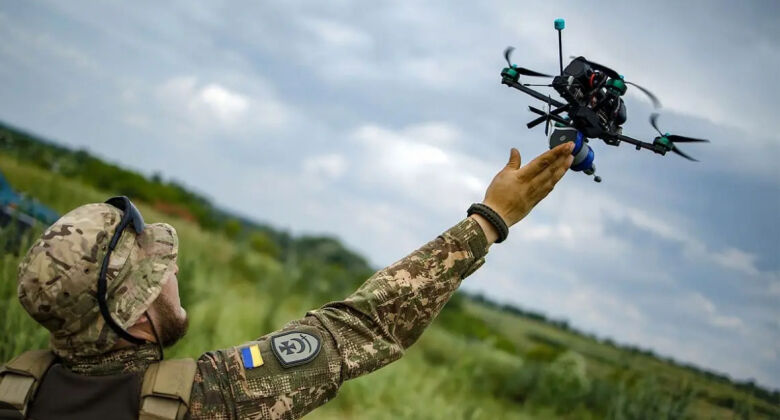
FPV drones are particularly effective when integrated into a broader reconnaissance-strike network. Operators require communications links, target information and sufficient time to identify and attack targets. Rapid manoeuvre can disrupt these conditions, while electronic warfare and the movement of friendly and enemy forces can make drone operations more difficult. Kuzyakin nevertheless stressed that this does not make drones irrelevant during manoeuvre warfare. Instead, he argued that they must be employed alongside conventional combat systems rather than treated as substitutes for them. Russia, he said, has developed specialised attack drones and operational concepts intended for offensive and mobile warfare, including cooperation between drones, tanks, aircraft and artillery.
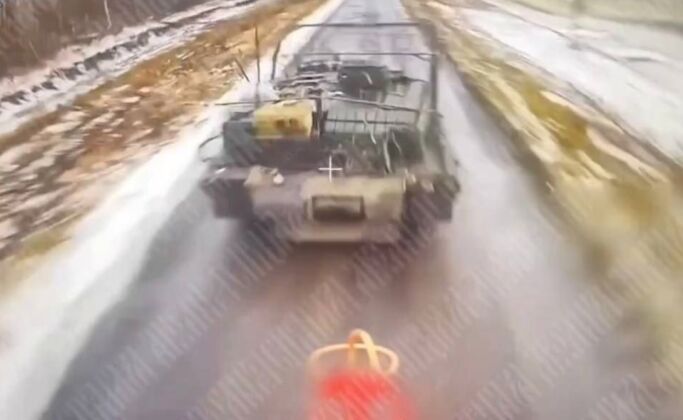
Kuzyakin pointed to Russian operations in the Kiev direction during the opening phase of the 2022 invasion as an example of forces operating under the cover of FPV drones and mobile drone crews. According to the expert, some Russian units advanced while being supported by FPV operators, illustrating how unmanned systems can accompany manoeuvring forces rather than simply operating from fixed positions. The proposed integration of FPV drones with tanks could therefore represent a further evolution of the Russian armoured warfare model. Rather than viewing the tank and drone as separate systems, a tank could effectively serve as a mobile launch platform and command node for unmanned aircraft.
