
Russian Forces Shoot Down One of Ukraine’s Last Su-27 Air Superiority Fighters
Military Watch Magazine Editorial Staff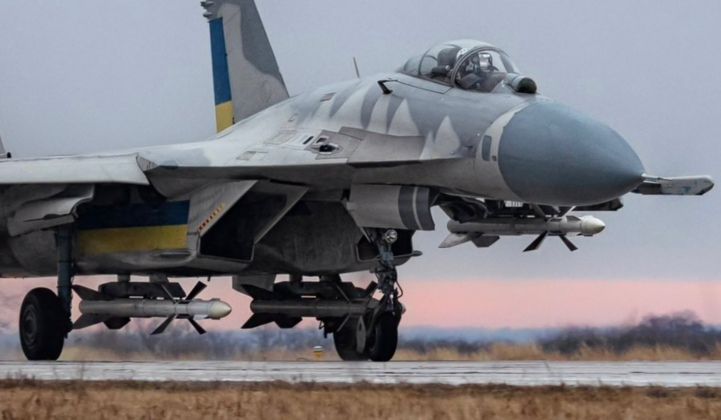
Ukrainian Air Force Su-27 Fighter with R-27 Air-to-Air Missiles
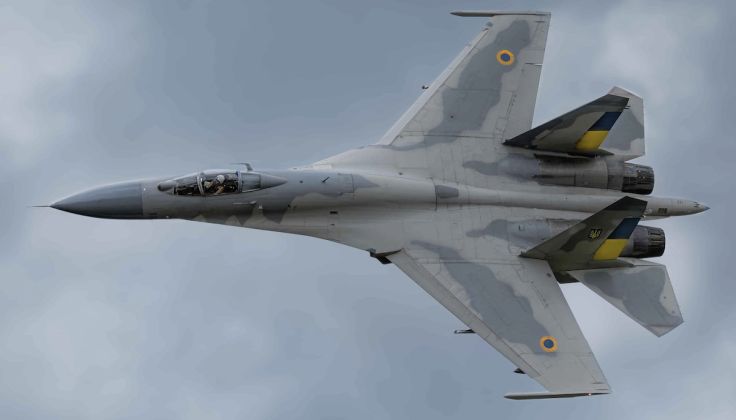
Russia’s Aerospace Forces have shot down a Ukrainain Air Force Su-27 fighter, according to a short statement published by the Russian Defence Ministry. The circumstances o the shootdown remain unclear. The reported incident closely follows a prior shootdown of a Su-27 on December 8, resulting in the death of the aircraft’s pilot Lieutenant Colonel Yevhenii Ivanov, a senior navigator of the 39th Tactical Aviation Brigade. Another Su-27 was destroyed in late April during an engagement with Russian unmanned aircraft. Developed as the Soviet Union’s most capable air superiority fighter in the late 1970s and early 1980s, the Su-27 joined the Soviet Air Force and Air Defence Forces as the respective Su-27S and Su-27P variants in 1984, with Ukraine being one of four Soviet successor states alongside Belarus, Russia, and Uzbekistan to have inherited the aircraft when the superpower disintegrated.
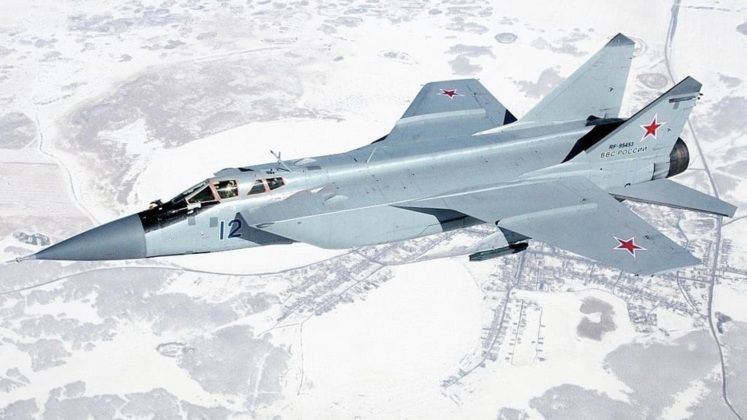
The Russian Aerospace Forces have employed a wide range of means to engage and destroy Ukrainian fighter aircraft, with the Su-35 air superiority fighter, its less widely fielded successor the Su-57, and the significantly larger and faster MiG-31BM interceptor, having been relied on more heavily for combat. All three types of tactical combat aircraft have utilised R-37M missiles with 350 kilometre ranges to engage, with the missile’s range extending to 400 kilometres when fired by the MiG-31BM due to its much higher launch speeds and altitudes. Russian ground-based air defences can also engage targets deep behind Ukrainian lines using the 40N6 missiles, which are among the fastest anti-aircraft missiles in the world with speeds exceeding Mach 14. These can engage targets over the horizon by using targeting data either from forward deployed radar systems, or from large airborne radars carried by aircraft such as the A-50 AEW&C system or MiG-31 interceptors.
Despite its age, the lack of more modern fighter types has ensured that the Su-27 continues to form the elite of the Ukrainain combat fleet. Ukrainian pilots who have flown Su-27s and the newly delivered U.S.-built F-16s have reported that the former remains an overall more capable aircraft, with the Soviet fighter’s radar being several times as powerful and four times as large, while its manoeuvrability at all speeds, altitude ceiling, speed, and weapons payload are all significantly higher. The Su-27 was developed specifically to outperform NATO’s most capable air superiority fighter, the U.S. Air Force F-15, and during multiple simulated engagements in the 1990s, primarily in the United States, the aircraft demonstrated it retained a very distinct advantage.
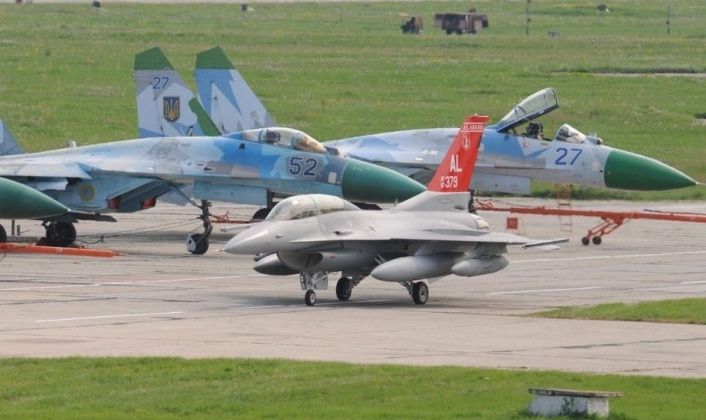
Although elite by the standards of the 1980s and 1990s, the Su-27’s viability for high intensity air-to-air combat in the 2010s remains highly limited. Ukrainian officials have on several occasions confirmed that the country’s fighters are significantly outmatched by Russian fighters, in particular the Su-35 which was developed as a heavily enhanced direct derivative of the Soviet aircraft. This has forced Ukrainian fighters to operate far from the frontlines to avoid the Russian fighter fleet. The Su-27 fleet has nevertheless achieved some successes in targeting Russia air defence systems using new AGM-88 anti-radiation missiles supplied by the Untied States, which home in on the radar emissions of such systems for targeting. With Ukraine highly unlikely to procure the F-15, and unable to procure further Su-27s, the aircraft inherited from the Soviet era will likely be the last long range heavyweights it fields.
