
One of Ukraine’s Irreplaceable Long Range Fighters Destroyed in Combat: Su-27 Pilot Deceased
Military Watch Magazine Editorial Staff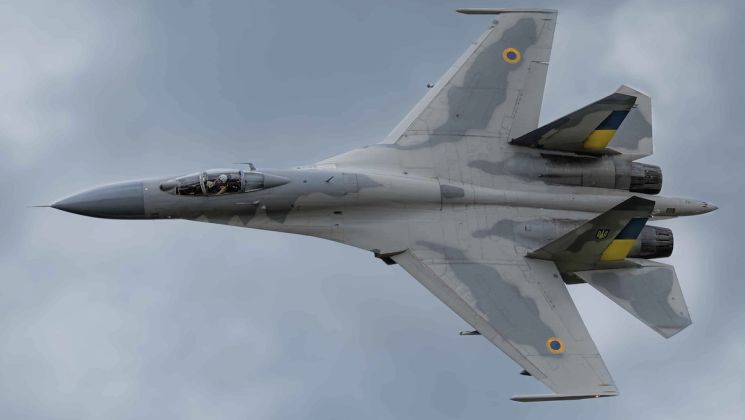
Ukrainian Air Force Su-27
On December 8 near midday a Ukrainian Air Force Su-27 fighter was lost under unclear circumstances during a combat mission. The aircraft’s pilot Lieutenant Colonel Yevhenii Ivanov, senior navigator of the 39th Tactical Aviation Brigade, was killed in action. The Su-27 is widely considered the most capable fighter type fielded by the Ukrainian Air Force, with its high weapons carrying capacity and long range making it highly prized for launching cruise missile strikes on Russian forces. Entering service from 1984 in both the Soviet Air Force and the Air Defence Forces, Ukraine was one of four Soviet successor states to inherit the aircraft when the USSR disintegrated. The fighter’s capabilities led it to widely be considered the most formidable air superiority fighter type of the Cold War era, particularly after its capabilities were tested in the United States in the 1990s.
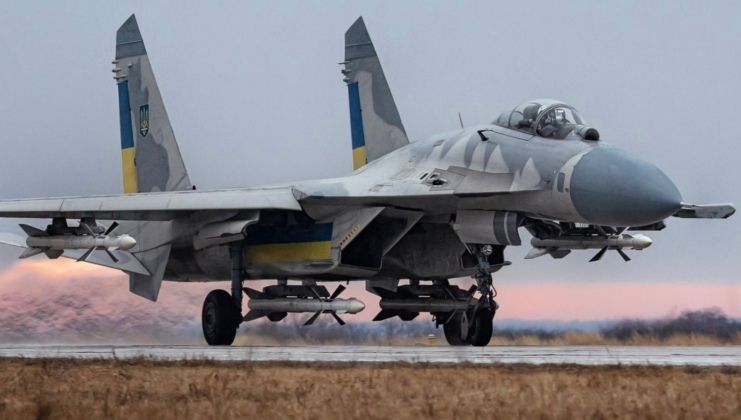
Recent incidents involving the Su-27 have included the destruction of one of the aircraft on April 28 during a “complex combat mission” to intercept Russian drones. In June it was nevertheless confirmed that the few remaining aircraft have continued to be used to attempt to destroy Russian air defence systems, after being re-equipped with American AGM-88 anti-radiation missiles designed to home in on the systems’ radar emissions. The success of these operations remains highly uncertain, but highlights the efforts that have been made to utilise the Ukrainian fighter fleet while avoiding air-to-air combat. Although cutting edge during its first decade in service, and pioneering a wide range of technologies in areas ranging from its infrared targeting capabilities, to the properties of its airframe materials, the Su-27 has seen its standing as an air superiority fighter diminish considerably, which has made it vital to avoid engagements with modern Russian fighters.
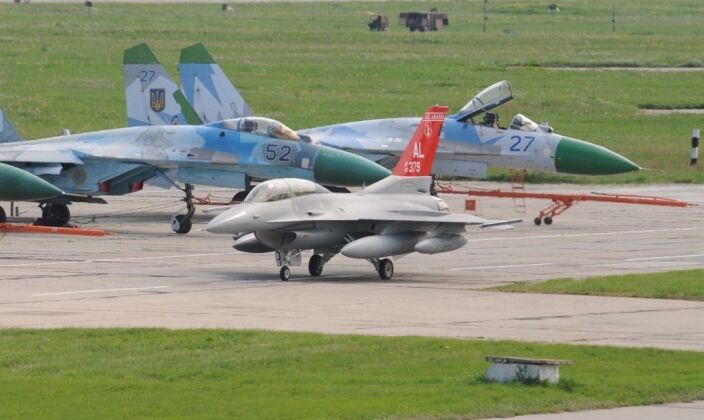
Efforts but the Ukrainian Air Force use the Su-27 to engage Russian aircraft in air-to-air combat have consistently ended in overwhelming losses, with the Soviet-built aircraft being at a significant disadvantage against 21st century fighter types such as the Su-30SM and Su-35, both of which are heavily enhanced derivatives of the same Soviet design. The discrepancy in air-to-air combat capabilities between the Su-27 and frontline Russian fighters has continued to grow, with a major turning point being the integration of new R-77M long range air-to-air missiles onto Russian Su-35s, which was confirmed in July. The Su-27 fleet has continued to rely on 1980s variants of the R-27 missile as its primary air-to-air armament, which while world leading during the Cold War, is straightforward to jam and has a limited range by current standards.
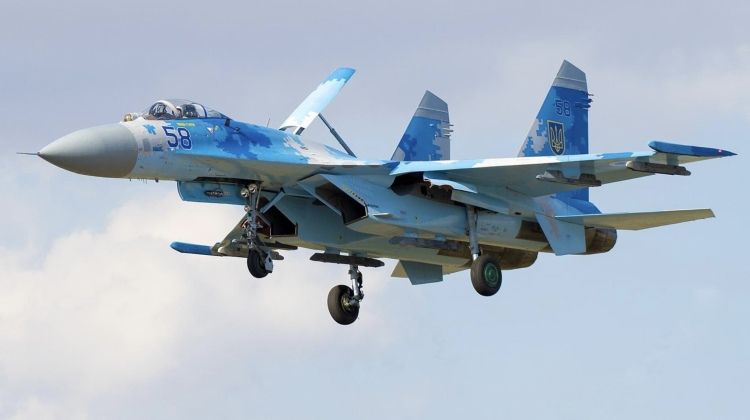
Ukrainian officials have on several occasions confirmed that the country’s newly procured American F-16 and French Mirage 2000 fighters are significantly outmatched by Russian fighters, much as the Su-27 has been, with the aircraft forced to operate far from the frontlines as a result to avoid the Russian fighter fleet. Ukrainian pilots who have flown Su-27s and the newly delivered U.S.-built F-16s have reported that the former remains an overall more capable aircraft, although as very few Su-27s are fielded by Western-aligned states there remains little possibility of combat losses being replenished. Despite the serious limitations of the Ukrainian fighter fleet, the Russian Aerospace Forces have failed to achieve air dominance due to a combination of factors, including the large size and advanced capabilities of the Ukrainian ground-based air defence network, the slow pace of fleet modernisation in the post-Soviet era, and the lack of investment in air defence suppression capabilities in the 30 years since the USSR disintegrated.
