
Russian Exercises Simulate First Ever Drone Swarm Attacks
Military Watch Magazine Editorial Staff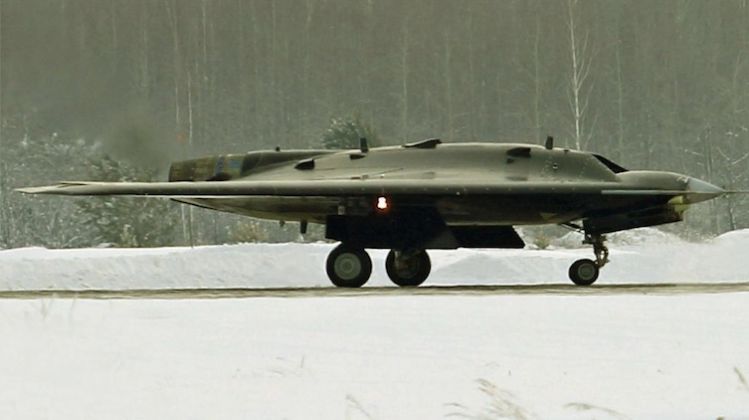
Okhotnik Stealth Drone
A relative latecomer to the field of unmanned military aircraft, the Russian Military has invested increasingly heavily in multiple drone programs since the mid-2010s launching a range of programs from the lightweight Forpost drone to the Okhotnik heavyweight stealth platform. On September 24th it was announced by a number of Russian state media outlets that the Russian Military was for the first time publicly deploying drones for stimulated ‘swarm’ attacks - in which multiple low or medium weight unmanned aircraft would work in cohesion, sometimes alongside manned aircraft, to overwhelm an adversary’s defences. Drones deployed during the Kavkaz-2020 military exercises were assigned the role of neutralising command centres, troop concentrations, weapons, and military equipment. Russia itself notably has significant experience in anti-drone warfare from its military intervention in Syria, with its military facilities and personnel having come under drone attack by Turkish-backed jihadist militants several dozen times.
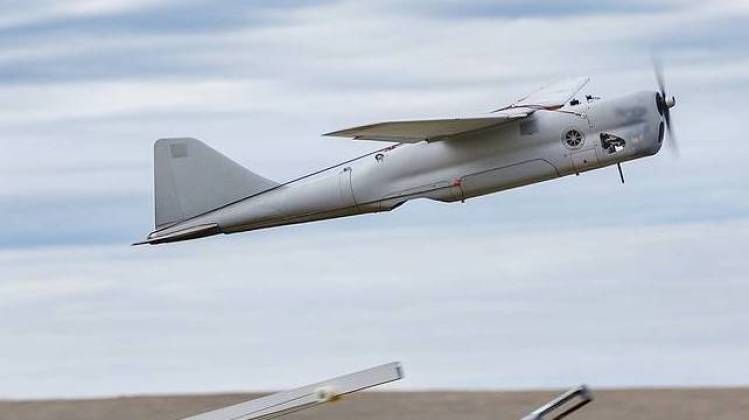
Drones involved in the Kavkaz-2020 exercises included the Forpost, Orlan-10 and Eleron-3 platforms, where were operating at altitudes ranging from 100 meters to 5 kilometres to counter enemy air defences and neutralise ground targets. Russian reports particularly highlighted the aircrafts’ surveillance capabilities against moving targets and their radio-electronic warfare capabilities. Although Russia’s drone program appears well behind those of China and the United States, currently the undisputed world leaders in the field, progress has been extremely fast and is likely to benefit from significant advances in artificial intelligence over the next decade. Russia is also currently testing unmanned aircraft to serve as front-line fighter jets - including developing an unmanned mode for its Su-57 jet which is being developed into a sixth generation fighter and is expected to rely heavily on artificial intelligence for future missions.
