
Russian Army Receives new T-90M and T-72B3M Tanks with Latest Drone Missile Shield Upgrades
Military Watch Magazine Editorial Staff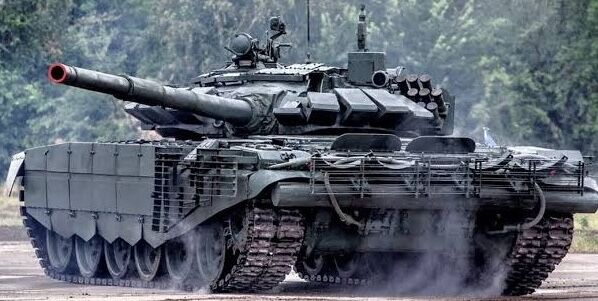
T-72B3 Tank
The Russian Army has received a new batch of T-90M and T-72B3M main battle tanks, with the delivery announced by Uralvagonzavod on September 12. The producer confirmed that vehicles in the latest batch incorporate improved all-round protection derived from combat experience in the Ukrainian theatre, while elaborating that production volumes are increasing and that modifications are continuing, particularly in response to the threat posed by unmanned aerial vehicles. The T-90M is currently the only type of main battle tank in production in Russia, with the first ten of the vehicles having been delivered in 2019. T-72s in storage are being modernised to the T-72B3M standard incorporating many of the same technologies.
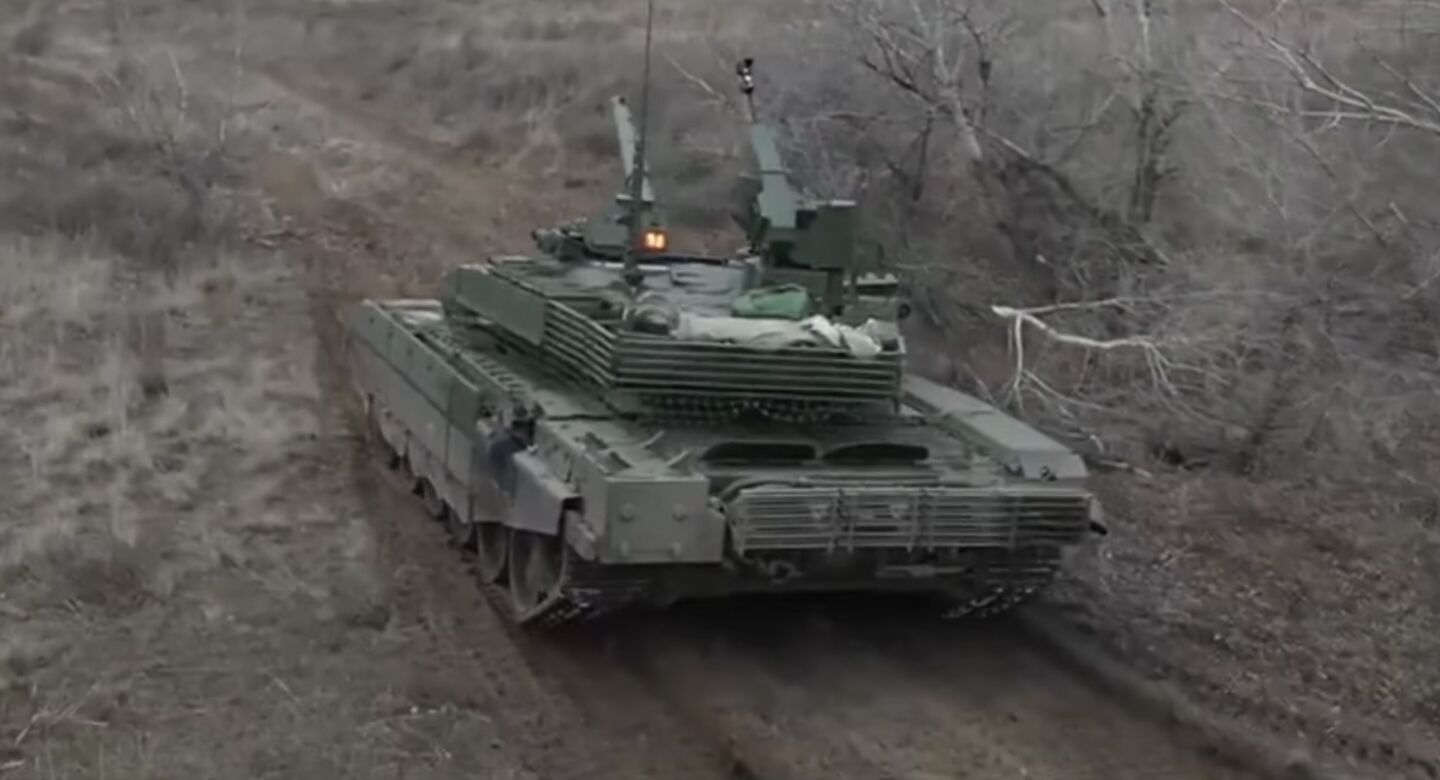
The experience of the Ukraine war has substantially altered the configuration of Russian tanks. First-person view drones and other unmanned systems have made the upper surfaces, rear sections and engine compartments of tanks particularly vulnerable, with vehicles having consequently appeared with increasingly elaborate roof protection, additional armour and electronic warfare equipment intended to interfere with drone attacks. Uralvagonzavod's emphasis on improved protection against UAVs indicates that some of these battlefield adaptations are now being incorporated directly into factory production. This represents an important feedback loop between combat experience and industrial production. Rather than treating the T-90M and T-72B3M as fixed designs, Russian manufacturers are modifying them in response to the changing threat environment.
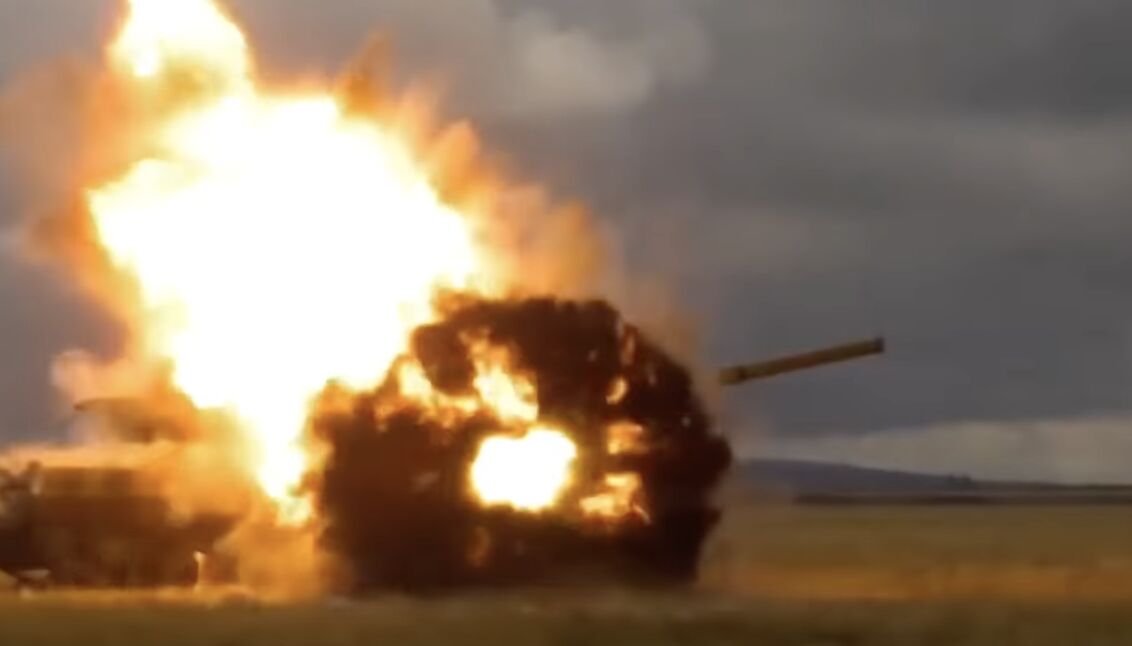
One of the most significant wartime improvements made to the T-90 and T-72 designs has been the integration of the Arena-M active protection system from 2024. This provides a distinct advantage over tanks fielded by the Ukrainian Army and over 95 percent of tanks fielded by NATO member states, which lack active protection systems of their own. The Arena-M uses a radar system to continuously monitor the surrounding environment for incoming threats, and when detecting an incoming projectile tracks it automatically, calculates its trajectory, and deploys protective munitions to intercept and destroy it before it impacts the tank. In August it was reported that work was underway to assess the viability of integrating first-person-view (FPV) drones onto Russian tanks, as part of efforts to combine conventional armoured warfare with rapidly evolving unmanned systems.
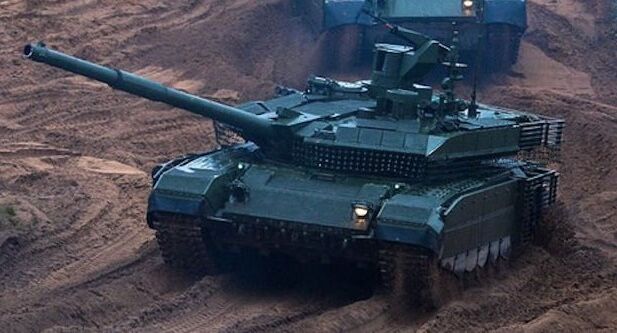
The gradual transition from Soviet stockpiles to new production presents a major challenge for the Russian defence industry. Factories must simultaneously manufacture new T-90Ms, modernise older tanks, repair vehicles returned from the frontlines, and maintain production of other armoured systems. The scale of Russia's wartime tank production remains difficult to establish with precision, although satellite footage indicates that Soviet era tank reserves have been rapidly depleted. This has fulled speculation that should T-90M production be insufficient to replenish losses, Russia may begin to procure tanks from North Korea, its primary foreign defence supplier, to avoid severe shortages of armour.
