
Russian Army’s Mi-28 Attack Helicopter Units Integrate New Extended Range Supersonic Anti-Tank Missile
Military Watch Magazine Editorial Staff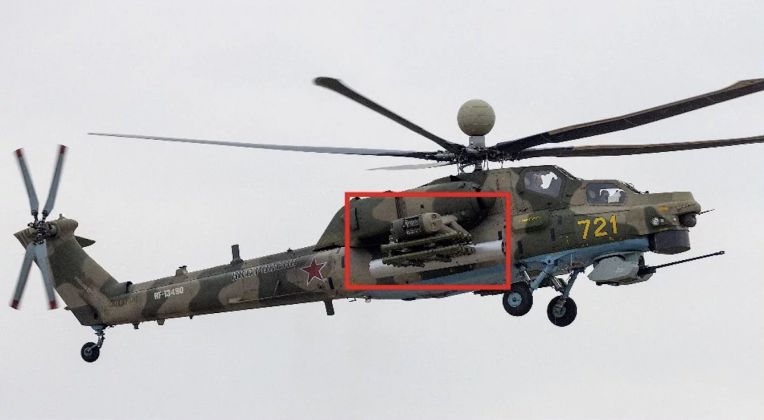
Mi-28 Attack Helicopter with Khrizantema Missiles
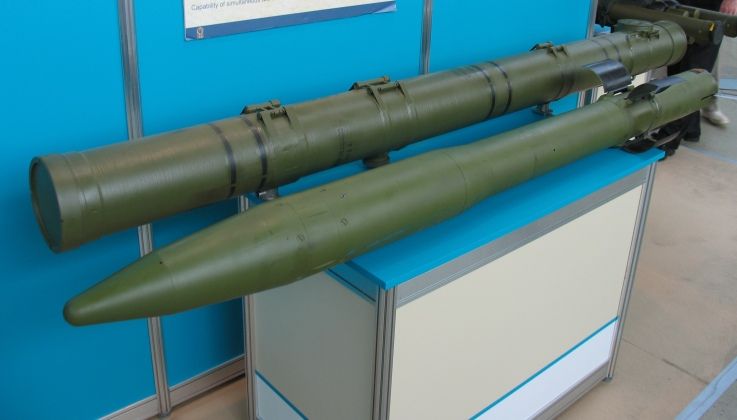
The Russian defence sector has completed the development of the new Khrizantema-M anti-tank guided missile, which combines an extended engagement range and a new capability to fly supersonically. A representative of the High-Precision Systems holding company noted that the missile was designed to be deployed from combat helicopters, and is already being used in air-defence missions. He explained that the missile’s extended range allows the launching aircraft’s crew to remain outside the “kill zone” of enemy man-portable air defence systems thanks to its greater firing distance. The Khrizantema-M was presented by state arms export conglomerate Rostec as part of a layered armament suite for the Mi-28 attack helicopter, complementing the already intensively combat tested LMUR missile which has a longer engagement range exceeding 25 kilometres.
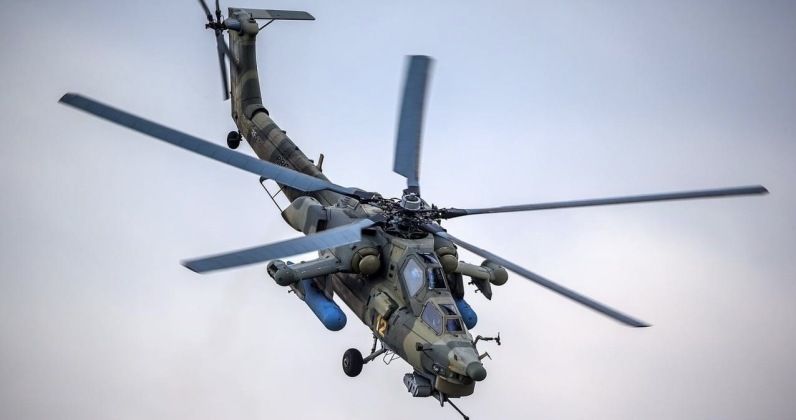
Alongside a wide range of ground vehicles, the Khrizantema-M is reportedly intended to equip Mi-28 attack helicopters, which have played a central role in countering Ukrainian armour during four years of hostilities. The Mi-28’s design pioneered very high levels of crew protection, with its titanium cockpit protected by armoured glass and ceramic plates capable of withstanding hits from 20mm rounds. Despite its heavy armour, the helicopters are exceptionally agile, capable of a roll angle of up to 70 degrees, compared to just 45-60 degrees for the preceding Soviet Mi-24 they were designed to succeed. The Mi-28’s ability to handle a vertical load factor of 2.8G, compared to just 1.8G for the Mi-24, allows for tighter turns. These totally unique flight performance characteristics allow the Mi-28 it to perform aerobatic manoeuvres like loops, and to fly in ways that confuse air defence systems, such as flying sideways and backwards at high speed.
Alongside the Ka-52 developed for the Navy, the Mi-28 is one of the newest clean sheet attack helicopter designs in the world, with the Mi-24, Mi-35, and NATO’s top attack helicopter the Apache all dating back to the Cold War era in their service. Despite being more heavily armoured than the Apache, the Mi-28 carries a larger armaments suite and is considerably faster and more manoeuvrable. It can carry up to 16 anti-tank missiles, and integrates a millimeter-wave radar atop the rotor mast, similar to the Apache's Longbow, enabling it to detect and track targets in all weather conditions. Secondary sensors include Forward-Looking Infrared and low-light TV systems and a laser rangefinder. Alongside intensive combat testing in the Ukrainian theatre, the aircraft have also supported counterinsurgency operations in Syria, and in Iraqi Armed Forces hands in Iraq.
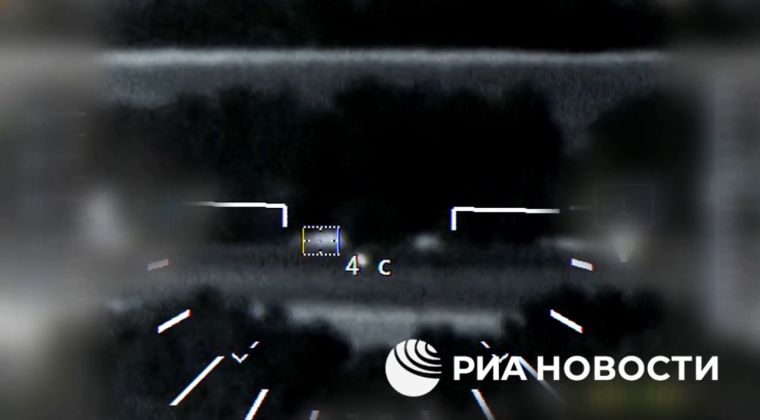
Footage released by the Russian Defence Ministry has shown nighttime operations by Mi-28 attack helicopters targeting Ukrainian and allied forces multiple times, including at times using thermal sensors to detect and fire on both infantry and armoured units, and use of the 9K121 Vikhr anti-tank missiles. New variants of the Vikhr missiles can reportedly penetrate 750mm of armour, while each helicopter can carry up to 16 of the missiles. The helicopters have otherwise primarily been seen employing 80mm and 122mm rockets and 9M120 Ataka and LMUR anti-tank guided missiles in Ukraine, and have been involved in attacks on Ukrainian strongholds along the frontlines in disputed regions. While Russia was previously the only country to have developed clean sheet new types heavyweight attack helicopter since the end of the Cold War, the standing of the Mi-28 and Ka-52 is expected to face a challenge, as China prepares to introduce its promising new Z-21 into service possibly before the end of the decade.
