
Russian Air Force to Receive Two New A-50 AWACS Platforms Amid Drive to Modernise Support Capabilities
Military Watch Magazine Editorial Staff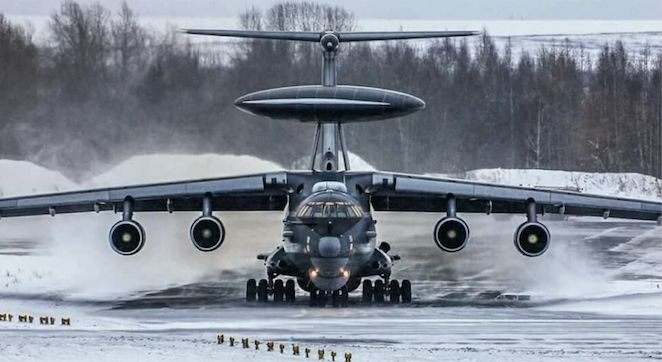
Beriev A-50 AWACS Platform
The Russian Air Force is set to take delivery of two advanced variants of the Beriev A-50 airborne early warning and control system (AWACS), following the announcement of plans by the Defence Ministry to focus more heavily on the development of support capabilities into the early 2020s after a series of major new additions to its combat fleet leading up to 2018. While Russia’s Air Force is still recieving combat aircraft regularly, from dozens of Su-30 air superiority jets to high tech new MiG-35 light fighters, support platforms such as the A-50 are able to act as effective force multipliers for the air fleet as a whole - facilitating better coordination among combat assets while providing valuable information to fighter squadrons using its massive Liana surveillance radar - allowing it to detect airborne targets up to 650km away.
AWACS platforms to be delivered to the Russian Air Force in 2018 are of the A-50U variant, which come with heavily modified electronics. The first aircraft of this variant were inducted into service in 2011, and have been extensively combat tested in the Syrian theatre. The A-50 is capable of providing vital intelligence on and coordinating attacks against ground targets from ranges over 300km, and it was primarily in this role that the platform was used in the Middle East. The aircraft was also likely to have been used to monitor the activities of Western air forces which also operated in the country - intelligence on which has proven highly valuable for the Russian armed forces.
The A-50 can control up to ten combat aircraft for simultaneously for either air to air or strike missions, and is a particularly lethal threat when combined either with the Russian Air Force’s unique long range air to air missiles - the R-33 and R-37 - or with standoff cruise missiles such as the Kh-35. The aircraft can track large targets up to 400km away, approximately the same range as the K-37 missile deployed by Russian interceptor jets, and it can track up to 150 separate airborne targets simultaneously. Approximately 40 A-50 aircraft have been manufactured, the majority during the Soviet era, and the aircraft’s replacement, the A-100, is currently in the late testing stages. The A-100 makes use of a new Vega Premier Active Phased Array Radar, new PS-90A-76 turbofan engines and is set to enter service in 2020 and be fielded alongside Russia’s new generation of fighter jets such as the Su-57, Su-34 and MiG-35. With the projected costs of the new platform extremely high, upgraded variants of the cheaper A-50 are set to continue to be relied on for many years to come serving alongside the faster and power sophisticated A-100.
