
Russia Achieves World’s Longest Missile Range as New Sarmat ICBM Has Over Double the Reach of Western Rivals
Military Watch Magazine Editorial Staff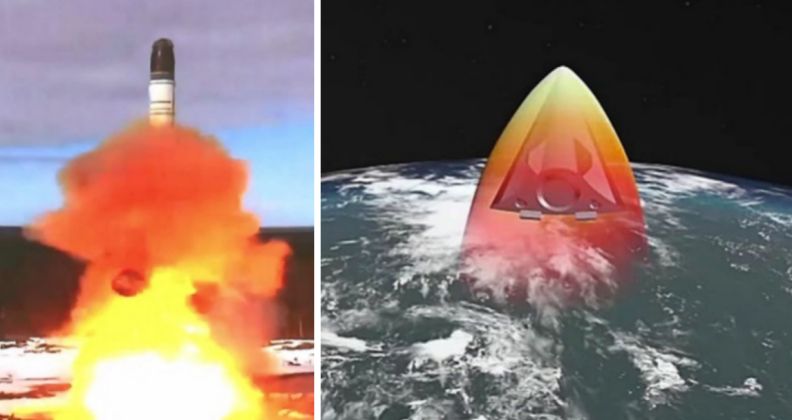
Sarmat Missile Launch and Avangard Glide Vehicle Artwork
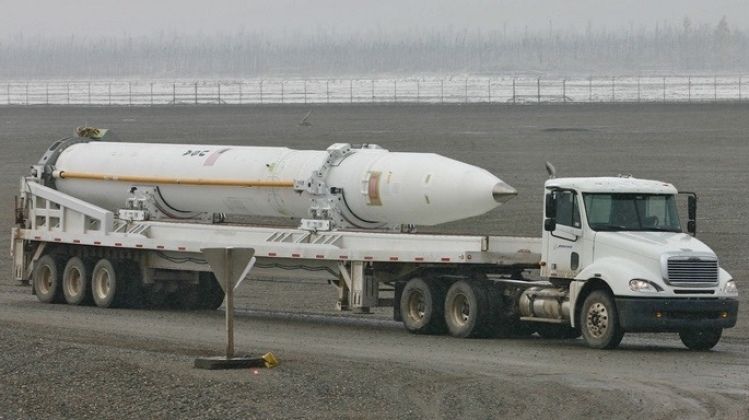
Russian President Vladimir Putin has revealed that the country’s new type of heavyweight intercontinental range ballistic missile (ICBM), the RS-28 Sarmat, has the world’s longest engagement range at 35,000 kilometres. “The missile can move not only on a ballistic but also on a suborbital trajectory, which allows for a range of over 35,000km while doubling its accuracy and the ability to penetrate all existing and future missile defence systems,” the president observed. He added that this is “the most powerful package system in the world, equal in power to the Soviet-era Voyevoda missile system in our arsenal.” “The total yield of the delivered warhead is more than four times greater than that of any existing, most powerful Western equivalent," he elaborated.
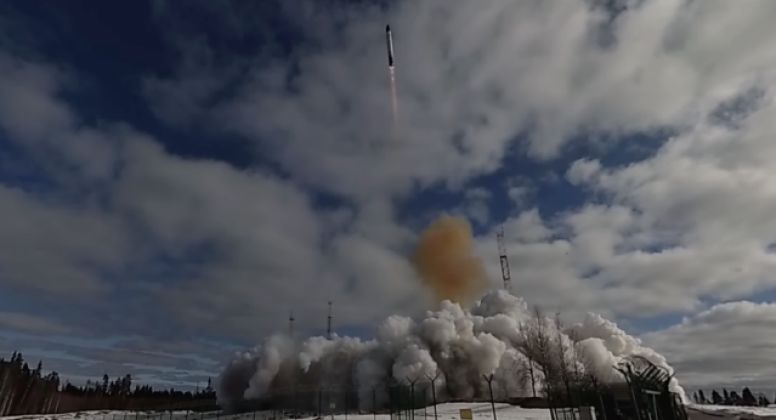
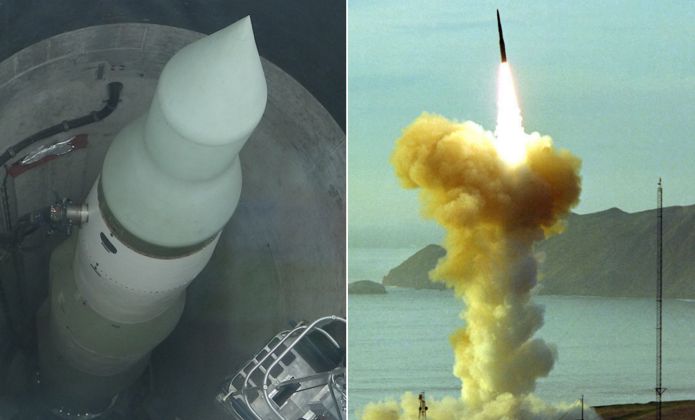
To place the range of the Sarmat in perspective, the preceding Topol and Yars intercontinental range ballistic missile had estimated 11,000 kilometre engagement ranges, while the U.S. Air Force’s LGM-30G Minuteman III, the only land-based ICBM in NATO service, has an engagement range estimated at around 13,000 kilometres. Previously, the missiles with the longest estimated ranges were the Chinese DF-41 and DF-5 and North Korean Hwasong-17 and Hwasong-18, all of which were estimated at approximately 15,000 kilometres, or less than half that of the Sarmat. The Russian missile’s extreme range is likely the result of its integration of the Avangard hypersonic vehicle, which was designed to be able to circle the earth before striking its target, and thus of striking well defended targets from all possible directions to reduce warning time and complicate missile defence efforts.
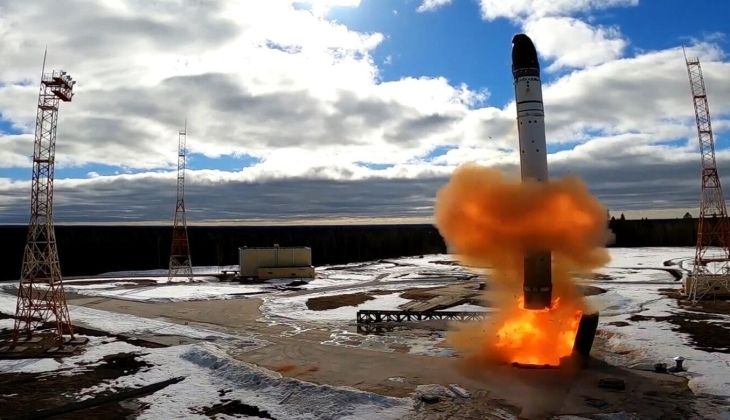
The Russian Armed Forces placed the Sarmat on combat alert for the first time in August 2023, after the missile was first test fired in April 2022. The missile was developed to replace the late Soviet era R-36M2 Voyevoda system that became operational in 1988. President Putin previously commented that the missile "is capable of overcoming all modern means of anti-missile defence. It has no analogues in the world and won't have for a long time to come,” referring to it as a “truly unique weapon [that] will strengthen the combat potential of our armed forces.” The Sarmat is the heaviest missile in the world at over 208 tons, and is deployed from fortified silos rather than mobile launch vehicles, while the much lighter Yars missiles predominantly being launcher based as part of a complementary high-low combination of ICBMs.
The ability of intercontinental range hypersonic glide vehicles to totally transform the capabilities of ICBMs has previously been alluded to with considerable concern in the Western world, particularly as Western Bloc states continue to lag behind China and Russia in bringing them into service due to serious development difficulties. Insight into the challenges these vehicles posed was provided in 2021 by Vice Chairman of the U.S. Joint Chiefs of Staff General John Hyten, who observed in November following a test earlier that year: “They launched a long-range missile. It went around the world, dropped off a hypersonic glide vehicle that glided all the way back to China, that impacted a target in China.” Hyten warned that China it could gain the capability to launch a surprise nuclear attack on the U.S. despite the small size of its nuclear arsenal, with hypersonic glide vehicles serving as major force multipliers in this regard.
Observing the Chinese launch in in 2021, Vice Chairman Hyten stressed that the vehicle struck accurately, in spite of its extreme range and speed, observing on this basis that the pace at which China was developing new capabilities was "stunning.” Although Russia’s defence sector has fallen behind that of China in a wide and growing range of areas, it remains uncertain whether it has been able to remain on a peer level in hypersonic glide vehicle development. Development of the system that became the Avangard glide vehicle began in the Soviet Union in the 1980s, before being suspended for over a decade following the state’s disintegration, and being announced by President Putin to be under development in March 2018. The president in 2024 highlighted that the Avangard program has provided an asymmetric counter to tremendous Western investment in strategic missile defences, observing: “If you calculate how much [the U.S.’] well-known missile defences cost them, one of the main components for overcoming these missile defences that we have is the Avangard, an intercontinental missile with an intercontinental-range glide unit. So you cannot compare budgets. We’ve basically nullified everything they’ve done, everything they’ve invested in this missile defence system.”
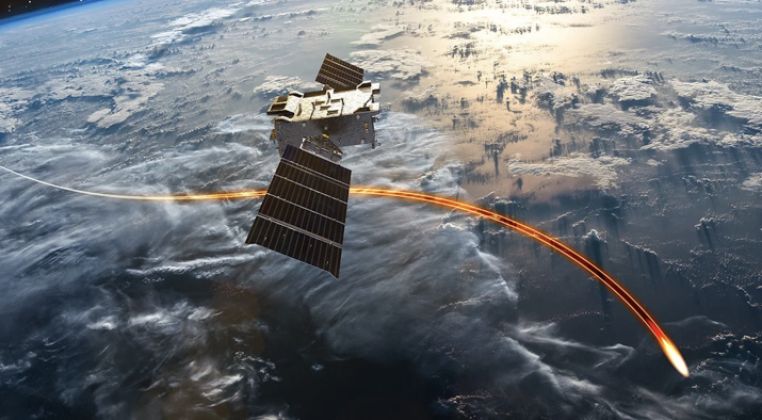
In large part in response to the development of advanced strategic missile types with hypersonic glide vehicles, the U.S. Department of Defence has invested in the Golden Dome missile defence initiative, which is intended to deploy anti-ballistic missiles in space. This is intended to allow for the targeting of missiles such as the Sarmat before they are able to deploy their hypersonic glide vehicles, when they remain over Russian, Chinese, or North Korean territory and are still traveling at relatively slow speeds. Key elements of the Golden Dome program such as space-based anti-missile interceptors have seen their feasibility widely questioned, due not only to the costs involved, but also to the viability of reliability neutralising advanced new generations of ballistic missiles such as those with hypersonic capabilities.
