
Russia Switching Pantsir Air Defence Systems to Belarusian Vehicles After Local Variants Suffer Issues
Military Watch Magazine Editorial Staff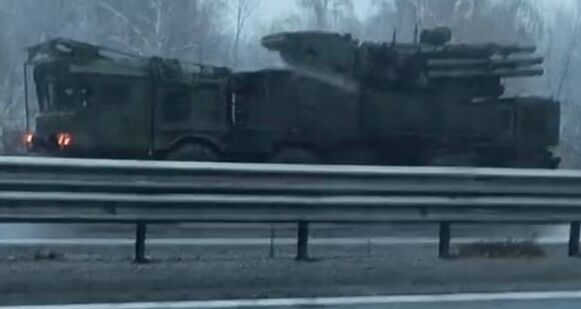
Pantsir Air Defence Combat Vehicle on Belarusian Chassis
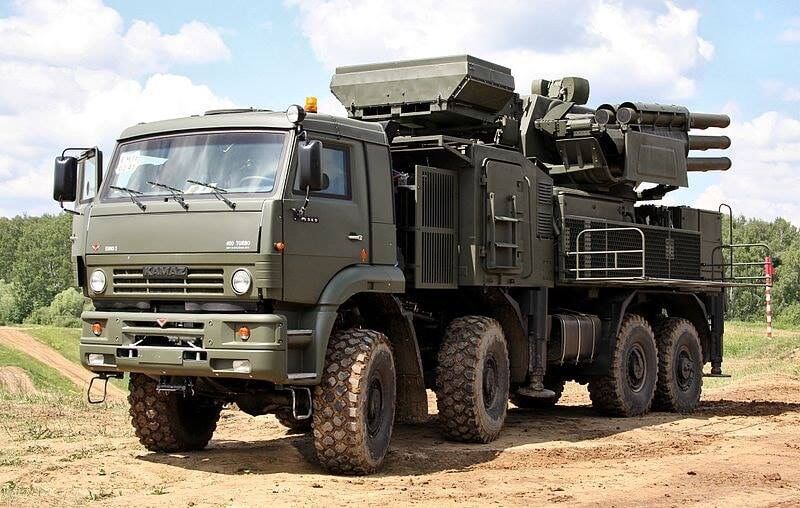
The Russian armed forces have made growing use of Pantsir air defence combat vehicles a Belarusian-built MZKT-7930-312 chassis, reflecting efforts to address longstanding mobility and stability problems associated with the Russian air defence system’s standard truck platform. The eight-wheeled vehicle produced by Belarus’s Minsk Wheel Tractor Plant offers potentially more stable and capable foundation for the heavy combat system. The standard Pantsir-S1 used by the Russian Armed Forces is mounted on the KamAZ-6560, an eight-wheeled truck carrying a substantial combination of radar equipment, missiles and twin 30mm autocannons.
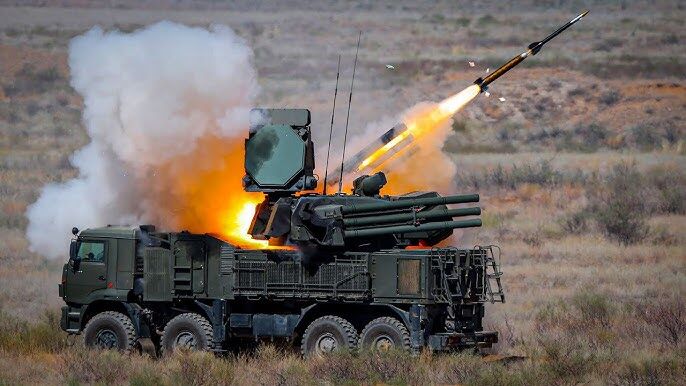
The high centre of gravity created by the Pantsir’s heavy payload, combined with the KamAZ-6560’s relatively narrow track width, has contributed to reports of Pantsir-equipped trucks overturning during manoeuvres. The vehicles have also been criticised for its off-road mobility, prompting interest in alternative chassis that can better accommodate the system’s weight and operational requirements. The MZKT-7930 family is already used for several major Russian weapons systems, including the Iskander-M ballistic missile system and the Bastion coastal defence system. Its heavy-duty eight-wheel-drive configuration is designed to carry large military payloads, making it a suitable candidate for the Pantsir’s combination of sensors and weapons. Belarus reportedly received an order for 18 MZKT-7930-series chassis intended for Pantsir systems in 2024, although the precise number of vehicles subsequently completed and delivered remains uncertain.
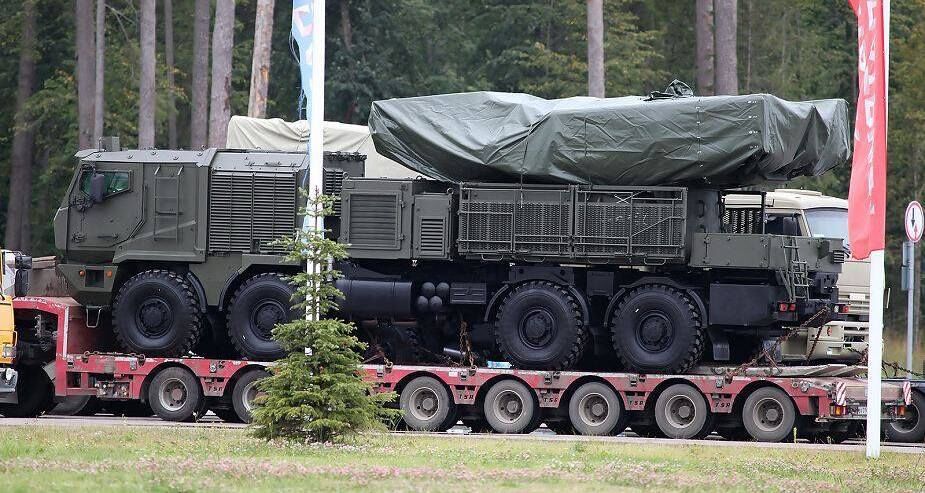
The use of the Belarusian chassis is not entirely new. A Pantsir configuration mounted on an MZKT-7930 was displayed as a prototype at the MAKS air show near Moscow in 2009, but the arrangement did not become the standard configuration for Russian service. More recently, a Pantsir mounted on a similar Belarusian chassis was reportedly destroyed by Ukrainian forces near Mariupol in February 2026, providing evidence that the configuration had progressed beyond an exhibition concept. Russia subsequently displayed a Pantsir-S1M on the MZKT platform during the Tsentr-2026 strategic exercise in September and October, marking a more public demonstration of the arrangement. While Russia has favoured phasing out reliance on Belarusian vehicles in the past, operational experience may have led the Defence Ministry to revise its priorities.
The Pantsir family provides short-range air defence against threats including aircraft, cruise missiles and unmanned aerial vehicles, generally operating as a protective layer around higher-value assets and longer-range air defence systems. Its mobility is particularly important because the system must be able to reposition while protecting military facilities, airfields and other strategic sites. The systems combine surveillance and tracking radars with surface-to-air missiles and automatic cannon armament, allowing it to engage a wide range of airborne threats at relatively short distances. They have been extensively combat tested in the Ukrainian theatre and against Turkish-backed jihadist militants in both Syria and Libya.
