
Russia’s Su-57 Stealth Fighter Receives Further Enhancements Based on Ukraine War Experience
Military Watch Magazine Editorial Staff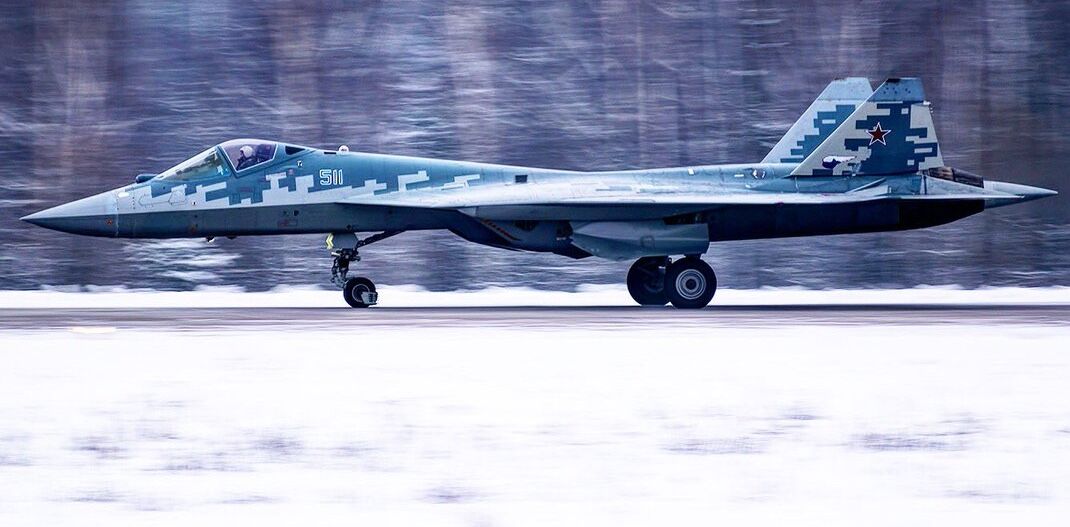
Su-57 Fighter
The latest batch of Su-57 fifth generation fighters delivered to the Russian Aerospace Forces have entered service in a “new technical configuration” incorporating further modifications to their onboard systems and weapons suites. The delivery was announced by United Aircraft Corporation on September 24, and provides further evidence that the Su-57 is continuing to evolve substantially after entering serial production. According to the Corporation, the fighter has undergone a “huge evolution” since the outbreak of Russian-Ukrainian hostilities in 2022, and is being modernised partly on the basis of “rich experience” from its use in combat operations.
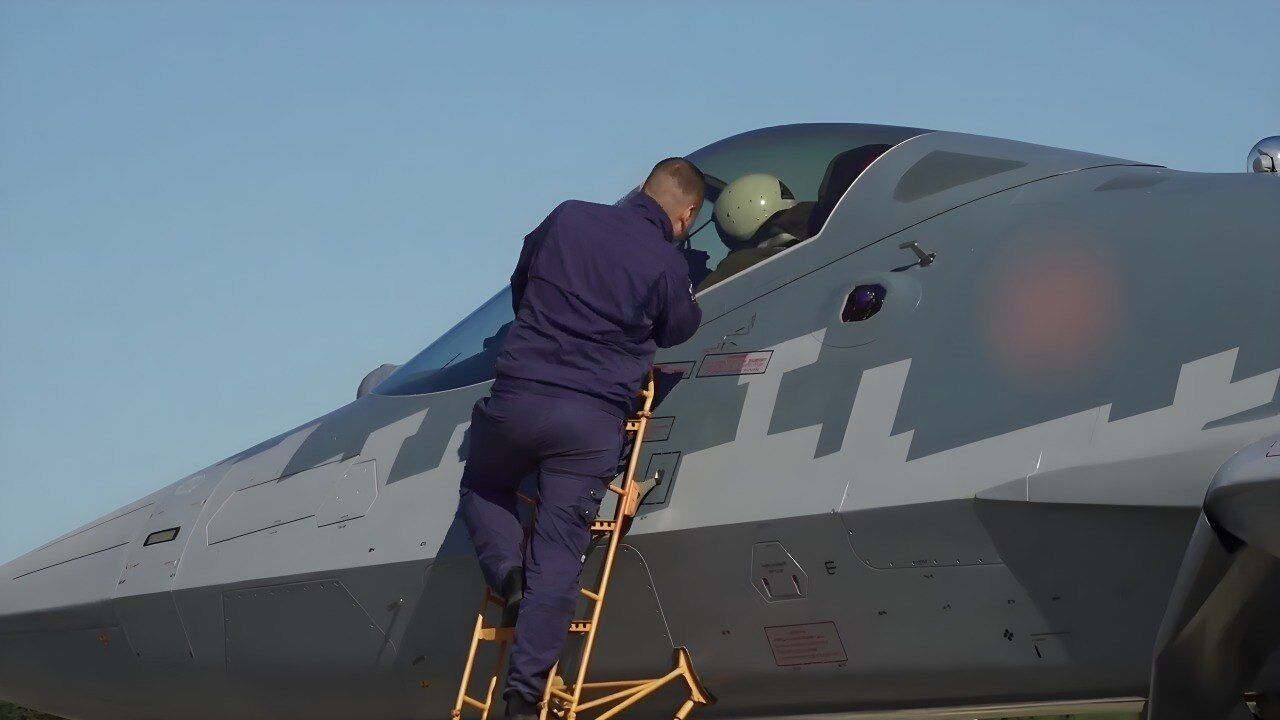
Commenting on the new standards to which the latest aircraft were built, a Russian Aerospace Forces Su-57 pilot involved in accepting the latest aircraft stated: “The aircraft has already performed well in the framework of the special military operation. The new technical configuration will contribute to expanding the range of tasks to which this type of aircraft is involved.” He further stated that “the advanced capabilities built into the aviation weapons system make it possible to use new models of aviation weapons.” Incremental upgrades are expected to eventually bring the Su-57 up to the Su-57M1 standard, which will include the integration of next generation engines.
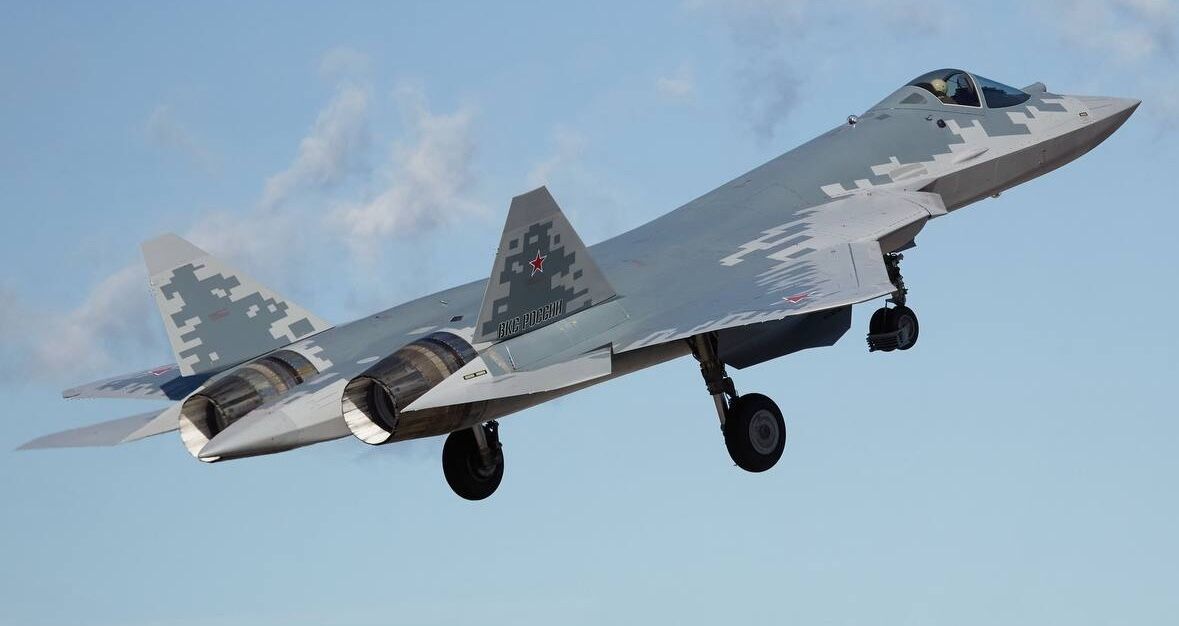
The Su-57 has been subjected to a continuous program of modifications since the first production aircraft entered service in 2020. Rather than treating the initial production standard as a fixed configuration, Russia has increasingly incorporated new avionics, defensive systems, weapons and other equipment into aircraft emerging from the Komsomolsk-on-Amur Aircraft Plant. Some of the most significant changes to recent Su-57s appear to concern their defensive sensor architecture. Earlier aircraft were equipped with the 101KS-U missile-approach warning system, while newer examples have been observed with modified sensor apertures that analysts have assessed as providing additional sensing capability.
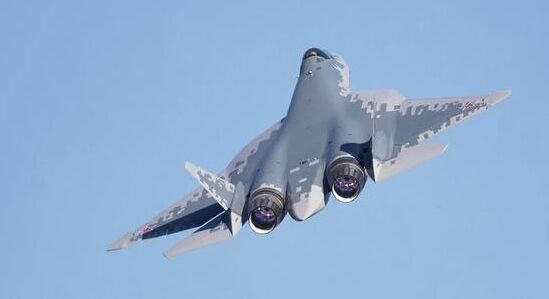
Recent production aircraft have also been observed with additional apertures around the fuselage, including sensors associated with missile warning and defensive functions. These changes are particularly relevant to a low-observable fighter, since passive detection of threats can allow an aircraft to maintain a lower electromagnetic signature while building situational awareness. The exact performance of the modified system remains classified. Photographs can establish that external hardware has changed, but they cannot establish detection ranges, processing capabilities, resistance to countermeasures or the effectiveness of the system against specific missile types.
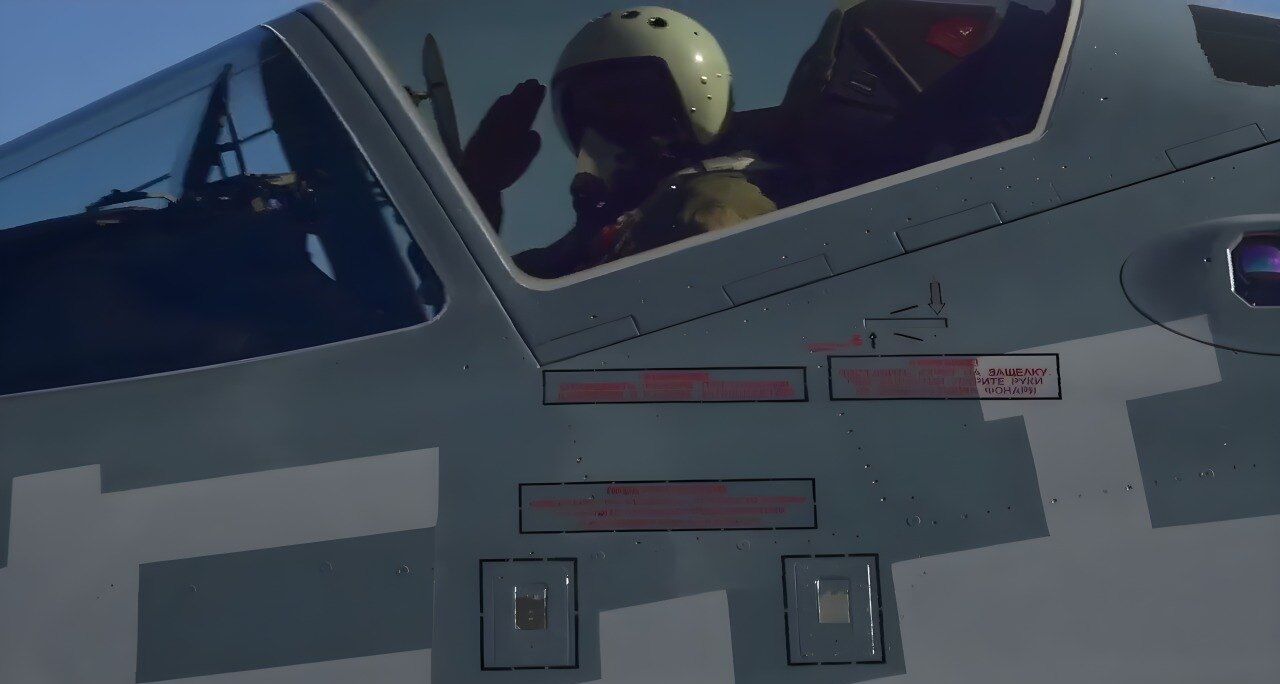
The Su-57 was designed from the beginning around an extensive network of active and passive sensors rather than relying on a single radar for situational awareness. Its Sh121 multifunctional integrated radio-electronic system incorporates the N036 Byelka radar family, while the aircraft also employs electro-optical systems and distributed sensors. Together, these systems are intended to provide the pilot with a broader picture of the surrounding battlespace than would be possible from a conventional forward-facing radar alone. The emphasis on passive sensing is particularly relevant to operations against modern air-defence networks, much like those which the fighter type has already operated against in the Ukrainian theatre.
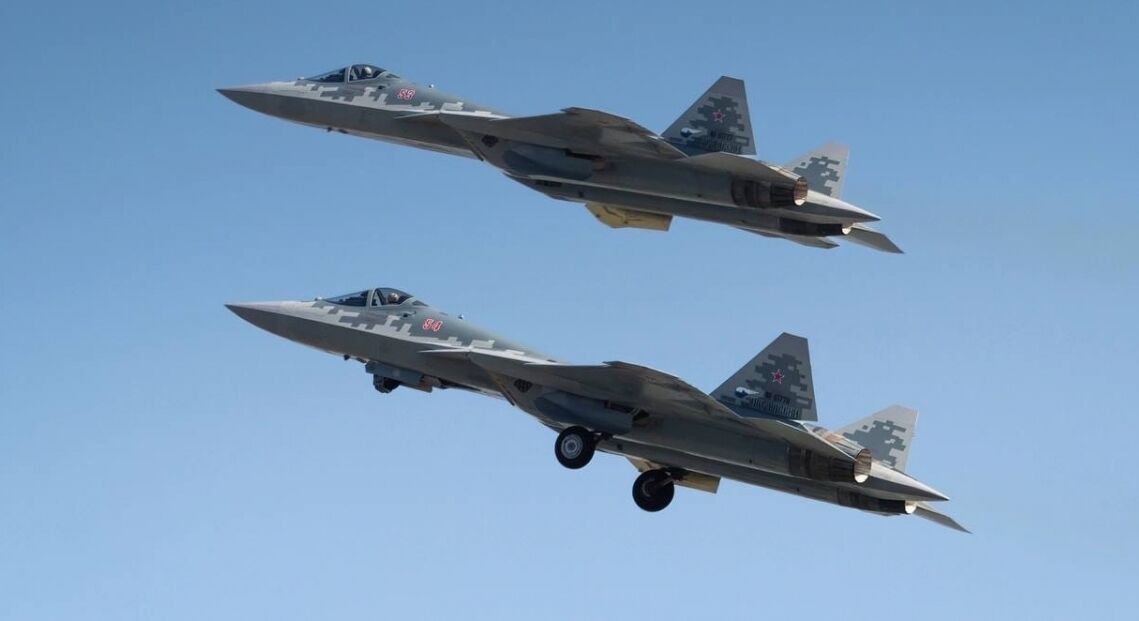
Another visible area of development has been the Su-57’s cockpit. Aircraft displayed publicly during 2025 showed a substantially revised cockpit arrangement, including a large-area display replacing the earlier configuration of multiple smaller multifunction displays. The evolution of the cockpit reflects a broader trend in modern combat aircraft towards presenting information from multiple sensors through a unified interface. For a fifth generation fighter expected to manage large quantities of radar, infrared, electronic-warfare, communications and weapons information, the ability to rapidly interpret and prioritise data is increasingly important. A revised head-up display has also been observed on newer aircraft, providing pilots with critical flight and targeting information without requiring them to look down at the cockpit displays.
