
Russia Demonstrates S-400 Long Range Air Defence System’s Secondary Land Attack Role in Latest Strike on Ukraine
Military Watch Magazine Editorial Staff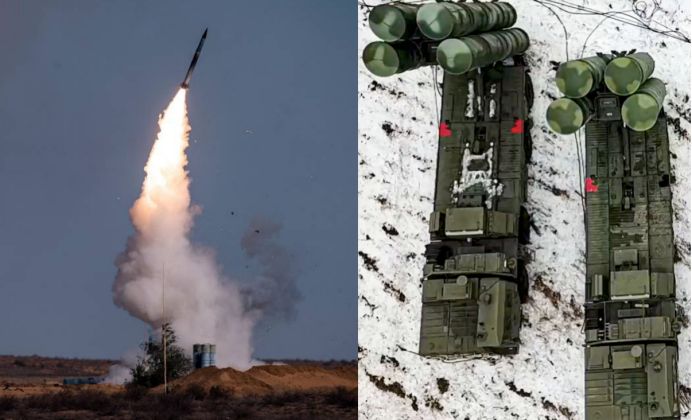
Missile Launches From S-400 Air Defence System
The Russian Aerospace Forces have made use of the secondary land attack capabilities of the S-400 long range air defence system during strikes on Ukrainian targets, with Ukrainian sources reporting that 48N6E2 surface-to-air missiles from the system were used to strike unknown ground targets. The 48N6E2 is one of three long range missile types integrated onto the system, and is significantly slower and less costly than the newer 48N6DM and 40N6 missiles which have respective 250 kilometre and 400 kilometre engagement ranges. The missile has a 200 kilometre range and Mach 8.2 speed, and carries a 180 kilometre warhead. The 48N6E2 was previously integrated onto the S-300PM-2 long range air defence system from the late 1990s, and is considered a secondary missile type for the S-400. Little is known regarding possible modernisation of the missile design since the turn of the century, although major improvements to its electronics and seeker are considered likely.
The significant increase in the production of cruise missiles, ballistic missiles and single use drones in Russia has raised questions regarding the purpose of using costly surface-to-air missiles against ground targets. One possibility is that the strike was launched to test the capabilities of the S-400 in a secondary land attack role. Another is that a strike was requested on short notice, and that the S-400 was at the time the only asset within range to respond. The use of surface-to-air missiles for ground attack roles is far from unprecedented, with Ukrainian forces having repurposed the much larger surface-to-air missiles from the S-200 long range air defence system to launch attacks on Russian cities, firing them ballistically to achieve long engagement ranges for strategic bombardment. Older Soviet era variants of the S-300 air defence system scheduled for retirement have also been used in land attack roles by Russian forces. The far more advanced guidance capabilities of the S-400 system allow for much higher levels of precision when attacking ground targets, however, making it considerably more versatile.
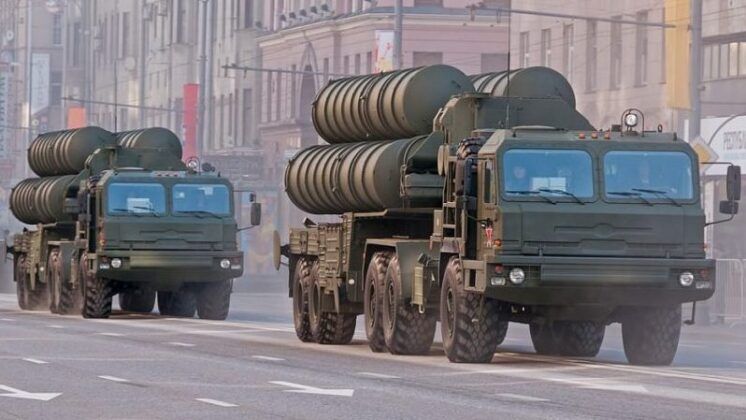
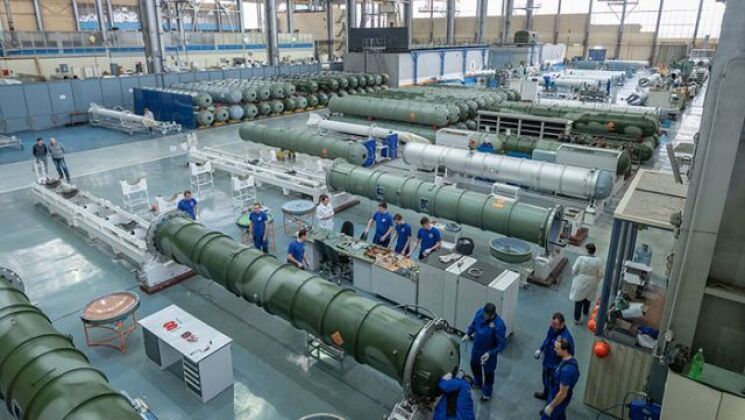
The S-400 entered service in 2007, and has continued to be incrementally modernised, with a major milestone in its enhancement being the integration of the 40N6 long range surface-to-air missile around 2018. The missile has proven capable of engaging targets up to 400 kilometres away, striking over the earth’s curvature by using targeting data either from forward deployed ground based radars, or from airborne radars. Successful combat testing has been accomplished against both Ukrainian and Pakistani targets, the latter in the hands of the Indian Air Force which is by far the largest foreign operator of the system. Large scale production of missiles for the S-400 system has been facilitated by major investments in the rejuvenation of the Russian surface-to-air missile industry, which was authorised by the Kremlin in the year 2000. Three major new facilities included a new wing of the Obukhov Plant, the Avitek Plant in Kirov which was throughly modernised, and the NMP Plant in Nizhniy Novgorod, with their completion after much delay in the mid-2010s facilitating a major surge in delivery rates.
