
Russia’s Answer to American AWACS Superiority: A-100 Jets and Hypersonic ‘AWACS Killer’ Missiles
Military Watch Magazine Editorial Staff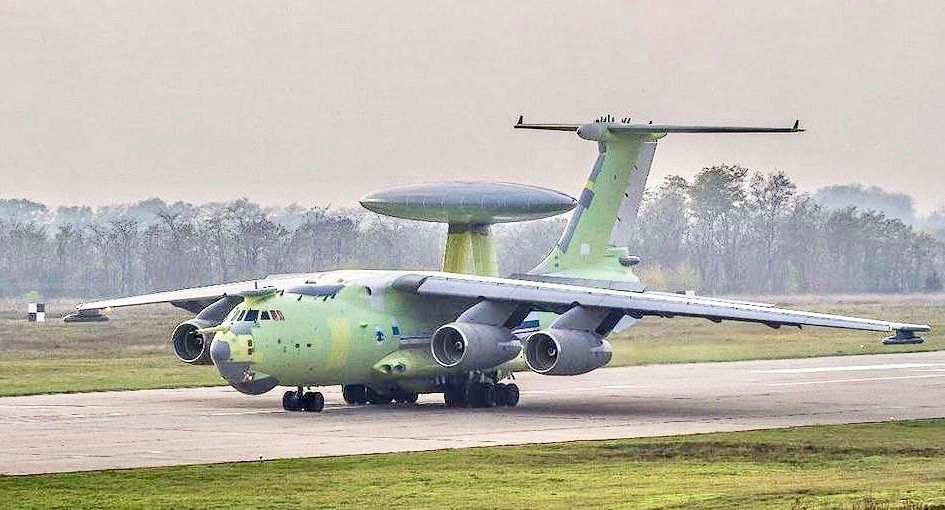
Russian A-100 AWACS Platform
In the ongoing race between Russia and the United States for the most advanced aerial warfare capabilities, both parties have attained advantages in various fields. Russian jets for example overall benefit from superior manoeuvrability and powerful infra red sensors, while their American counterparts more widely make use of modern low signature AESA radars and radar cross section reducing airframes. One field in which the United States has retained a considerable advantage, perhaps the most distinctive both quantitatively and qualitatively, is in the airborne early warning and control systems it deploys. From the Navy’s carrier based E-2 Hawkeye to the Air Force’s heavier E-3 Sentries these aircraft provide an effective force multiplier for the American fleet - and in their most modern variants can detect and track several thousand aircraft simultaneously. The radar the aircraft deploy are considerably heavier and more powerful than those used by fighters and interceptors, and can be used to direct fighter units, provide data on incoming threats and enemy targets, and even guide friendly long range missiles towards their targets.
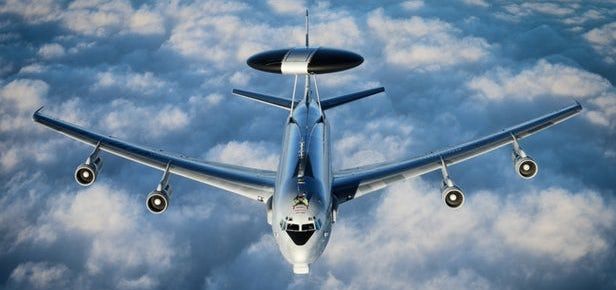
While Russia has deployed AWACS platforms of its own, namely the A-50 which first entered service in the Soviet Air Force in 1984, these are expected to be both quantitatively and qualitatively outmatched by their American counterpart the E-3. As Russia has invested in modernising its Air Force, with growing tensions with the Western Bloc accelerating the race for superior capabilities, the country’s armed forces have sought to compensate for their inferior AWACS capabilities in a number of ways. One of these has been the induction of new AWACS platforms with superior specifications. The A-50U which entered service in 2013, although still considered inferior to the latest variants of the E-3 such as the E-3G, demonstrates considerably more advanced capabilities to its predecessors with a new lighter and more powerful radar system, new electronics and new self protection systems. A entirely new AWACS platform, the A-100, is also in the late development stages and is expected to enter service in the early 2020s. The new platform is expected to surpass the capabilities of the E-3 - although it will be fielded in significantly smaller numbers due to its high cost.
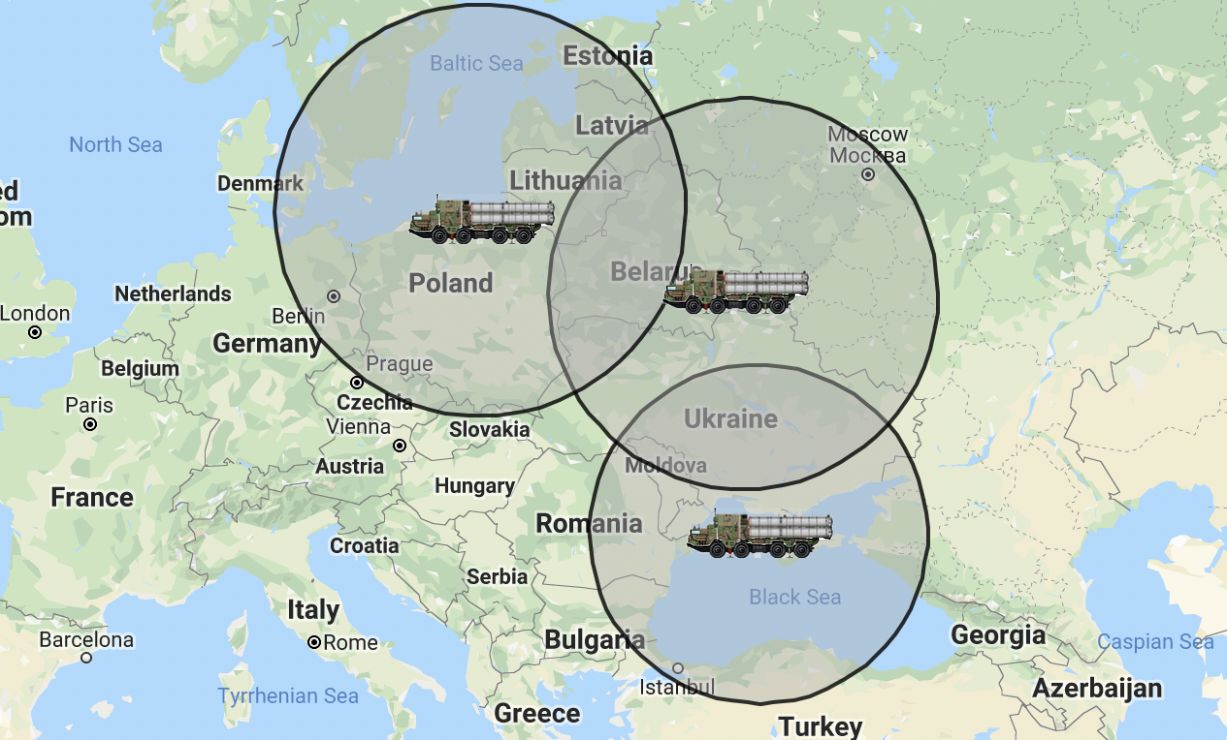
Alongside plans to field new AWACS platforms, Russia’s armed forces have partially compensated for the disparity in capabilities by attempting to deny enemy AWACS access to the battlespace. This has been achieved through the development of hypersonic long range anti aircraft missiles, which are carried by Russian fighters and interceptors and deployed from ground based air defence batteries. Where in the Cold War the Soviet Union developed an advanced variant of the S-200D missile system with a 300km range and Mach 6 speed precisely for this purpose, missiles in service today intended to target such high value assets at extreme ranges remain unrivalled worldwide. A prominent example is the 40N6E, a Mach 15 missile deployed by the S-400 and S-300V4 with a 400km range - which even at long distances can strike targets at all altitudes. These are complemented by air launched Mach 6 hypersonic missiles which also enjoy a 400km range - the R-37 and R-37M deployed by Russian MiG-31 interceptors and Su-35 fighters respectively. These missiles can be used to effectively deny aircraft such as the E-3G access to battlespaces - a threat repeatedly alluded to by high level American sources. More capable and longer ranged ‘AWACS killers’ are reportedly set to enter service in the early 2020s - including a 600km hypersonic platform set to be deployed by the S-500 missile system and longer ranged air to air platforms for the upcoming MiG-41 interceptor. Should the S-500 be deployed to Kaliningrad, Crimea and other provinces in Western Russia, their reach across the European theatre will make operating AWACS particularly difficult. Given the cost of AWACS platforms, and the E-3 Sentry in particular, they are the furthest thing the U.S. Air Force has from an expendable asset - which the U.S. is unlikely to risk deploying anywhere near the expected range of enemy air defences.
