
Russia’s New Oreshnik Hypersonic Ballistic Missiles Arrive in Belarus: Can They Counterbalance NATO Forces?
Military Watch Magazine Editorial Staff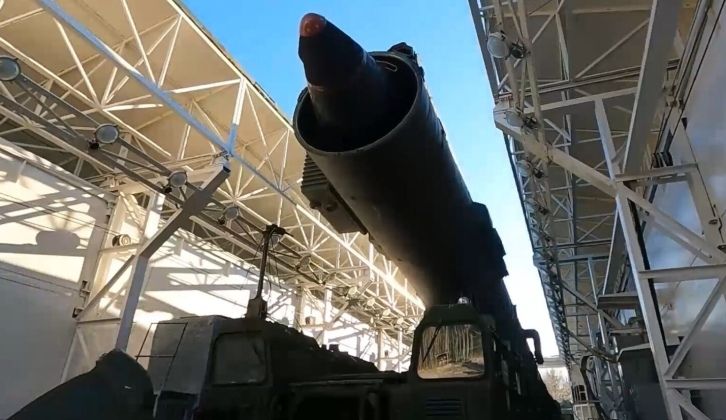
Russian Yars Ballistic Missile Preparing For Launch
Belarusian President Aleksandr Lukashenko on December 22 confirmed that his country had received up to ten Oreshnik intermediate range hypersonic ballistic missile systems, following confirmation earlier in the year that the new Russian missiles would be prioritised for delivery the country. Lukashenko in 2024 stated a number of “ten for now,” suggesting that Belarus could host a larger arsenal in future. The procurement is a game changer for the reach of the Belarusian Armed Forces, and provides a means of countering the vast and fast growing capabilities of NATO members on its borders. The Oreshnik can deployed both nuclear and non-nuclear warheads, and can be utilised both as a strategic deterrent to strike major cities across Europe, and as a tactical asset to strike hostile ground forces. Its procurement complements that of Iskander-M short range ballistic missile systems from Russia, a portion of which are also nuclear armed.

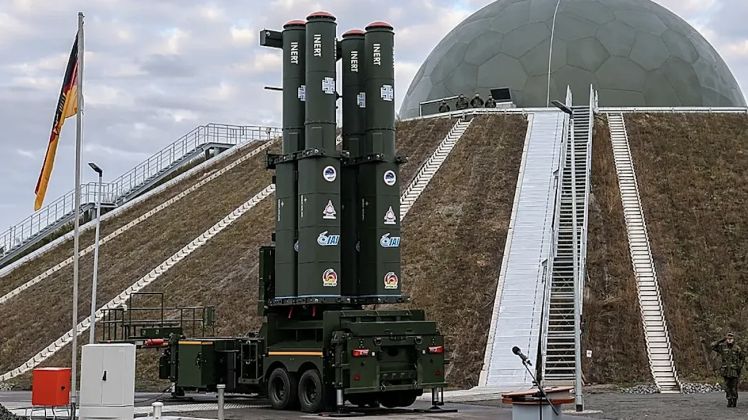
Russian President Vladimir Putin on December 17 announced that the Oreshnik would placed on combat duty by the end of 2025, indicating that the systems received by Belarus may already be operational, or else will likely be in the very near future. The missile was first fired in combat on November 21 against Ukrainian targets, at which time the program’s existence was announced to the world, and it was confirmed in June to have entered serial production. The missile is estimated to have a 4000 kilometre range while carrying multiple independently re-targetable warheads mounted on hypersonic reentry vehicles, which can manoeuvre and approach targets from unexpected directions. Combined with their sheer speeds, this seriously limits the ability of traditional air defence systems, such as Germany’s recently procured Arrow 3 system, to intercept them.
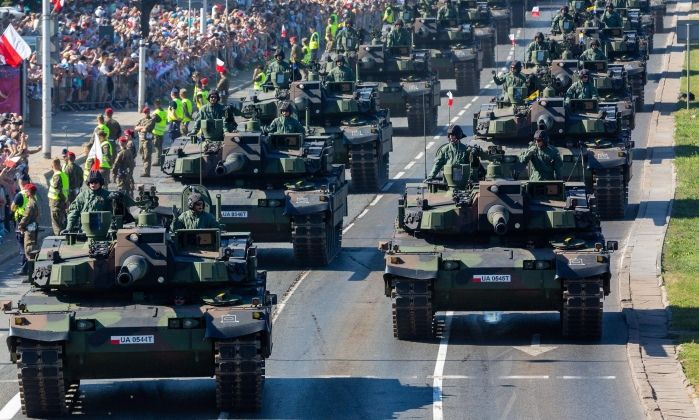
Belarus has perceived increasingly serious security threats from across its borders, with the German Army on May 22 having inaugurated the new 45th Armoured Brigade stationed in Vilnius, Lithuania. This is expected to provide an elite forward deployed mechanised warfare capability on the territory of the former Soviet Union just 150 kilometres from the Belarusian capital Minsk. The brigade is being prioritised to field the German Army’s most capable equipment, including the first Leopard 2A8 tanks. Neighbouring Poland has also rapidly modernised its ground force capabilities through very large scale procurements from South Korea, including hundreds of K2 tanks, K9 howitzers, and Chunmoo rocket artillery systems. The Polish Air Force’s capabilities are also being revolutionised with the procurement of F-35A fighters well optimised for launching penetrative strikes, and of F/A-50 light fighters, alongside parallel modernisation of its F-16s to the F-16V standard.
The Belarusian Armed Forces have invested heavily in making new procurements from late 2020, including Mi-35 attack helicopters, Su-30SM fighters, and S-400 air defence systems, although these procurements are being made on a much smaller scale than those of neighbouring states. The Oreshnik provides a means of counterbalancing NATO forces on its borders with a much longer ranged strike capability. Belarus is notably manufacturing the mobile launch vehicles for the Oreshnik systems, with the country’s defence sector having a long history of doing so for a number of Russian missile programs in the Soviet era and since. Plans to supply Oreshnik missiles were confirmed on December 6, 2024, and will represent the only transfer of intermediate range ballistic missiles between countries since the turn of the century. “We have places where we can deploy these weapons. With one condition: that the targets will be determined by the military-political leadership of Belarus, and that Russian specialists will service the deployment of the weapons,” President Lukashenko stated at the time.
