
Russia to Supply Belarus with Oreshnik 4000km Range Missiles Under Nuclear Sharing Deal
Military Watch Magazine Editorial Staff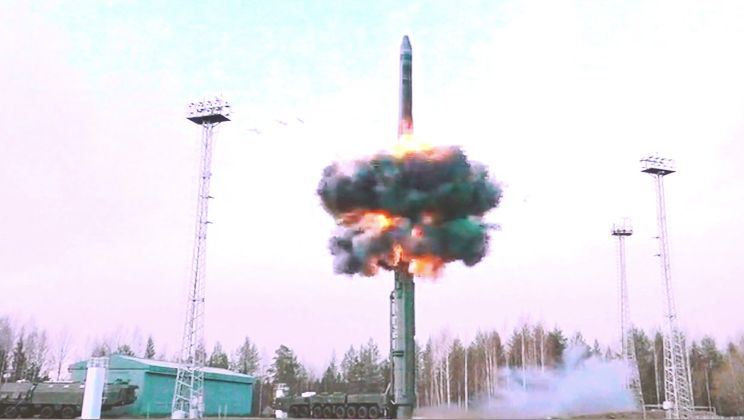
Missile Launch From Russian Yars System
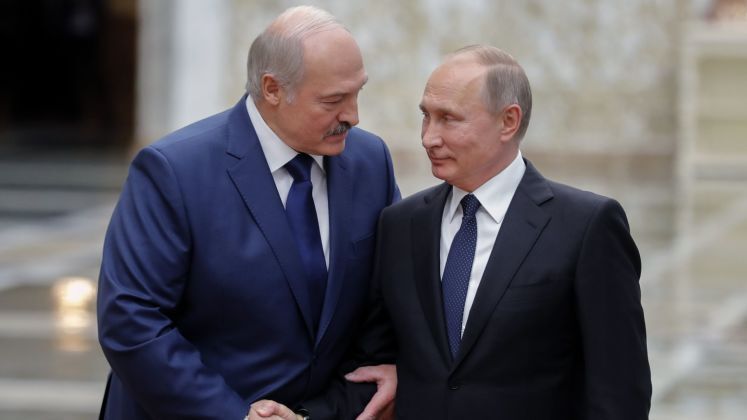
Russian President Vladimir Putin revealed on December 6 that Moscow plans to supply Oreshnik intermediate range ballistic missiles to neighbouring Belarus. He stated that his Belarusian counterpart, Alexander Lukashenko had asked about his country making such an acquisition in the context of their bilateral nuclear sharing agreement. Under this agreement Belarusian personnel train to use Russian nuclear weapons stationed on their territory, with the weapons being transferred to the control of the hosting country in the event of a major war. “We have places where we can deploy these weapons. With one condition: that the targets will be determined by the military-political leadership of Belarus, and that Russian specialists will service the deployment of the weapons,” President Lukashenko stated. According to the Russian president, the missiles could be deployed in the second half of 2025. “There are a number of technical issues here that must be resolved by specialists, namely, determining the minimum range, taking into account the priorities of ensuring the security of Belarus,” he told Lukashenko.
Russia made its first ever combat firing of an intermediate range ballistic on November 21, with the Oreshnik missile used subsequently unveiled to the world. The missile is estimated to have a 4000km range, and to carry multiple independently re-targetable warheads, including both nuclear and conventional warheads. Although missiles with such ranges, when first operationalised during the Cold War, were exclusively fielded to carry nuclear warheads, the increased accuracy that has been facilitated by technological advances allows them to serve as effective launch platforms for non-nuclear strikes. Nevertheless, all units deployed to Belarus are expected to carry nuclear weapons.
President Lukashenko first raised the possibility that Belarus could host Russian nuclear weapons in December 2021, and elaborated that his country maintained considerable infrastructure inherited from the Soviet Union, namely launchers for the nuclear-tipped Topol intercontinental range ballistic missiles, which could help make this process easier. It remains uncertain whether this infrastructure may be used to deploy Oreshnik missiles. Nuclear warheads shared with Belarus were previously deployed by the country’s Iskander-M short range ballistic missile systems, although a new derivative of the system was announced in May 2022 to be jointly under development by the two countries, with its range expected to be longer.
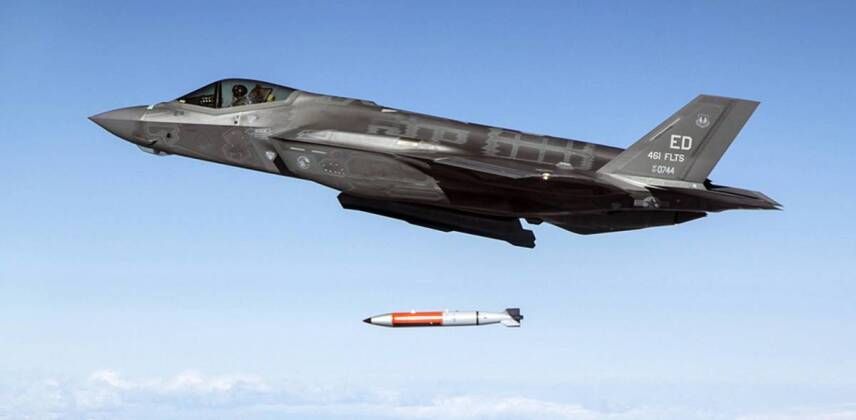
The Oreshnik will provide a revolutionary improvement to Belarus’ previously very limited nuclear strike capability, with its provision potentially being interpreted as a response to the modernisation of the nuclear delivery capabilities of American partners in NATO. The air forces of Belgium, Germany, Italy, the Netherlands and Turkey all train to use American B61 nuclear warheads stationed on their territories, and are permitted to do so in the event of conflict. All are expected to deploy these warheads using F-35 fifth generation fighters. A single nuclear armed F-35 is estimated to be able to kill over 310,000 inhabitants in Moscow or 360,000 in St Petersburg with a single attack. Nuclear sharing deals have been highly controversial due to their de facto creation of new nuclear weapons states, with Western analysts having widely highlighted that they violate Articles I and II of the Treaty on Non-Proliferation of Nuclear Weapons. Preceding the nuclear sharing deal with Belarus reached in 2023, American nuclear sharing agreements with its European NATO allies were the only such deals in place.
