
Russia Offers China Second Batch of Elite Su-35 Fighters - But Does the Air Force Need Them?
Military Watch Magazine Editorial Staff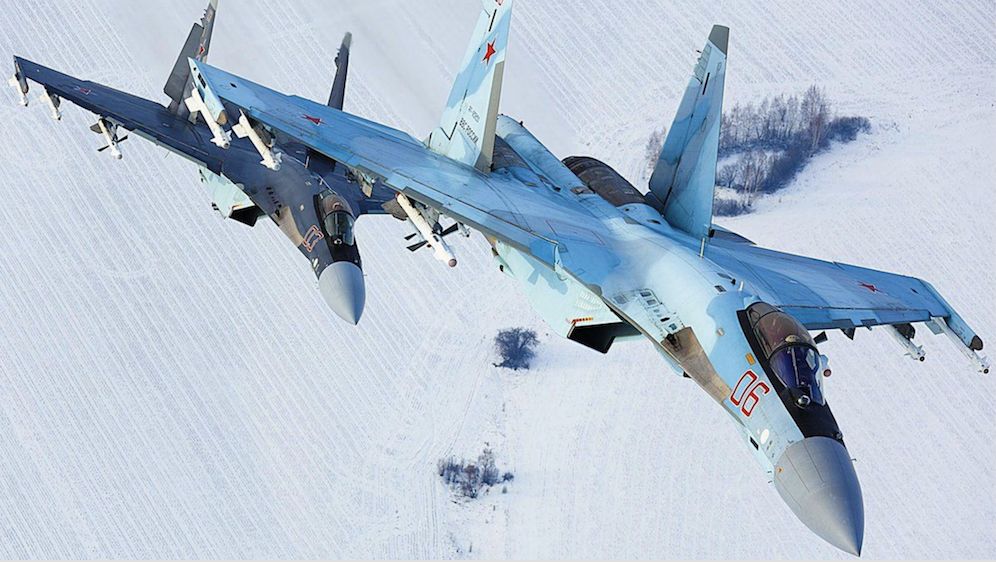
Su-35 '4++ Generation' Air Superiority Fighters
Russia's Federal Service for Military-Technical Cooperation (FSVTS) has reported that China’s People’s Liberation Army (PLA) has been offered a second batch of Su-35 ‘4++ generation’ air superiority fighters - following the completing of the first order two months prior in April 2019. The fighter was the third major derivative of the Su-27 Flanker design acquired by the PLA from Russia, following larger orders for Su-27 and Su-30 platforms in the 1990s. While the Su-30 has seen extensive use in a maritime strike role with the PLA Navy, the Su-35 like the Su-27 is expected to be operated by the PLA Air Force exclusively. The FSVTS stated regarding the offer of new fighters to China: “We are expecting a response from China on our offer to purchase modern weapons and military equipment manufactured in Russia, including additional batches of Su-35 fighter jets.” Chinese media reports indicate that the PLA is currently considering further Su-35 acquisitions.
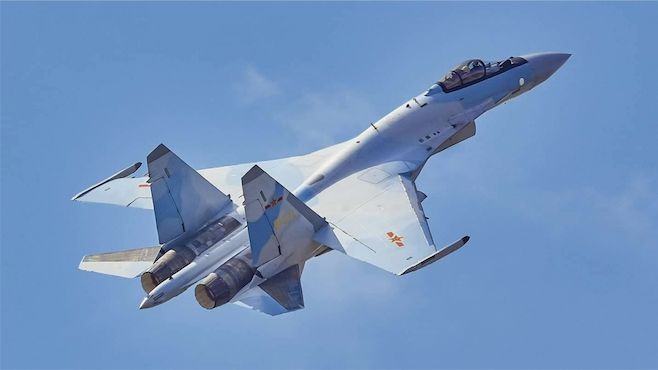
Reports of potential Chinese interest in further batches of the Su-35 come three months after a statement from the director for international co-operation and regional policy at Russia's Rostec defence industrial holding company Viktor Kladov regarding expected future Chinese arms acquisitions from Russia: “China has recently taken delivery of 24 Su-35 aircraft, and in the next two years [China] will make a decision to either procure additional Su-35s, build the Su-35 within China, or to buy a fifth-generation fighter aircraft. This could be another opportunity for the Su-57E." The Su-35 is currently among most advanced aircraft in the PLA Air Force alongside the J-20 fifth generation stealth fighter and the J-10C ‘4++ generation’ lightweight multirole fighter. The fighters have been deployed to patrol disputed territories in the South China Sea, where a number of Western powers have had a large and increasing presence in recent years directed solely at undermining China’s territorial claims in the region.
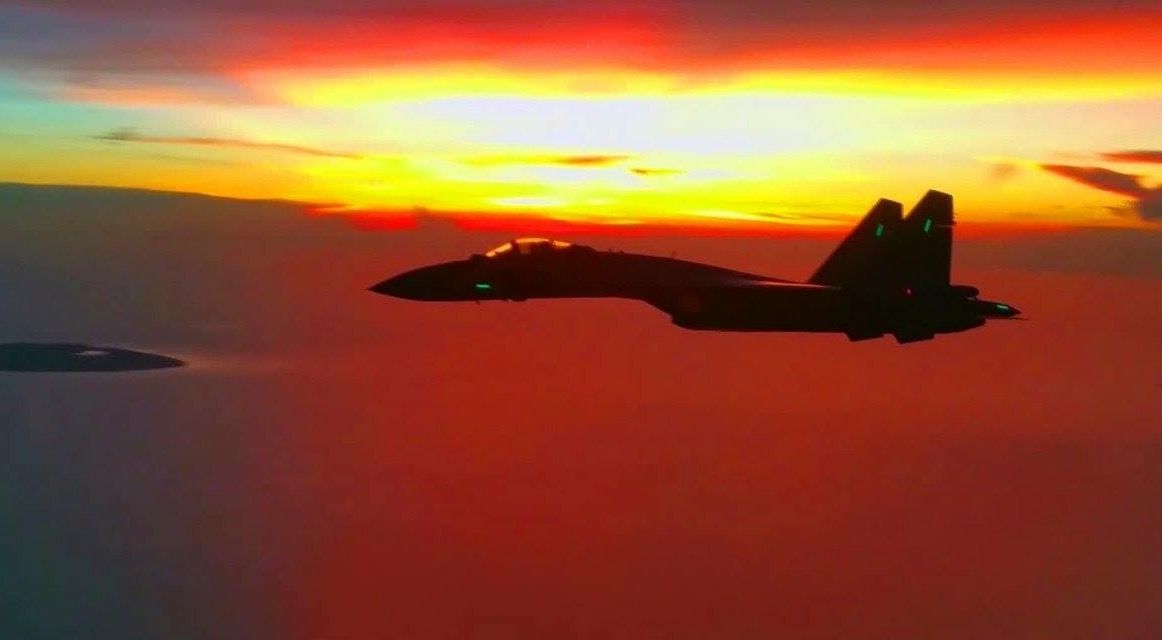
The Su-35 is prized for its state of the art electronic warfare systems and Irbis-E radar, extremely manoeuvrable, lightweight and high composite airframe which benefits from three dimensional thrust vectoring engines, and its large arsenal of up to fourteen missiles which include the R-77 for air to air and Kh-35 for anti shipping roles. Chinese interest in acquiring more Su-35 fighters to equip additional squadrons remains uncertain however. While the fighter is a considerable improvement over the Su-27 and J-11B which currently form the mainstay of its air superiority fleet, the upcoming J-11D which is currently in a late prototype stage has capabilities highly comparable if not superior to the Su-35. Boasting a similarly high use of composites, high payload and three dimensional thrust vectoring engines, the J-11D also benefits from access to indigenous munitions such as the PL-15 for an air to air role as well as an active electronically scanned array radar which the Su-35 lacks. Such radar systems are not only more powerful, but are more resilient to jamming and give out a reduced radar signature compared to their passive counterparts used by the Su-35. The PL-15 is considered a generation ahead of the R-77 and its American analogue the AIM-120C, and has a range estimated at between 150km and 200km. Combined with the benefits of producing the fighters domestically, it is likely that China will chose to acquire the J-11D over further units of the Su-35. This hardly means an end to Chinese acquisitions of high end Russian combat jets however, and the more sophisticated Su-57 retains a number of highly unique capabilities which make a PLA acquisition highly likely - possibly even for the PLA Navy where it can serve as a potentially ideal fighter for maritime strike and air superiority roles.
