
Russia’s Most Complex Tank Unveiled in New Enhanced Armour Configuration: How Capable is the Latest T-80 Variant?
Military Watch Magazine Editorial Staff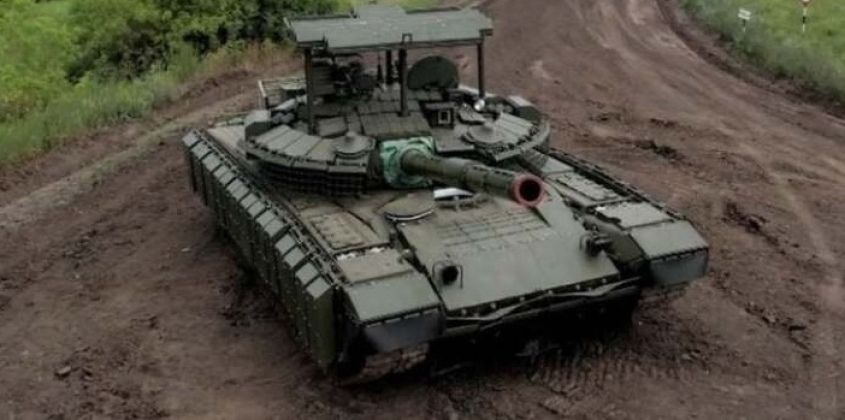
Russian Army T-80BVM Tank During Frontline Operations
Russian sources have circulated an image showing a previously unseen new sub-variant of the Russian T-80BVM main battle tank, with its armour configuration appearing to provide significantly higher protection levels than prior variants. The T-80 is Russia’s most costly and complex tank design, and benefits from much higher mobility than other types in service, with the world’s highest power to weight ratio due to the integration of a powerful gas turbine engine. Although production of the T-80 ended in 2001, several thousand have been withdrawn from storage and refurbished to replenish intense frontline losses in the ongoing Russian-Ukrainian War.
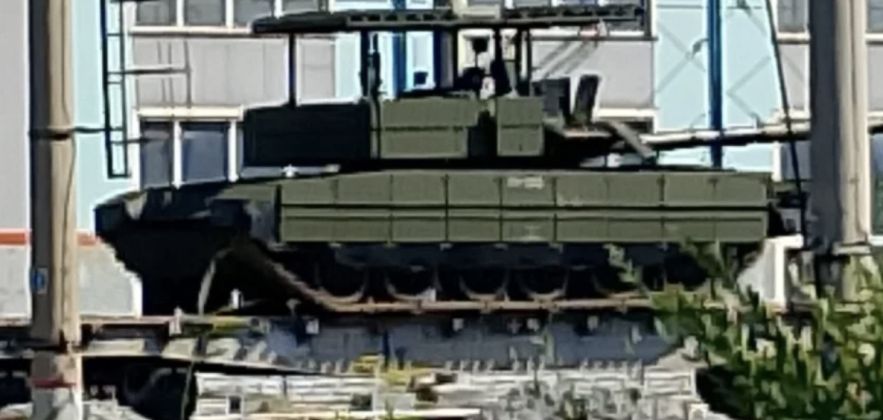
The most immediately noticeable feature of the new T-80 armour configuration is a redesigned turret-mounted anti-drone cage, commonly referred to by Russian troops as a "mangal" or "barbecue grill." Unlike the improvised steel structures that first appeared during the early stages of the war, the latest design appears to be more integrated into the vehicle, with a lower profile and improved coverage over the turret roof. Such structures are intended to defeat first-person-view (FPV) drones and loitering munitions by causing their shaped-charge warheads to detonate before striking the relatively thin upper armour of the turret. Although the effectiveness of these systems remains difficult to quantify and varies considerably depending on the type of munition employed, their continued evolution illustrates the degree to which drone threats have fundamentally reshaped armoured vehicle survivability requirements.
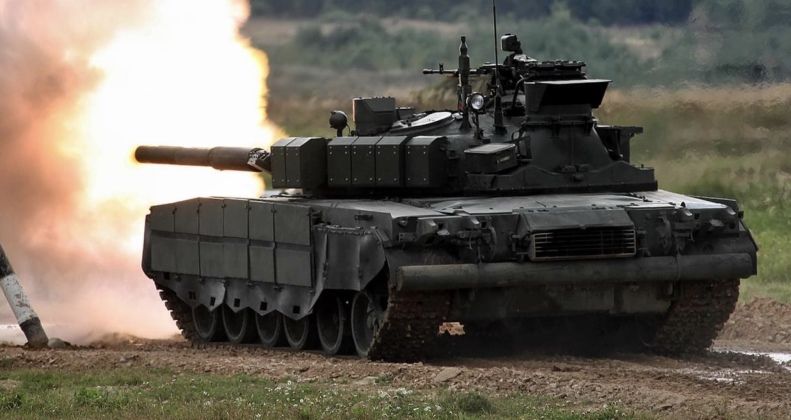
The vehicle also appears to feature an updated arrangement of explosive reactive armour (ERA) along the hull sides and turret. The T-80BVM already incorporates the Relikt ERA system introduced as part of the platform's modernisation programme, providing substantially greater protection than the older Kontakt-1 armour fitted to legacy T-80BV variants. The latest configuration appears to expand protected areas further, particularly around the side skirts and other sections that have proven vulnerable during combat in Ukraine. Together with the revised drone cage, the modifications suggest an effort to improve protection against both conventional anti-tank weapons and the increasingly ubiquitous threat posed by small unmanned aerial systems.
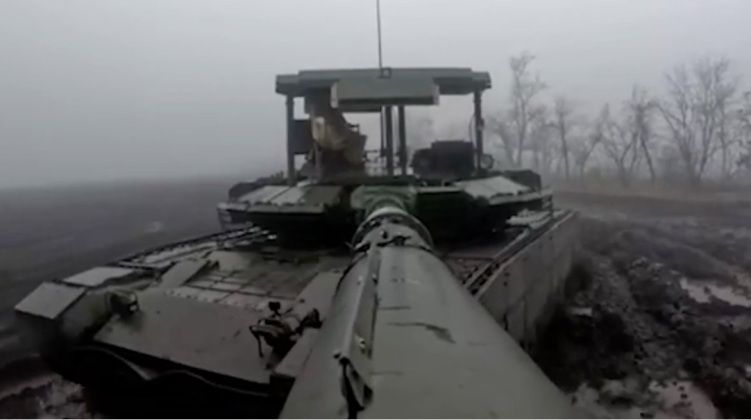
The redesign reflects the rapid evolution of armoured warfare during the conflict in Ukraine. Before 2022, most modern tanks were optimised primarily to withstand attacks from kinetic energy penetrators and anti-tank guided missiles approaching from the front or flanks. The widespread use of inexpensive FPV drones has transformed this threat environment by making the relatively thin roof armour of tanks a frequent point of attack. Both Russian and Ukrainian forces have responded by experimenting with a wide range of protective measures, from improvised steel cages to electronic warfare systems and additional armour packages. Designs that initially attracted ridicule as crude battlefield improvisations have gradually become more sophisticated as experience has accumulated, with manufacturers refining configurations based on operational feedback.
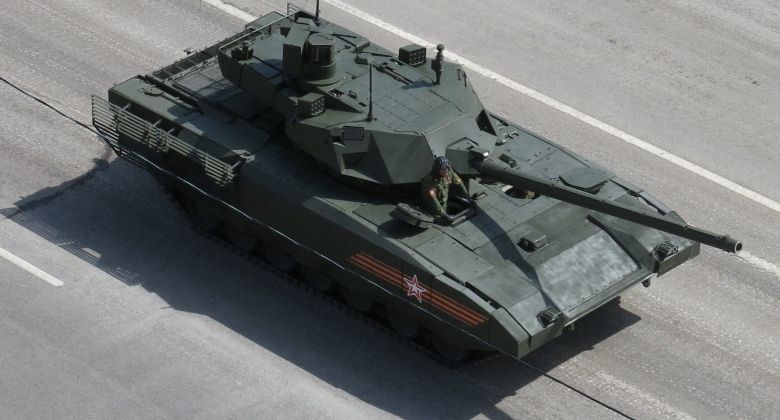
Russian tank producer Uralvagonzavod in July elaborated on ongoing efforts to modernise the T-80, observing that this “continues in all the military-technical aspects: firepower, protection, mobility and crew control. However, the final parameters of these upgrades remain beyond the framework of public disclosures. The main result should be the increased effectiveness of this armoured vehicle’s use.” The number of T-80BVM tanks in service has been expanded very considerably since the outbreak of full scale hostilities in the Ukrainian theatre, with only four units having been equipped with the vehicles in 2021, before this rose to 23 units in 2025. The type’s outstanding performance in the Ukrainian theatre is thought to have been a primary factor influencing the decision announced in September 2023 to restart production.
