
Russia Mi-28 and Ka-52 Attack Helicopters Filmed in Drone Defence Operations
Military Watch Magazine Editorial Staff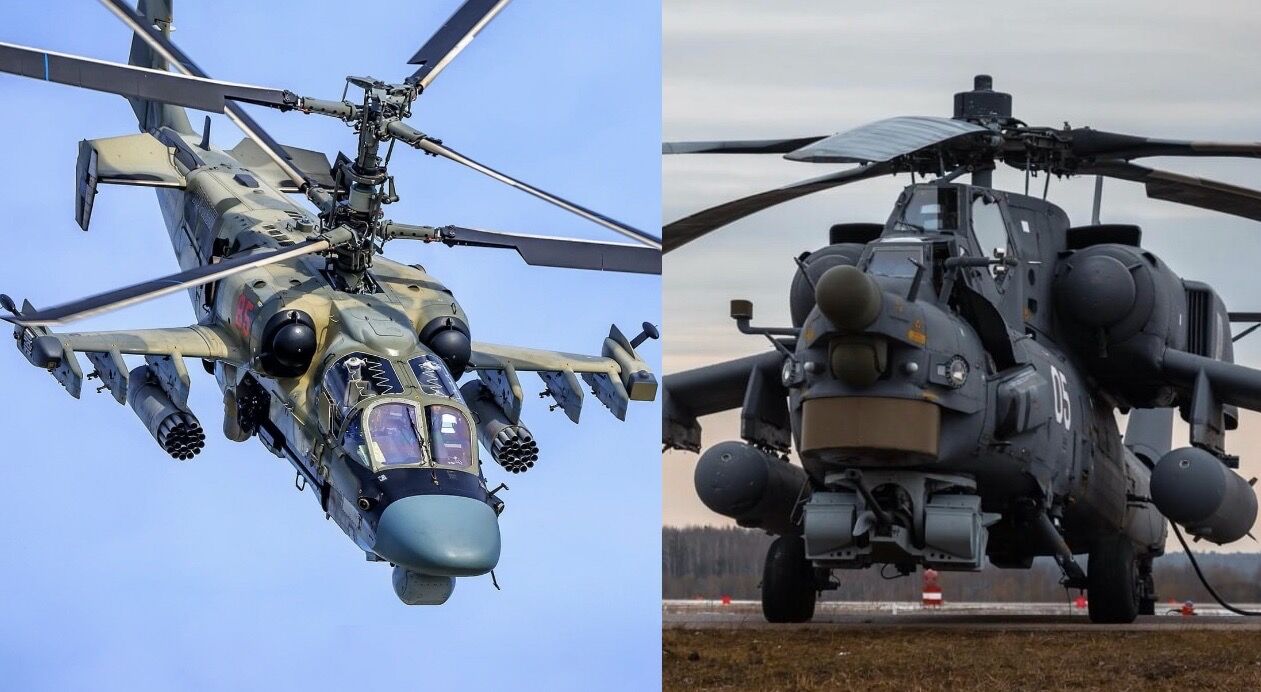
Ka-52 (left) and Mi-28 Attack Helicopters
New footage has shown the Russian Aerospace Forces’ two most capable attack helicopter types the Mi-28N/NM and Ka-52 being used to intercept Ukrainian FP-1 and MICH-2000 drones, following weeks of reports that they are serving as specialised air defence platforms. The Mi-28 was seen using its 2A42 30mm cannon for close-range engagements, supported by the OPS-28M multispectral electro-optical system and N025 mast-mounted radar. These sensors can detect low-RCS targets at ranges of up to 5 kilometres. The engagements highlighted the ability of the aircraft’s automated fire-control system to calculate lead angles to improve hit probability, thereby optimising the expenditure of ammunition.
The Ka-52 and Mi-28 were developed in parallel as successors to the Soviet Mi-24 attack helicopter, and began to enter service in significant numbers in the 2010s. The Ka-52 is a heavier and more costly helicopter design with a less conventional layout, and benefits from the integration of a significantly more powerful radar that is better optimised for detecting small drones against ground clutter. Both aircraft use the same 9M342 Igla-S and 9A1472 Vikhr-1 air-to-air missiles for beyond visual range air-to-air engagements to complement their cannons.
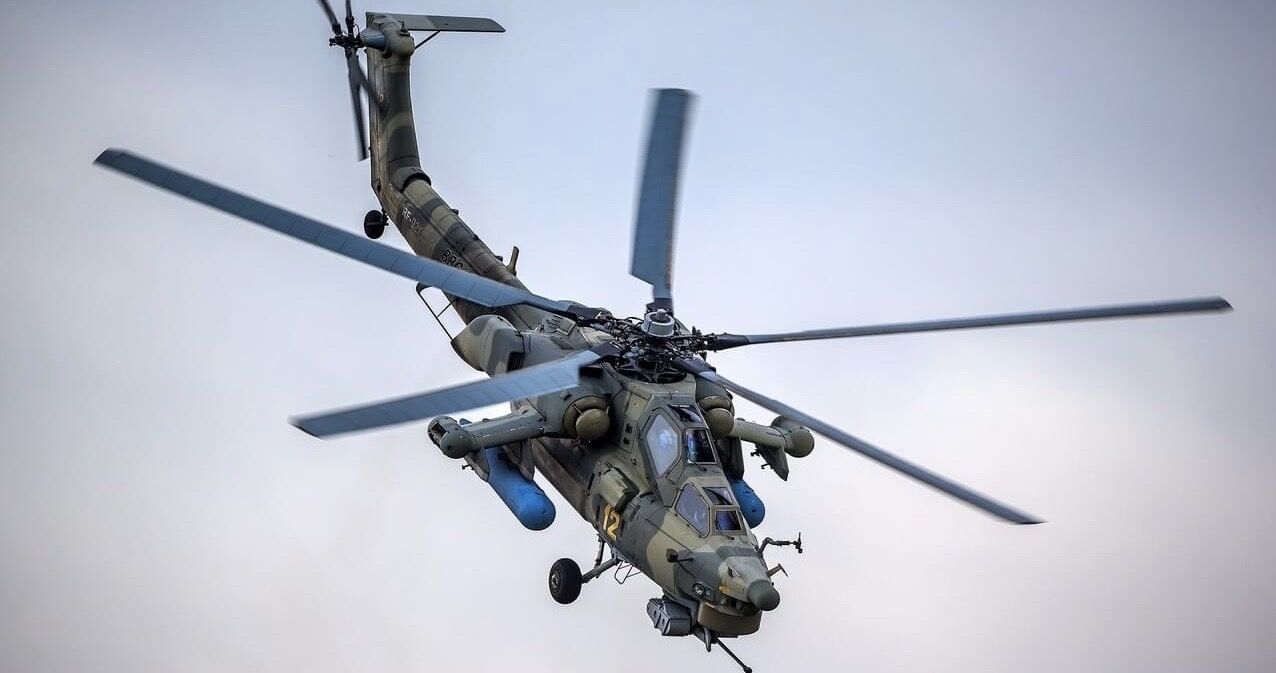
In June new footage confirmed that the Mi-28NM had been modified to enhance its performance in counter-drone roles, with new antenna housings in multiple locations across its airframe expected to provide a robust defence against drone attacks. The utility of attack helicopters serving as air defence platforms against drones and subsonic cruise missiles has recently been demonstrated in the Middle East, with the U.S. Army’s training for its own Apache attack helicopter units also increasingly emphasising counter-drone operations. Attack helicopters have a superior capability to loiter, and have far lower sustainment costs and maintenance needs than manned fighter aircraft, integrate precision guided rockets, and in the Mi-28’s case also an 30mm automatic cannon, that are well suited to counter-drone duties.
