
Russia Provided Key Intel to Help Iran Precisely Strike Secret CIA Stations - Reports
Military Watch Magazine Editorial Staff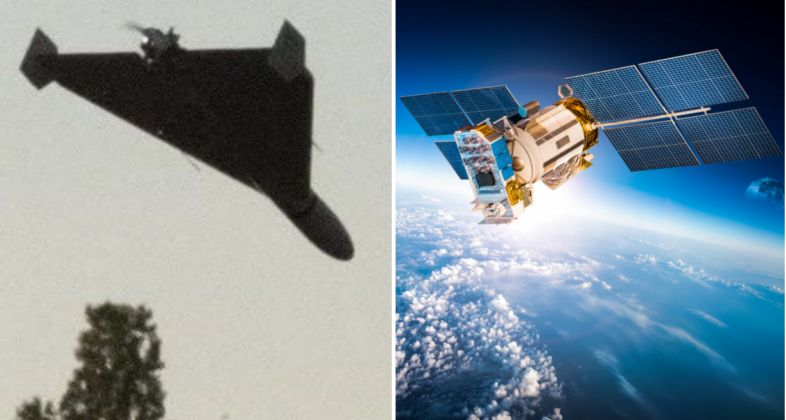
Reconnaissance Satellite (Artwork) and Shahed 136
The United States intelligence community is investigating how Iran was able to accurately target multiple covert Central Intelligence Agency (CIA) facilities during its recent military campaign, with officials having indicated a high possibility that sensitive targeting information was provided by Russia. The strikes have raised serious concerns within Washington regarding the security of some of the United States’ most closely guarded overseas intelligence installations and the possibility of unprecedented intelligence cooperation between Moscow and Tehran. The reports follow over four years of extensive sharing of targeting data with Ukraine by countries across the Western world to allow for strikes on high value Russian targets.
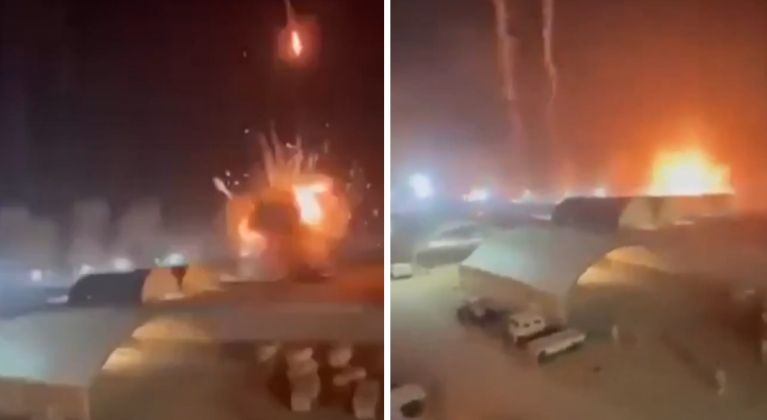
One of the most significant attacks on a CIA target occurred in March, when Iranian drones struck the U.S. Embassy compound in Riyadh, Saudi Arabia. Two drones targeted the CIA station located within the compound, with one blasting a hole through the building’s exterior, before a second drone flew through the opening and detonated inside, suggesting an exceptionally precise attack. Reuters also reported that a separate CIA facility in eastern Iraq was successfully struck, while U.S. officials speaking to Reuters having indicated that the total number of affected CIA sites was somewhere between “more than one and fewer than a dozen.” Current and former intelligence officials cited by Reuters stated that Iran would not normally be expected to possess sufficiently detailed information regarding the exact locations of these facilities, prompting investigators to examine whether external assistance was provided.
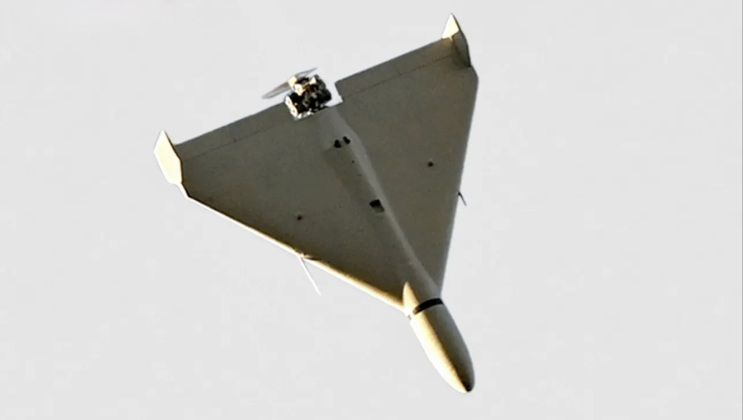
Analysts believe the Iranian drones employed against CIA targets may have benefited from Russian enhancements, namely access to a Russian satellite navigation system considered substantially more resistant to electronic jamming than the navigation capabilities previously available to Iran. Although investigators have not reached a definitive conclusion, Reuters cited former CIA officials as arguing that relatively few countries possess both the intelligence capabilities and strategic motivation to provide Tehran with such highly sensitive targeting data. The reported precision of the attacks has alarmed U.S. intelligence officials because the locations of overseas CIA stations are among the most highly classified pieces of information held by the U.S. government.
If confirmed, the successful targeting of covert CIA facilities would represent one of the most significant intelligence security breaches affecting U.S. overseas operations in recent decades. Intelligence stations embedded within American diplomatic compounds serve as critical hubs for human intelligence collection, counterterrorism operations, liaison with allied intelligence services, and regional covert activities. Damage to these facilities could disrupt intelligence collection across large areas of the Middle East while forcing the United States to reassess the security of similar installations elsewhere. While U.S. casualty counts in its war with Iran have been seriously questioned for multiple reasons, one reason has been that casualties among intelligence agencies and contractor groups have not been announced as part of total counts.
