
Russia Configures World’s Heaviest Fighter for Expanded Glide Bomb Strikes
Military Watch Magazine Editorial Staff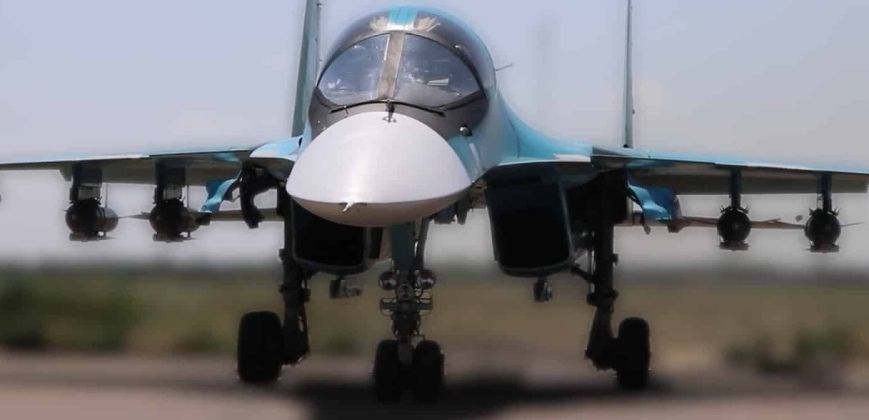
Su-34 with Four Glide Bombs
Russia has revealed new footage of a Su-34 strike fighter carrying four modified FAB-500T bombs fitted with upgraded Unified Gliding and Correction Module (UMPK) guidance and range-extension kits, highlighting a continuing evolution in the Russian Aerospace Forces' approach to launching beyond visual range strikes. The bombers integrated elongated UMPK modules that appear substantially different from earlier versions introduced in 2023, and may incorporate additional propulsion, potentially including a compact turbojet engine, allowing significantly greater ranges than previous glide bomb variants. The new design appears to represent the latest stage in Russia's effort to convert vast Cold War-era bomb stockpiles into precision-guided weapons.
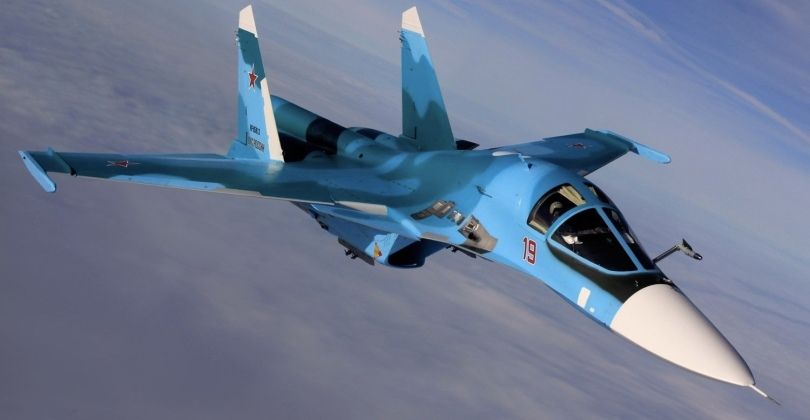
Russia's glide bomb program has for the past three years been one of the most important developments of the conflict in the Ukrainian theatre. Rather than relying exclusively on expensive purpose-built precision weapons, Russia has adopted a comparatively low-cost approach by fitting conventional FAB-series bombs with guidance modules, deployable wings and satellite navigation systems. This has enabled the Russian Aerospace Forces to deliver precision strikes at a fraction of the cost of dedicated cruise missiles while making use of enormous inherited Soviet bomb inventories.

The appearance of a Su-34 carrying four upgraded FAB-500T weapons also illustrates how the Russian Air Force has adapted its operational doctrine. Early in the conflict, Russian tactical aircraft frequently operated relatively close to the front line while employing conventional free-fall bombs. A shift toward stand-off employment, with aircraft releasing glide bombs from well outside the engagement envelopes of many air defence systems has been a leading contributor to reduced attrition rates in the fleet, allowing bombers to engage targets from extreme ranges, often over 70 kilometres away from their targets.
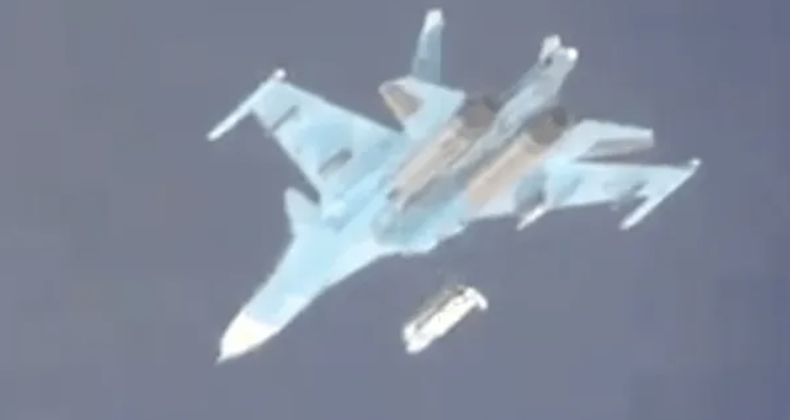
The first unified gliding and correction modules allowed bombs to travel 40-50 kilometres when dropped from altitudes of 10-12,000 meters, before this range was later increased to 80 kilometres. In October 2025 the deputy head of Ukraine’s Main Directorate of Intelligence Vadim Skibitsky revealed that a new type of glide bomb had demonstrated a range of 193 kilometres. He stressed that this could fundamentally alter the dynamics on the frontlines, and was a game changer for the ability of aviation assets to launch low cost mass strikes on targets far deeper behind the frontlines. The bomb referred to appeared to be a recently unveiled design with a rocket engine. Although more costly than a traditional glide bomb, this rocket powered bomb is estimated to have still cost just a small faction as much as a cruise missile capable of delivering a similar payload across a comparable range.
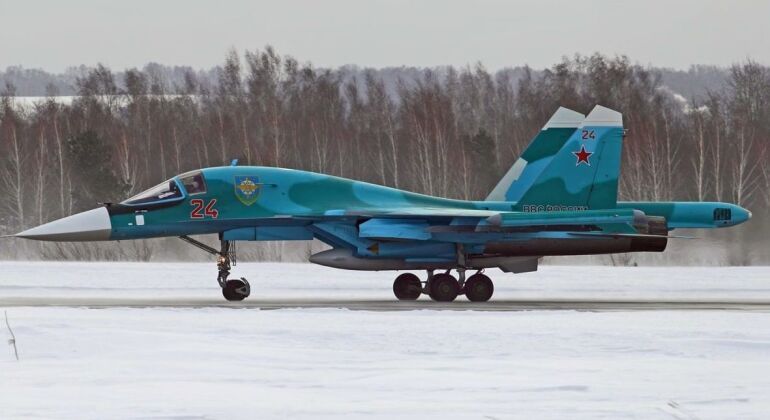
The UMPK functions similarly to the American JDAM-ER concept by transforming unguided bombs into precision glide weapons. Russia's glide bomb program has expanded well beyond the original FAB-500. 500 kilogram bombs, with UMPK kits having been adapted for heavier FAB-1500 and FAB-3000 bombs, significantly increasing destructive power while retaining precision guidance. These heavier weapons have proven particularly effective against hardened fortifications and underground facilities, combining the explosive power of large conventional bombs with the accuracy of modern guided munitions.
