
Russia Builds Forward Infrastructure For Strategic Nuclear Deterrent in Belarus as Oreshnik Missiles Deploy
Military Watch Magazine Editorial Staff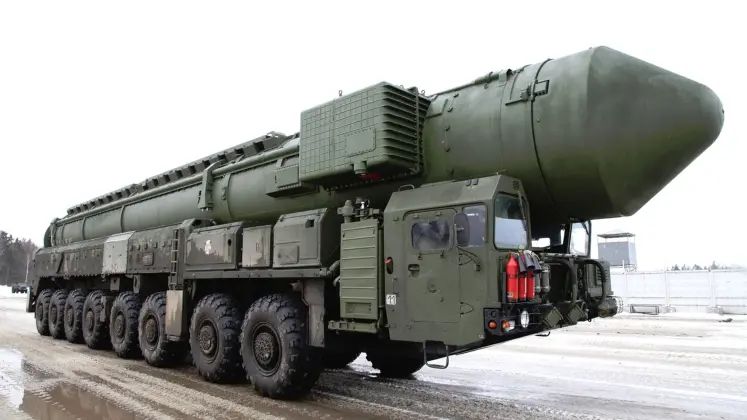
Topol Intercontinental Range Ballistic Missile
The Russian Armed Forces have begun construction of strategic missile facilities at multiple locations in Belarus, which are intended to host Oreshnik intermediate range nuclear-capable ballistic missiles that are currently beginning to be brought into frontline service. Satellite imagery indicates a likely deployment at the former Krichev-6 aerodrome in eastern Belarus, approximately five kilometres from the Russian border, with construction at the former Krichev-6 airfield having begun in early August 2025 as existing civilian structure have been removed, and a dedicated railhead and secure facilities have been built. Krichev-6 appears set to host a smaller battalion-sized element of two to three launchers, rather than a full regiment. Analysts affiliated with Middlebury College assessing existing commercial satellite imagery have indicated that a number of other sites may also be being prepared to host the missiles.
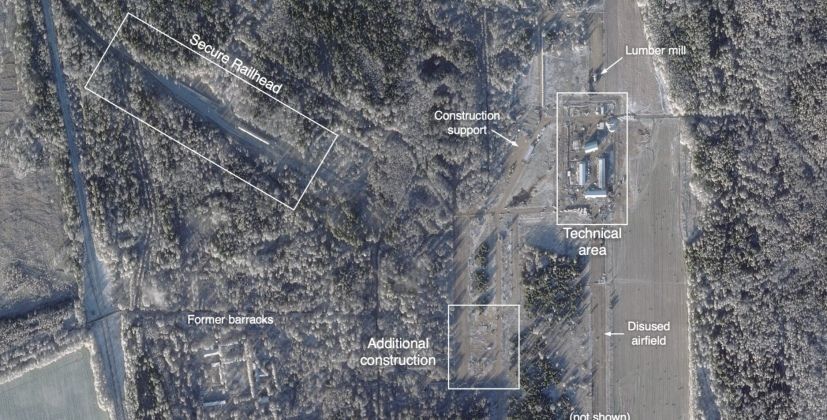
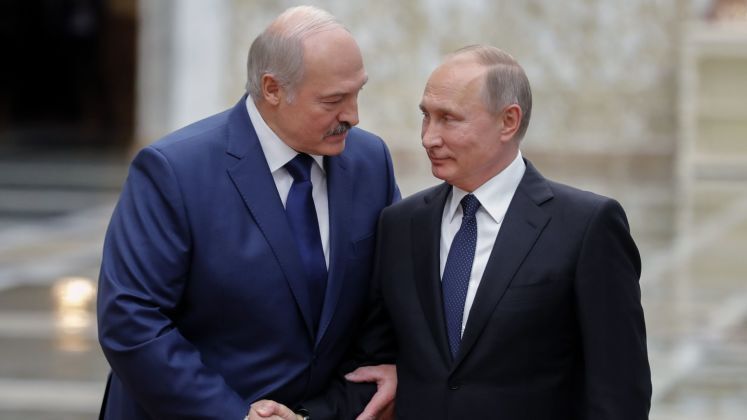
Signs of the construction of new facilities follow a statement by Belarusian President Aleksandr Lukashenko on December 22 confirming that his country had received up to ten Oreshnik intermediate range hypersonic ballistic missile systems. Ukrainian President Volodymyr Zelenskyy similarly observed: “The relocation of the Oreshnik system to the territory of Belarus is nearing completion. We understand where it will be deployed,” although he did not name the location. Speaking five days prior on December 17, President Lukashenko elaborated regarding planned deployment locations: “We never stationed Oreshnik in or around Slutsk… We deployed it where it is more advantageous, but I will not speak about that… The first positions have been prepared for the Oreshnik missile system. We have had it since yesterday, and it is going on combat duty before the end of the year.”
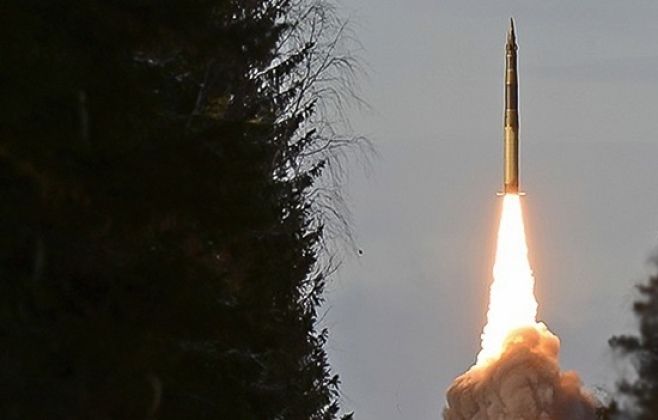
As early as December 2021, President Lukashenko indicated that his country could host Russian nuclear weapons, and that his country’s nuclear weapons infrastructure inherited from the Soviet Union had been preserved. "Why did I become an enemy for the West? Not because I am a dictator. Because all the sites on which Topol [missiles] stood, except one, are completely preserved and are still ready for use," he stated. He further elaborated that former Russian President Boris Yeltsin had in the 1990s sought to press for the destruction of launching facilities in Belarus as Moscow was itself under pressure from the United States. "I said no. But when the pressure was extreme so that you know, I can prove and show it, we blew up one site, it was in the forest, the sites are not just 10 centimetres there, it is very big [area].” Belarus’ Soviet era strategic nuclear infrastructure is expected to play a key role in allowing it to integrate the new arsenal more quickly.
Although a number of conventionally armed Oreshnik systems are expected to be fully controlled by the Belarusian Armed Forces, others with nuclear warheads will remain under Russian control in peacetime under the two countries’ nuclear sharing agreement. The State Secretary of the Union State of Russia and Belarus, Dmitry Mezentsev, described the deployment of the missiles as “a guarantee of the Union State’s security. Today, Russia and Belarus are forced to respond to unprecedented foreign pressure.” The Oreshnik was first fired in combat on November 21, 2024, against Ukrainian targets, at which time the program’s existence was announced to the world, and it was confirmed in June 2025 to have entered serial production.

The Oreshnik is estimated to have a 4000 kilometre range while carrying multiple independently re-targetable warheads mounted on hypersonic reentry vehicles, which can manoeuvre and approach targets from unexpected directions. Its combination of range and advanced generative capabilities place targets across Europe within reach, with forward deployments in Belarus allowing for engagements of targets further West and deep into the Atlantic. The missile provides a means of launching tactical nuclear strikes on key targets across continental Europe, including key command centres and military bases, which could allow Russia and Belarus to counter the conventional forces of collective NATO forces. The missile is the first with an intermediate range to have been developed in Russia since the Soviet era.
