
Russia Enhances Navy’s 3M14 Kalibr Missiles Based On Operational Experience in Syria
Military Watch Magazine Editorial Staff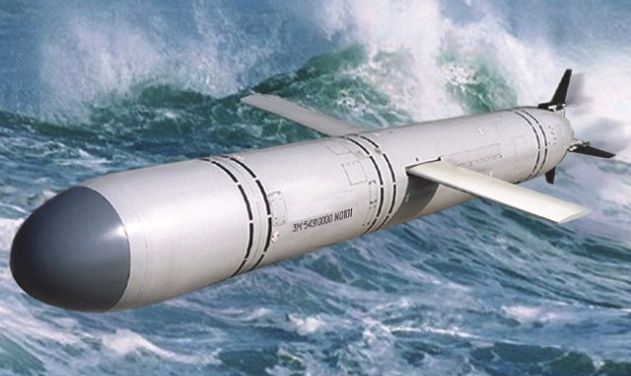
Kalibr Cruise Missile - artwork
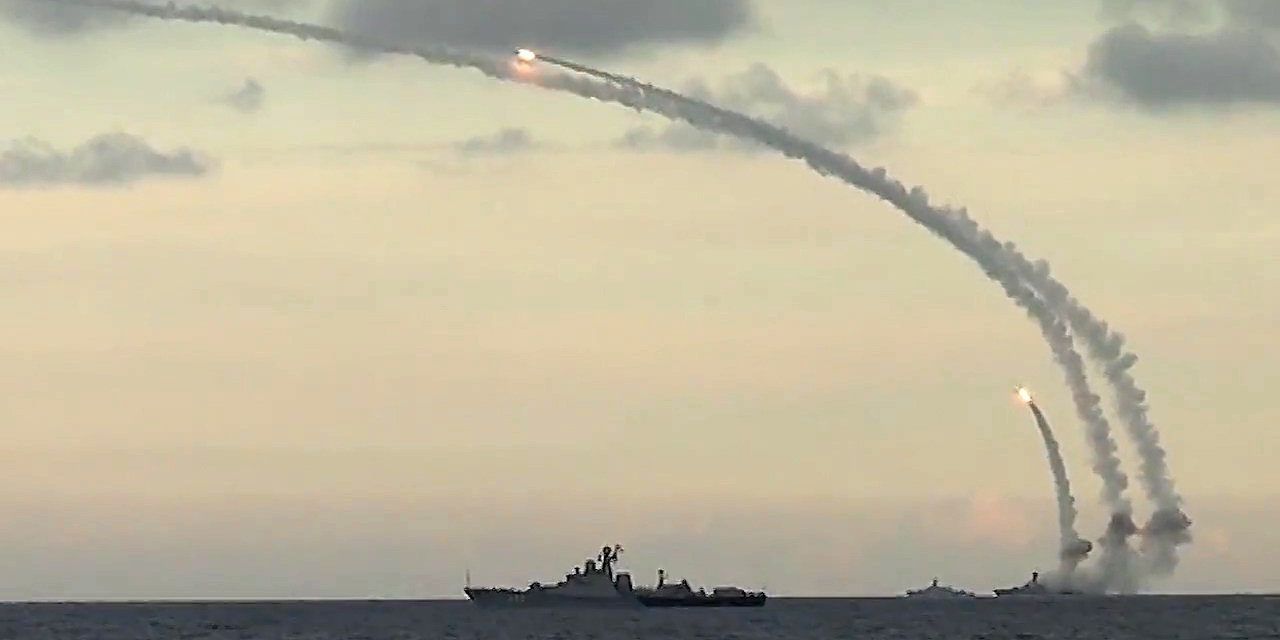
The 3M14 Kalibr cruise missile has provided the submarines and surface vessels of the Russian Navy with some of the most sophisticated precision land attack capabilities in the world. Unlike the 3M54, a platform capable of approaching speeds of Mach 3 and relied on to neutralise enemy warships, the 3M14 is subsonic but has a considerably longer range of over 2500km. The relatively low cost missile is deployed in large numbers by Russian warships - with plans being considered to outfit Typhoon Class submarines with up to 200 of these high end munitions and planned future destroyers of the Shkval Class set to deploy a similar number at maximum capacity. The Kalibr was one of several new weapons systems tested in the Syrian theatre against Islamist militant groups, and alongside the bomber launched Kh-101 was one of the most prolific missile types to make its debut. The first deployment came just a month after the country’s intervention in the country in support of Syrian forces, and invovled a Byuan-M Class corvette launch 26 missiles from the Caspian See through Iraqi and Iranian airspace to strike jihadist targets in Raqqa, Idlib and Aleppo - the first under Islamic State control and the latter two under Al Qaeda linked groups. Two more launches occurred that year, one in November of 18 missiles from other Russian surface vessels and one in early December from an Improved Kilo Class submarine in the Mediterranean.
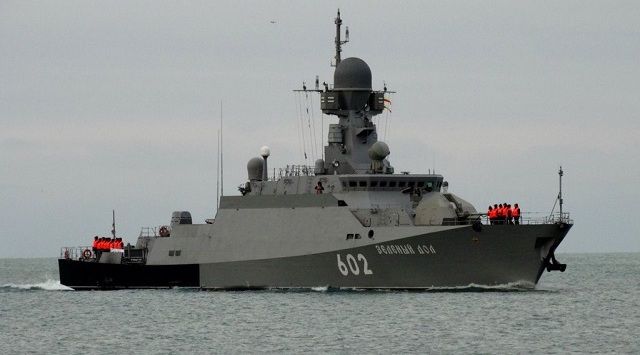
Russia has reportedly improved the design of the Kalibr based on experience operating in the Syrian theatre. While the country has not employed the missiles in almost two years since February 2018, with capabilities fully tested and the vast majority of jihadist targets already neutralised lessons from the conflict led to requests to modify the design. Specifically, the targeting system on both surface and submarine launched variants of the 3M14 have been improved to allow them to better carry out time sensitive attacks. Defence Minister Sergei Shoigu shed light on this upgrade program on September 22nd, stating: “If we talk about the use of precision weapons, for example, [previously] loading a flight mission into the Kalibr cruise missile took so much time that the target could go [away]… and today the loading time for a Kalibr flight mission has decreased, I emphasise, by a multiple, and this work to reduce the time it takes to transmit target designations is ongoing.” Further elaborating on the improvements, the Defence Minister stated: "Based on the results of this work, [President Vladimir Putin] gave direct orders to refine or improve certain characteristics of some weapons. So it was with our Kalibr cruise missiles, the armament of long-range aviation and submarines. As a result of the hostilities in Syria, we naturally had a great debriefing, and not one, not ten. I can tell you that about 300 types of weapons were finalised taking into account the Syrian experience.”
A number of other weapons systems, including Russia's Su-35 air superiority fighter which made their debut in the conflict, are confirmed to have been upgraded based on combat experience. The Kalibr itself is set to be developed into a ground based variant, an effort reportedly currently underway due to the U.S. withdrawal from the INF Treaty which banned deployment of tactical ground based missiles with ranges of over 500km. While the 3M14 Kalibr only began to enter service in large numbers in the 2010s, the Russian Navy is set to begin deployment of a more capable cruise missile class by the mid 2020s. The Zircon cruise missile will not only have a greater range, but will be able to strike targets at high hypersonic speeds approaching Mach 9. The missile will reportedly be deployed in both anti-ship and land attack variants, although it is expected to be considerably more costly than the Kalibr with the older missiles set to remain in production alongside it.
