
Footage Shows New Russian Airborne Electronic Warfare Station Designed for Defence Against Drone Strikes
Military Watch Magazine Editorial Staff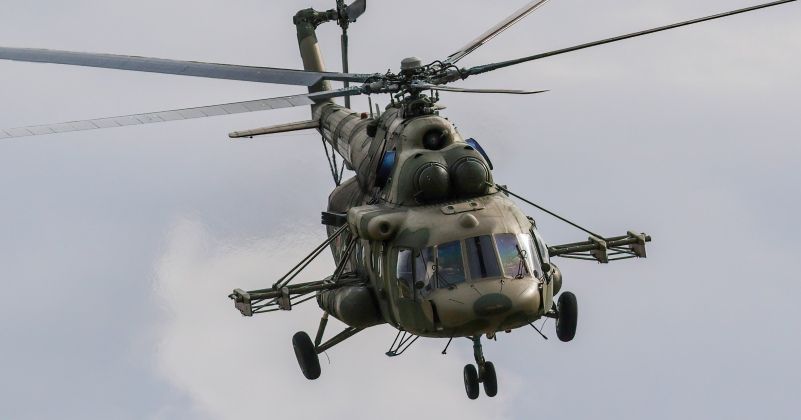
Mi-8 Helicopter
The Russian Army has begun to field a new airborne electronic warfare variant of its Mi-8 transport helicopter, adapting the platform into a dedicated flying jammer that appears intended to disrupt Ukrainian long-range strike drones. The modified Mi-8 has been fitted with what appear to be multiple electronic warfare antennas designed to interfere with the satellite navigation and communications systems used by long-range unmanned aircraft. Rather than destroying drones through kinetic means, the helicopter is intended to prevent them from accurately navigating toward their targets by degrading or denying GPS and other satellite navigation signals over wide areas.

Unlike conventional ground-based electronic warfare systems, mounting jamming equipment aboard a helicopter provides several important operational advantages. Operating at altitude significantly increases line-of-sight coverage, allowing the aircraft to project electronic interference across much larger areas than vehicle-mounted systems constrained by terrain. The helicopter can also rapidly reposition to protect different regions as intelligence identifies new drone attack routes, providing a flexible layer of defence that can accompany high-value military assets or reinforce vulnerable sectors of Russia's air defence network.
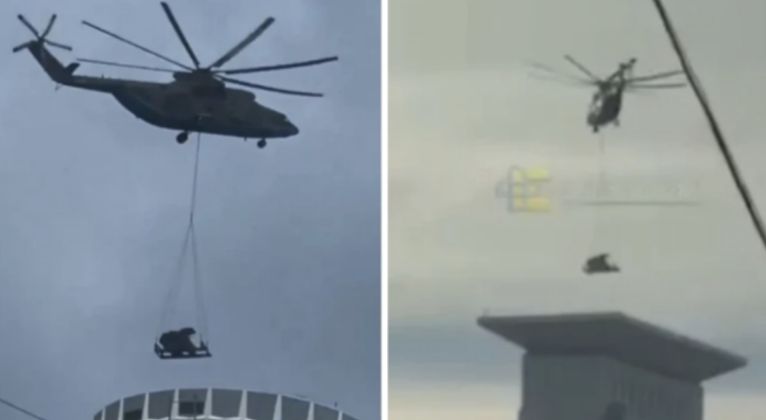
The development of the new Mi-8 variant illustrates how the widespread employment of long-range unmanned aircraft has transformed the character of the war. Ukrainian forces have increasingly relied on domestically produced strike drones capable of attacking targets hundreds or even thousands of kilometres behind the front lines. Oil refineries, ammunition depots, logistics hubs, aircraft factories, air bases, and strategic bomber facilities have all come under repeated attack, forcing Russia to devote growing resources to protecting infrastructure previously considered relatively secure.
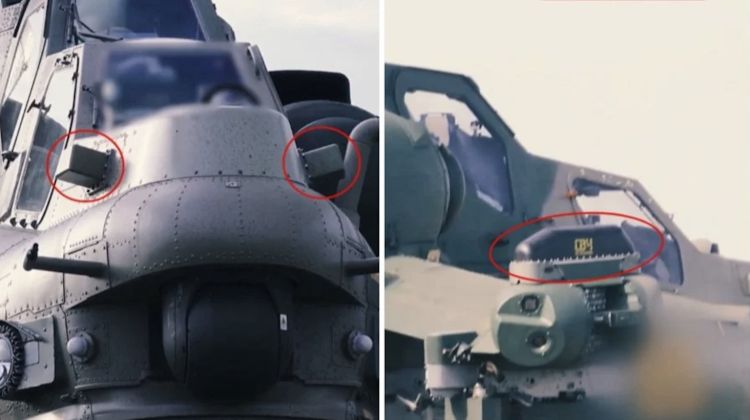
The Mi-8 modification reflects Russia's preference for adapting proven Soviet-era platforms rather than developing entirely new aircraft for specialised missions. More than 12,000 Mi-8 helicopters have been produced since the type entered service, making it one of the most numerous military helicopter families ever built. Hundreds remain in Russian service across the Aerospace Forces, Army Aviation, Rosgvardia, the Border Guard Service, and other government agencies, providing a large fleet that can be modified relatively quickly to meet emerging operational requirements. Russia’s defence sector has made broader efforts to enhance its aircraft’s electronic warfare systems, with footage of upgraded Mi-28NM attack helicopters in June appearing to show the integration of new counter-drone electronic warfare systems.
