
Russia Deploys Rare MiG-35 Fighters for Low Cost Air Defence Against Ukrainain Drones
Military Watch Magazine Editorial Staff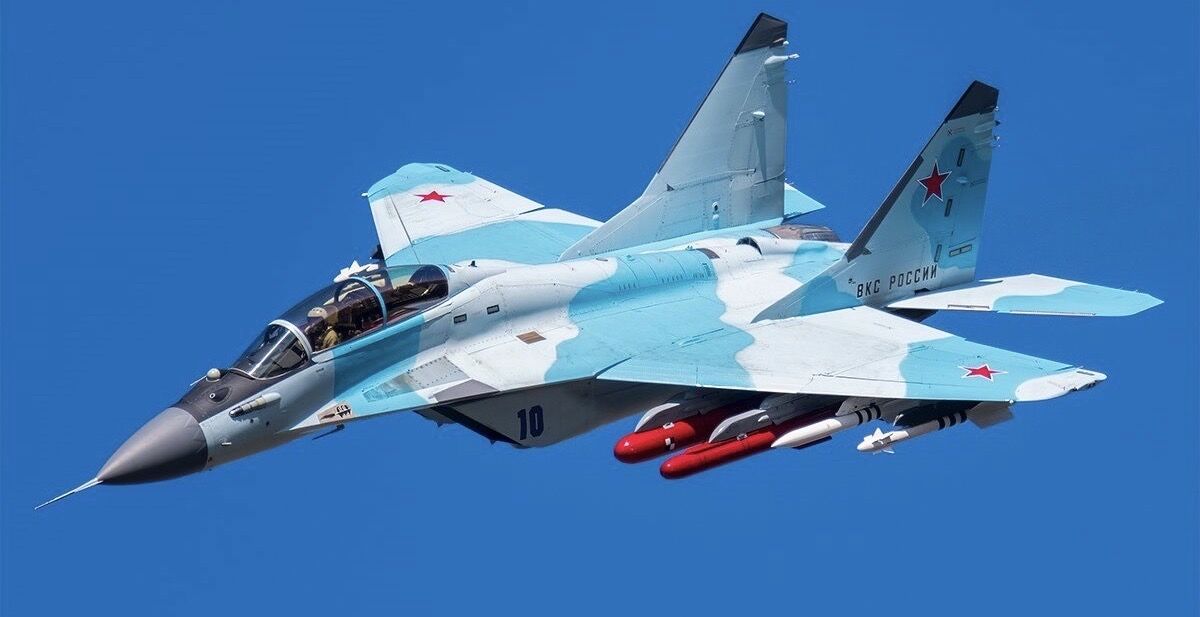
Russian Aerospace Forces MiG-35 Fighter
The Russian Aerospace Forces have begun using MiG-35 fighters to intercept Ukrainian long-range unmanned aerial vehicles attacking targets deep inside Russian territory. According to a report published by Ukrainian defence outlet Defense Express in late October, the deployment was highlighted by an image shared by the aviation-focused Soniashnyk open-source intelligence community, reportedly taken from inside a Russian MiG-35 cockpit during a mission to counter Ukrainian drones. With only six of the aircraft believed to have been produced, their reported use in homeland air defence illustrates the growing demands Ukrainian long-range strikes are placing on Russian military resources.
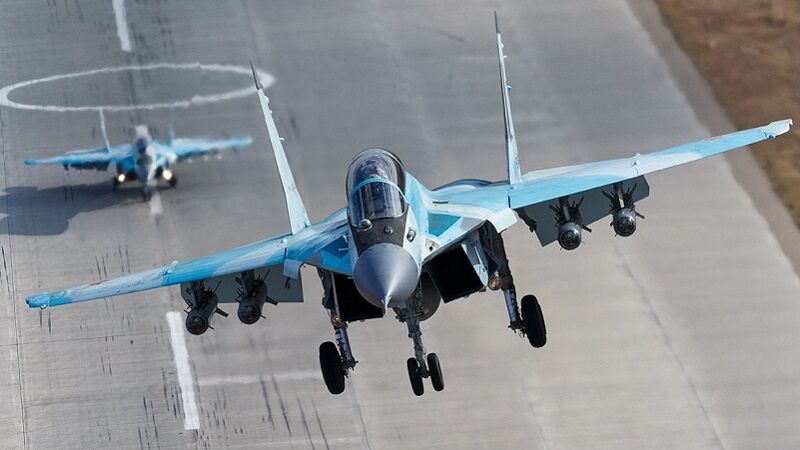
The MiG-35 has the lowest sustainment costs of any fighter type in Russian service, reflecting the fact that the aircraft are considerably smaller than the Su-30, Su-34 and Su-35 fighters that form the backbone of the fleet. With these heavier fighter types all being derivatives of the Soviet Su-27 heavyweight air superiority fighter, the MiG-35 was developed in parallel as a derivative of the MiG-29 medium weight fighter, which while having a much smaller radar and more limited weapons payload, also requires much less maintenance and is considerably less costly to operate. The MiG-35 was developed primarily for export, but has gained no orders in large part due to competition from the more advanced Chinese J-10C fighter. Limited domestic demand as reflected the fact that doctrine in post-Soviet Russia has deprioritised the fielding of medium or lightweight combat jets.

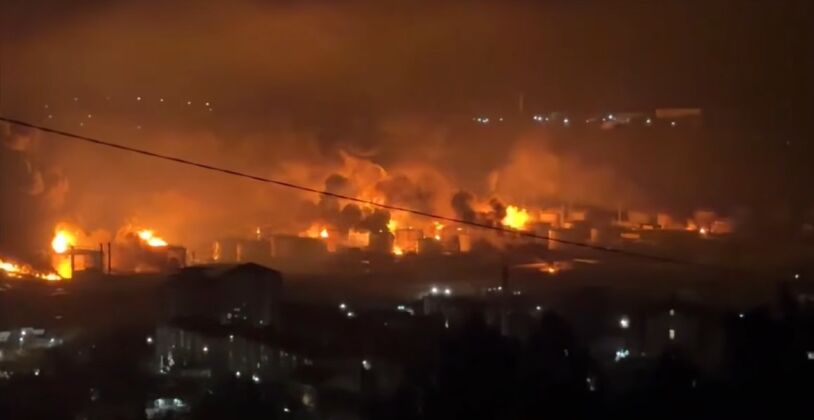
The MiG-35’s deployment has occurred as Ukraine continues to expand its long-range drone campaign against Russian military installations, airfields, industrial facilities, oil refineries and other strategic targets. Ukrainian unmanned aircraft have repeatedly penetrated Russian airspace to strike targets far from the front lines, forcing Moscow to distribute air defence resources across a vast territory. The resulting demands extend beyond surface-to-air missile systems, with fighter aircraft, radar networks, electronic warfare systems and mobile air defence teams all contributing to the effort to detect and intercept incoming drones. Fighter aircraft can offer advantages when countering long-range drones, particularly when targets are detected far from defended installations. Their speed allows them to cover large distances quickly, while onboard sensors and air-to-air weapons can provide another layer of interception capability alongside ground-based defences.
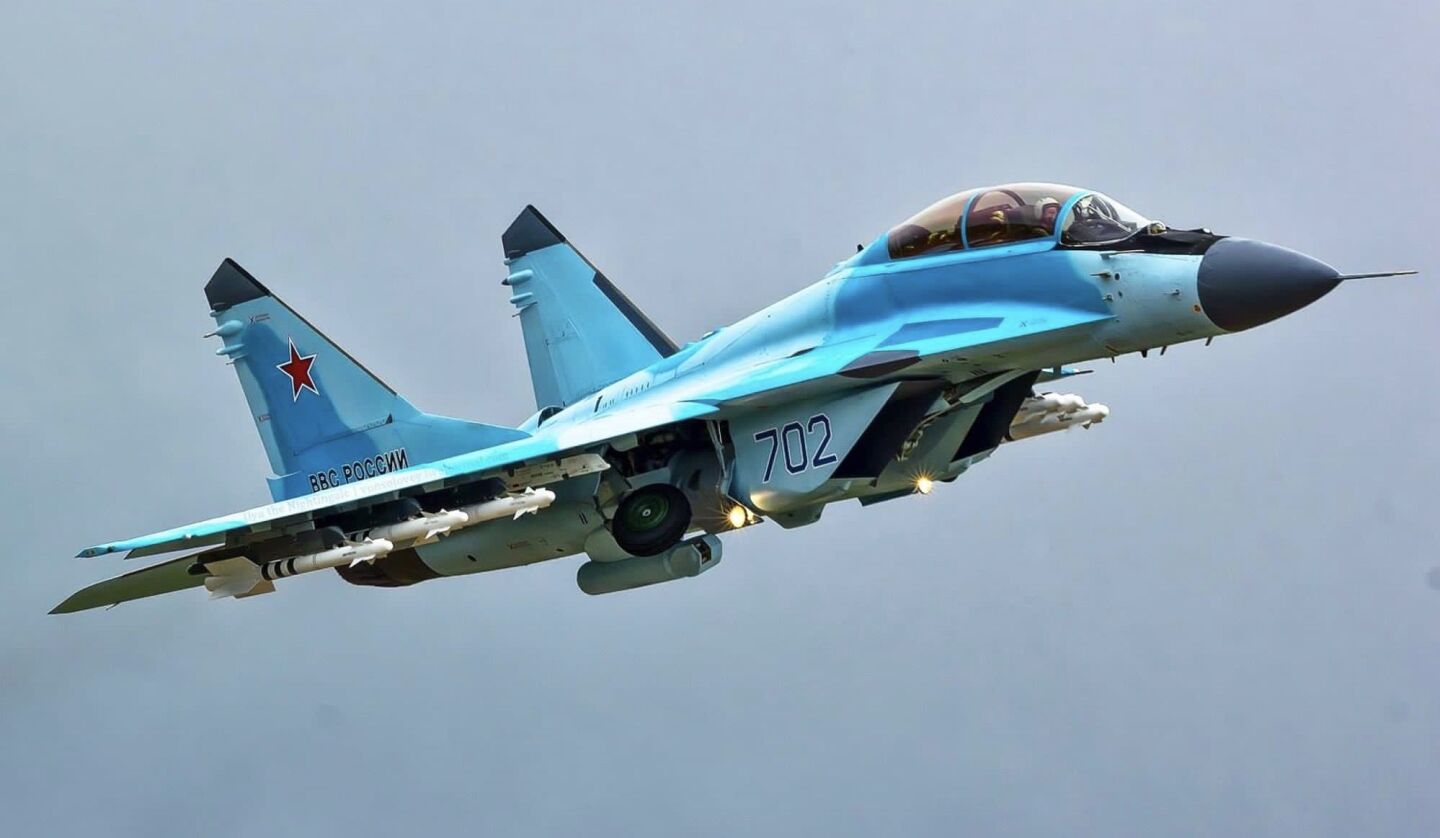
Employing advanced fighters against comparatively inexpensive unmanned aircraft can create an unfavourable cost exchange, particularly if expensive guided missiles are required to destroy individual drones. The effectiveness of this approach also depends on the ability to detect relatively small targets flying at low altitudes and to engage them without exposing the aircraft to unnecessary risks. The MiG-35’s mounting of onboard cannon and compatibility with gun pods, combined with its very high manoeuvrability and low sustainment costs, makes it a potentially optimal fighter for such operations. Although older MiG-29s are widely in service, they cost considerably more to operate and require more maintenance than the MiG-35 due to their less efficient Soviet era designs.
The Russian Aerospace Forces have deployed A-50U airborne early warning and control (AEW&C) systems to provide support to missile defence efforts, in particular to help intercept FP-5 Flamingo cruise missile strikes against high value strategic targets. This gained particular attention after Russian air defences in shot down more than five of the missiles in the early hours of June 5. It remains highly possible that the MiG-35 could be integrated with such operations, with support from the A-50’s powerful airborne radar potentially compensating for the limited power of the fighters’ own onboard sensors. It is likely that Russian government-linked sources will seek to publicise the MiG-35’s combat successes as part of renewed efforts to market the fighter type for export.
