
Russia’s Most Advanced Fighter Begins Operations in New Air-to-Air Combat Configuration
Military Watch Magazine Editorial Staff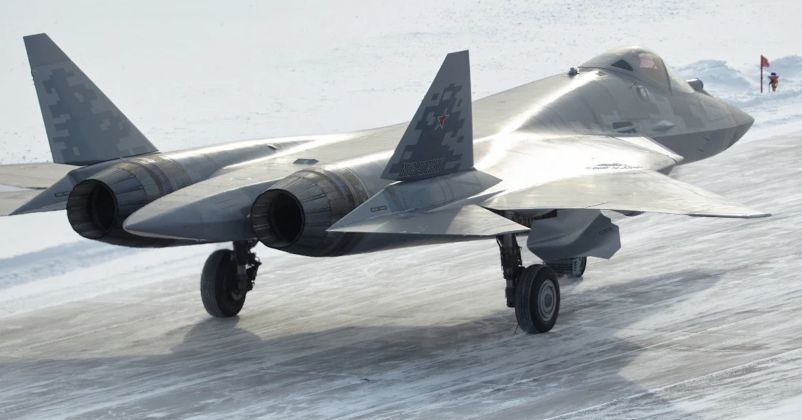
Su-57 Fighter Delivered to the Russian Aerospace Forces in February 2025
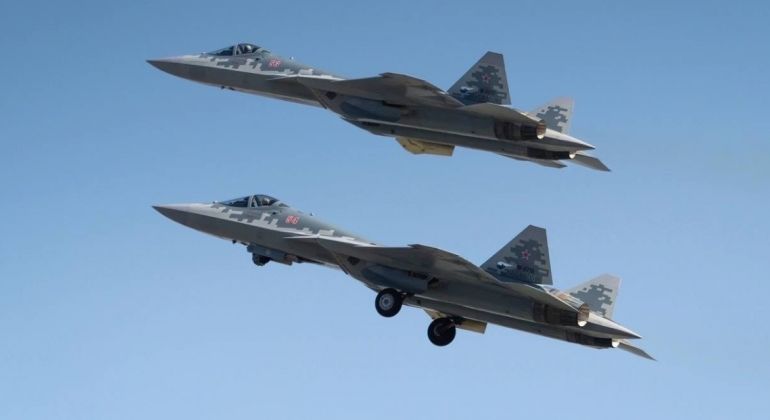
New footage has shown the Russian Su-57 fifth generation fighter in a new air-to-air combat configuration, the purpose of which remains uncertain. The fighter is the sole type of its generation to have been produced outside the U.S. and China, and has been more intensively combat tested than its foreign rivals due to its important role in the Russian-Ukrainian War. The fighter was seen with two R-73/74 short-range infrared-guided air-to-air missiles mounted beneath its wings, together with what appears to be a previously unseen targeting pod beneath the left engine nacelle. This differs from the aircraft's normal configuration, since the Su-57 was specifically designed to carry such weapons internally to preserve its low observable characteristics. While this may represent a test configuration or weapons evaluation, another possibility is that it is intended to expand the fighter’s firepower with further missiles carried internally.
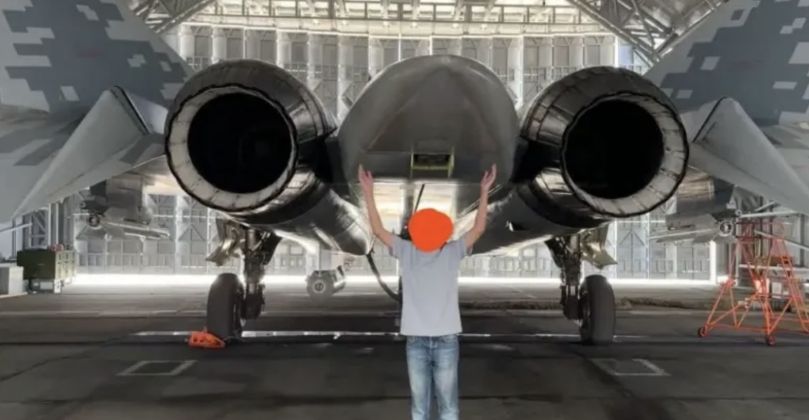
The article places the photographs in the broader context of Ukraine's steadily expanding long-range strike campaign against targets deep inside Russia. Ukrainian single use attack drones and increasingly capable cruise missiles have reached military airfields, oil refineries, missile factories and infrastructure hundreds of kilometres from the front. One of the most significant examples occurred in June 2024, when Ukrainian drones reportedly damaged or destroyed a Su-57 at Akhtubinsk Air Base, highlighting the vulnerability of Russia's most valuable aircraft even at rear-area bases. Since then, Russia has accelerated construction of hardened aircraft shelters and strengthened local air defences around important installations.
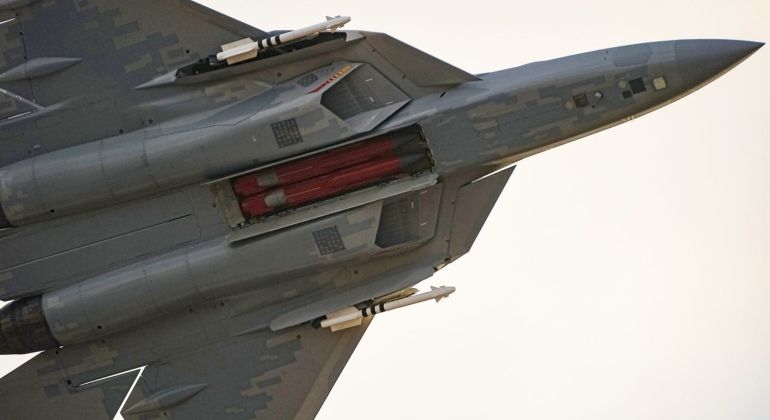
Like all fifth generation fighters, the Su-57 was specifically designed to carry missiles internally to preserve its low observable characteristics, with external weapons carriage making the aircraft significantly less challenging to detect, track, and target at range. When configured to preserve its stealth capabilities, Su-57s are the only fighters known to have operated in heavily defended Ukrainian airspace, indicating confidence in their survivability. External carriage of missiles and pods suggests that the aircraft are operating far from hostile territory, either to launch cruise missile strikes or, more likely, for air defence duties. The carriage of the R-73/74, rather than radar guided missiles such as the R-77-1, is nevertheless unusual, and may indicate that the fighters are being deployed against lower value targets such as unmanned aircraft.
The previously unseen pod mounted beneath the Su-57’s left engine nacelle may be a derivative of the 101KS-N navigation and targeting pod, but has noticeable external differences, raising the possibility that it represents either an improved version or a specialised variant optimised for air-to-air target identification. While originally intended for air-to-ground missions, targeting pods have become increasingly useful for visually identifying drones and cruise missiles at long range, supplementing radar and infrared sensors. The combination of infrared guided air-to-air missiles and a targeting pod is particularly unusual, especially for a fifth generation fighter as such aircraft usually integrate sufficiently advanced avionics that they do not require external pods.
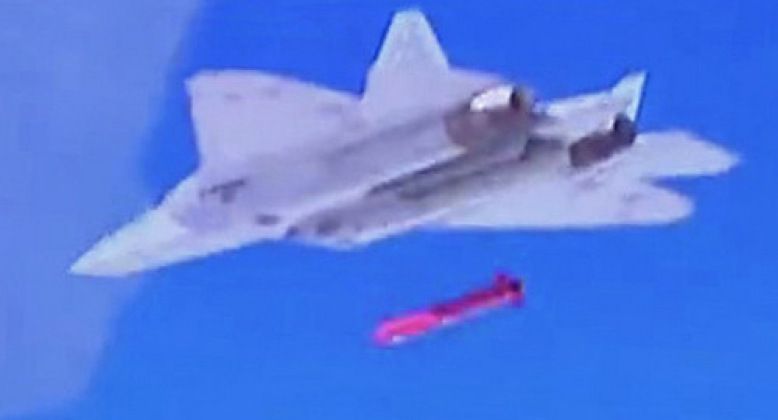
The scope of the Su-57’s operations in the Ukrainian theatre have remained significant, and included air defence suppression, air to air combat, and operations in heavily defended enemy airspace, as well as a range of precision strike missions using missiles carried both internally and externally. It was previously reported by Ukrainian sources in May 2024, and again in September that year, that Su-57 units had intensified their strikes on the country, with reports in August 2025 indicating that these operations had expanded to include whole formations of the aircraft. While it is significantly more advanced, the Su-57 is also considerably more complex than other Russian fighter types, with a flyaway cost well over double that of the Su-35S and close to triple that of the Su-30SM despite its similar size and use of a common engine type with the former.
