
Republic of China Air Force’s Urgently Needed T-5 Brave Eagle Fighters Face Major Delivery Delays
Military Watch Magazine Editorial Staff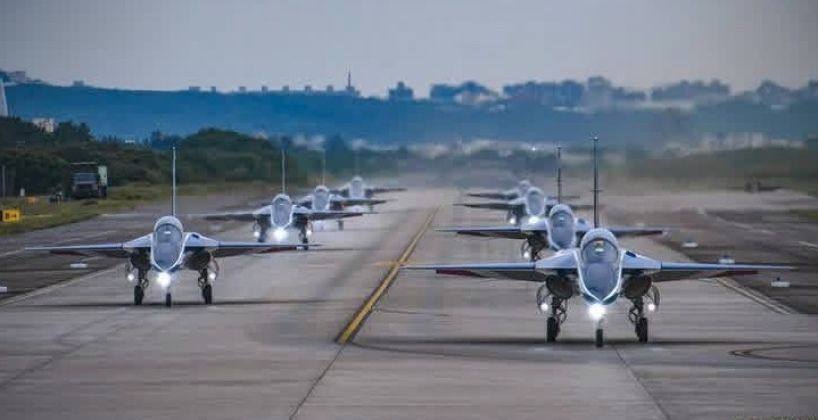
T-5 Brave Eagle Fighters
The production of the T-5 Brave Eagle fighters for the Republic of China Air Force has fallen further behind schedule, with 11 of the aircraft currently overdue for delivery. According to the domestic aircraft manufacturing schedule, the Taipei-based Aerospace Industrial Development Corporation is obliged supply 66 Brave Eagles, with a delivery schedule of two fighters in 2021, eight in 2022, 17 in 2023, 18 in 2024, 18 in 2025, and three in 2026. A written report submitted by the Republic of China Ministry of National Defence to the Legislative Yuan in February 2025 indicated that the Air Force should have received 18 aircraft in 2025, plus the two overdue from 2024, of which only 30 percent, or a total of six aircraft, have been received. Delivery of the Brave Eagle is thus confirmed to have begun to fall behind schedule in 2024, with the shortfall worsening significantly in 2025.
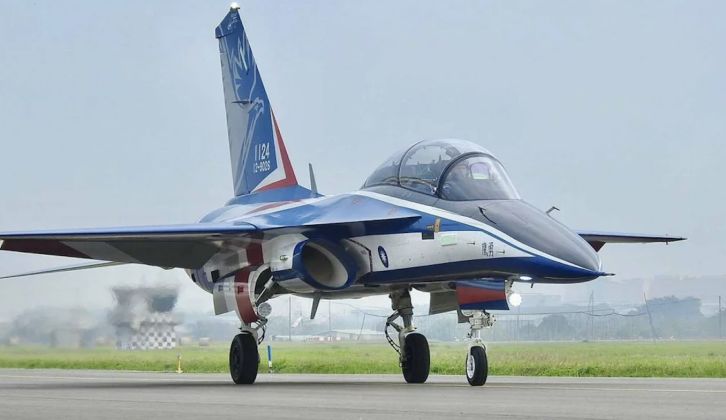
In early July 2025 the Republic of China Air Force retired its last F-5F fighter aircraft and RF-5E reconnaissance planes from active service, marking a final end to the lightweight combat jet’s 60 year long service in China, and a significant step towards its retirement globally. The fighters equipped one of the six squadrons within the Air Force, with the Brave Eagle having been intended to serve as a successor in both training and combat roles. The Brave Eagle is a very lightweight ‘4+ generation’ fighter, and is an enlarged and extensively modernised variant of the F-CK fighter that entered service in the 1990s. The aircraft made its first flight in January 2020.
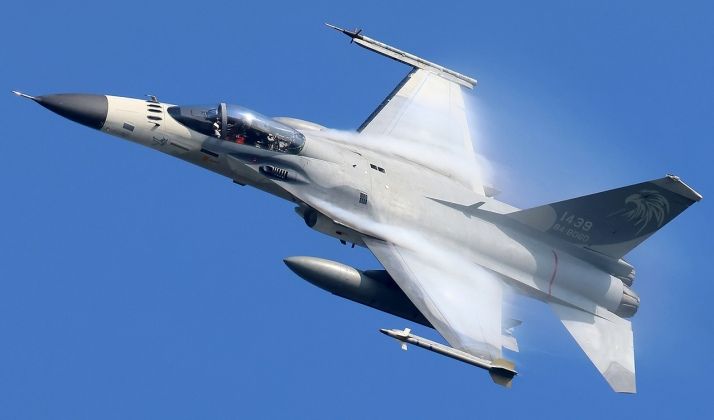
In parallel to the Brave Eagle program, the Republic of China Air Force in January 2026 moved ahead with the development of a new upgrade program for the locally produced F-CK Ching Kuo fighters aiming to bring their capabilities to a ‘4+ generation’ standard. This program is expected to extensively leverage technologies developed for the Brave Eagle to enhance the older aircraft, in particular indigenous AESA radar and other avionics related technologies. Taipei-based analysts have emphasised the importance of increasing the number of ‘4+ generation’ fighters in service, due to the low likelihood that the Air Force will be able to transition to fielding fifth generation fighters for the foreseeable future.
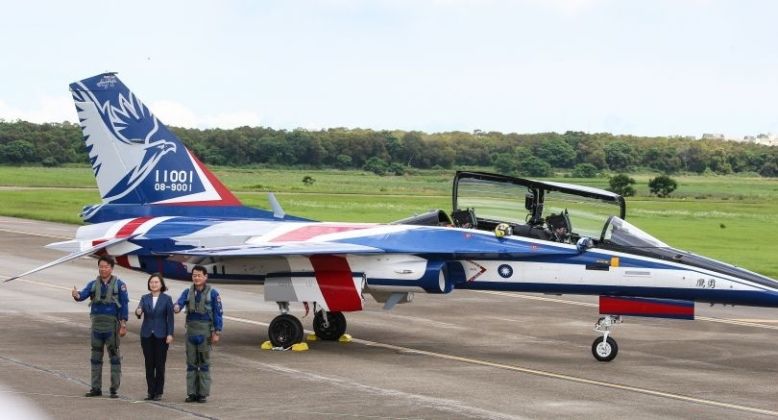
The Brave Eagle, modernisation of the F-CK, the recently completed F-16V upgrade program to enhance obsolete F-16A/B fighters, and the procurement of 66 F-16 Block 70 fighters to replace problematic and obsolete French Mirage 2000 fighters, are between them intended to bring all six fighter squadrons to ‘4+ generation’ standards. Work has also commenced to produce an indigenous engine to replace the American F124 that is currently powering the F-CK and Brave Eagle fighters. The Defence Ministry is also considering pursuing the development of a fifth generation fighter to succeed the F-CK in service, potentially with an intended service entry date in the late 2030s, which is expected to build on many of the technological advances that were made with the Brave Eagle program. The Brave Eagle program in turn has built on work on the F-CK Ching Kuo, and before than license production and modernisation of the F-5 on a very large scale in the 1970s.
