
Republic of China Air Force F-CK Fighters Integrate First Supersonic Anti-Ship Missiles as Part of Major Modernisation Program
Military Watch Magazine Editorial Staff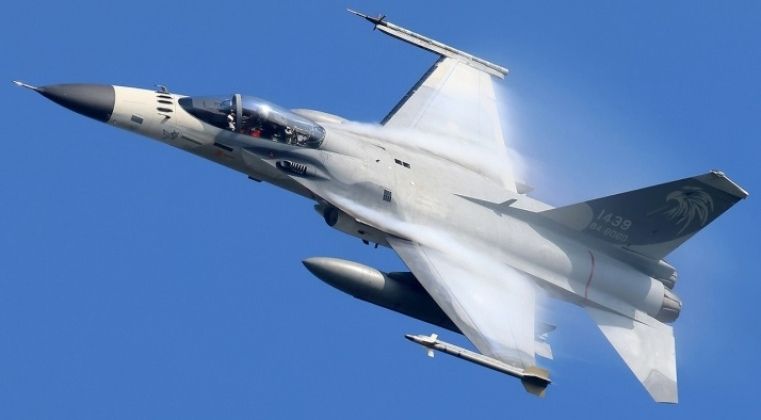
F-CK Ching Kuo Fighter
The Republic of China Air Force has achieved a significant milestone in modernising the anti-ship capabilities of its F-CK Ching Kuo fighters with the first test launch of the Hsiung Chia anti-ship missile. The test was conducted over the Jiupeng weapons test range on Taiwan Island’s southeastern coast. Although the Republic of China Ministry of National Defense has not publicly disclosed detailed performance figures, the test suggests the missile has moved from captive-carry and integration trials into live weapon evaluation. The missile’s development represents part of broader efforts to significantly enhance the combat capabilities of the F-CK fighters, which face the risk of obsolescence at a time of rapid advances across regional air forces.
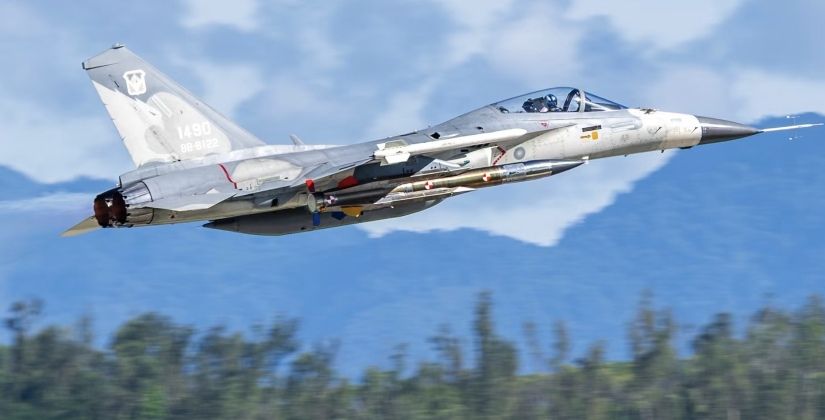
The Republic of China Air Force in March moved ahead with plans to significantly modernise the capabilities of its F-CK under the Falcon Project, with the fighters testing the integration of the Sky Sword II radar guided air-to-air missile. The fulls scope of the Falcon Project still remains uncertain, with some unconfirmed reports indicating that the aircraft will integrate conformal fuel tanks, addressing the F-CK’s very short range which is currently among its leading shortcomings. The integration of the Hsiung Chia missile is considered part of this program. A new active electronically scanned array (AESA) radar was confirmed in April to have begun flight testing.
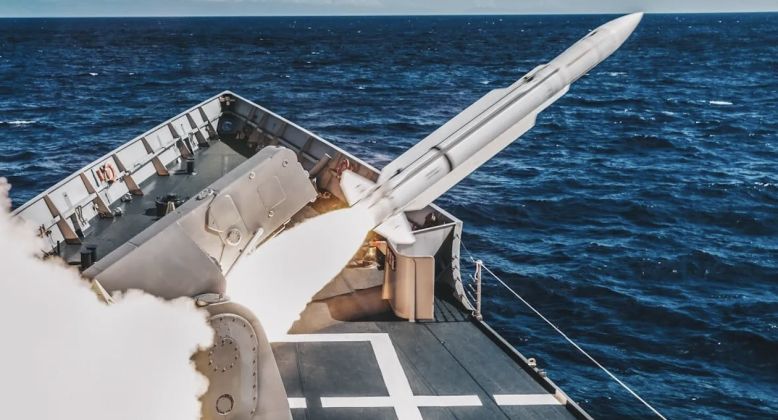
The Hsiung Chia is derived from the ground- and ship-launched Hsiung Feng III supersonic anti-ship cruise missile, with the F-CK fighter providing high initial altitude and speed which extends its range compared to launches from ground level. Engineers were able to redesign the weapon with a smaller airframe and a lighter booster, reducing weight sufficiently for carriage by the F-CK while preserving much of the original missile's high-speed terminal attack profile. This required a substantial redesign of the missile’s propulsion, launch sequence, and aerodynamic characteristics. The missile’s capabilities, while in many ways superior to those of the AGM-84 Harpoon missiles being procured from the United States, are far from outstanding, particularly when compared to those of the hypersonic anti-ship missiles fielded by the Chinese People’s Liberation Army across the Taiwan Strait.
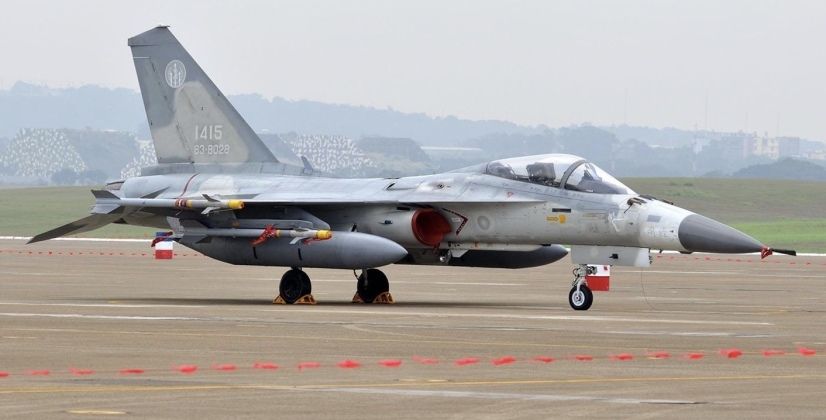
Existing land and ship-based Hsiung Feng III have their engagement areas are constrained by the launch platform's location, where, an air-launched version enables fighters to rapidly reposition, approach from unexpected directions, and engage hostile naval forces at much greater operational distances. This provides a more flexible anti-access capability against an approaching amphibious task force or surface action group. Nevertheless, the ability of the F-CK fighter to operate over the Taiwan Strait in wartime is expected to be highly constrained by both the fighter type’s lack of stealth capabilities, the location of bases within range of multiple type of hostile ballistic and cruise missiles, and the advanced long range air-to-air and surface-to-air capabilities fielded by the People’s Liberation Army. The Chinese People’s Liberation Army and the Republic of China Armed Forces have remained in a state of civil war for decades, with the balance of power in the Taiwan Strait increasingly overwhelmingly favouring the former.
