
Why France’s Rafale Could Beat America’s F-35 in Contest for Swiss Fighter Contract
Military Watch Magazine Editorial Staff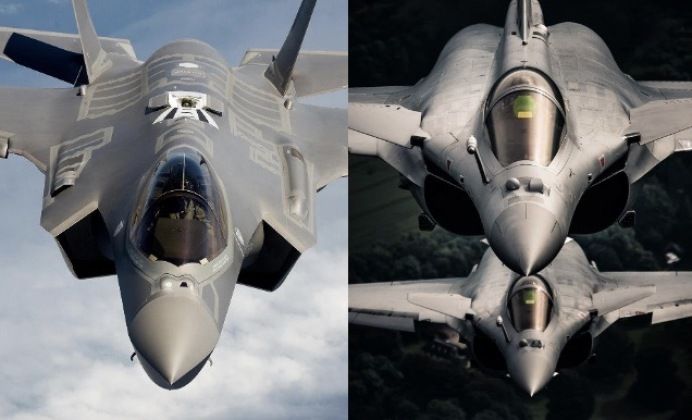
F-35 (left) and Rafale Fighters
France’s Rafale twin engine lightweight fighter has emerged as an unexpected leading contender in the $7 billion Air 2030 tender to provide new combat jets to the Swiss Air Force. The tender was launched in 2020, and has seen no non-Western combat aircraft considered, pitting the Rafale against the American F-35 Lightning II and F-18E Super Hornet and the British-German-Italian Eurofighter. The aircraft chosen will replace Switzerland’s fleet of F-5E Tiger II and F-18C Hornet fighters - the former which is a lightweight third generation fighter and the latter a lightweight early fourth generation fighter. The F-35 and F-18E were expected to be the leading contenders, in part due to Switzerland’s historical preference for American fighters. The Super Hornet benefits from being compatible with much of the same maintenance infrastructure as the F-18C the country already deploys, with the transition from the Hornet to the Super Hornet being particularly smooth and the F-18E having been popular with clients for the F-18C in the past. The F-35 was also considered a leader due to it being the only post-fourth generation fighter in production in the Western world, and benefitting from superior avionics and stealth capabilities to its rivals.
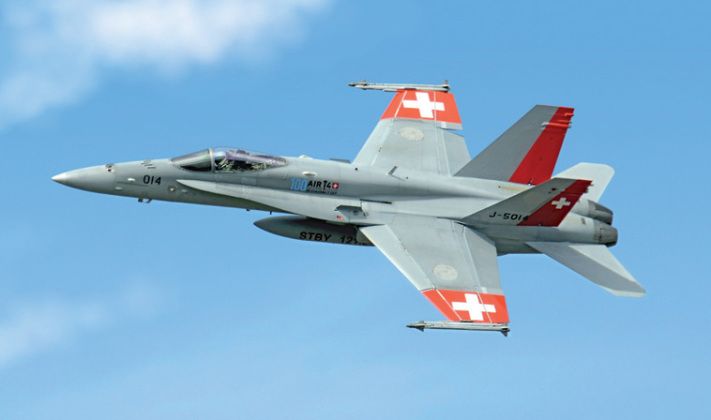
Despite the advanced capabilities of the American fighters, there is growing speculation that the Swiss Federal Council will announce the French Rafale as the winner of the tender at the end of June. The F-35, and to a lesser extent the F-18E, have all faced considerable opposition from Swiss officials - reportedly because the U.S. has imposed strict terms on how the aircraft can be used after sale while France has not. Buying F-35s would tie Switzerland closely to the U.S. defence sector, with the jet networked to facilities in America and reported in the past to spy on its operators and send the data back to the U.S. “Buying the American F-35s, which are the most expensive, is excluded,” the leader of the Socialist group in the Federal Assembly, Roger Nordmann, notably claimed, which gave some early indication of the consensus in the government. The compatibly of the Rafale with the Thales the aerial surveillance system SkyView, which Switzerland recently acquired from France, was another reason. On the other hand, however, the Rafale stands out for being the only one of the fighters that is not compatible with American air launched missiles such as the AIM-9 or AIM-120, meaning Switzerland would need to discard is entire current arsenal if it chooses the French jets.
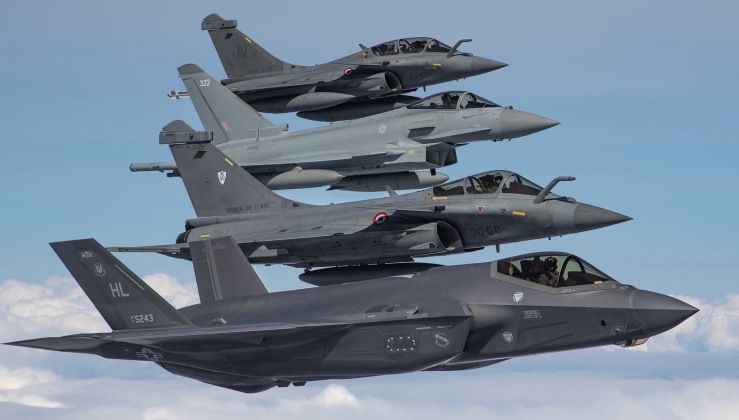
Although the F-35 is overall a much more capable aircraft than the Rafale in almost all parameters, the French jet has a number of advantages including a much lower operational cost, lower maintenance requirements, and superior long range air to air missiles due to its deployment of the Meteor. With the F-35 having begun production much more recently, however, and expected to continue to be offered upgrades for several decades longer, the American jet will likely last considerably longer in service before it needs replacement. The F-35, although more advanced, has been a much more problematic aircraft and is still very far from combat ready, with the Pentagon having yet to approve it for full scale production due to ongoing issues despite the jet having officially entered service in 2014. The Rafale thus may represent a cheaper and more reliable option, with its lack of sophistication or complexity in some respects being advantageous.
