
Polish MiG-29 Fighters Scramble to Intercept Enhanced Russian Intelligence Aircraft
Military Watch Magazine Editorial Staff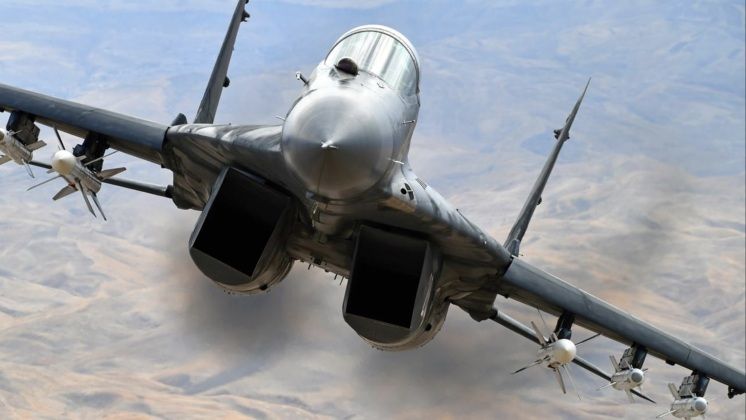
MiG-29 Fighter
The Polish Air Force scrambled MiG-29 fighters to intercept a Russian Il-20M reconnaissance aircraft flying over international waters in the Baltic Sea, visually identifying the target and escorting it. The aircraft was reported to have been operating without a filed flight plan and with its transponder switched off, which represented its ninth such mission of the year. The Il-20M integrates a comprehensive suites for signals intelligence, communications intelligence and electronic intelligence, with its passive sensor array capable of collecting data on radar activity, radio communications, naval movements, and other NATO operations without entering their airspace.
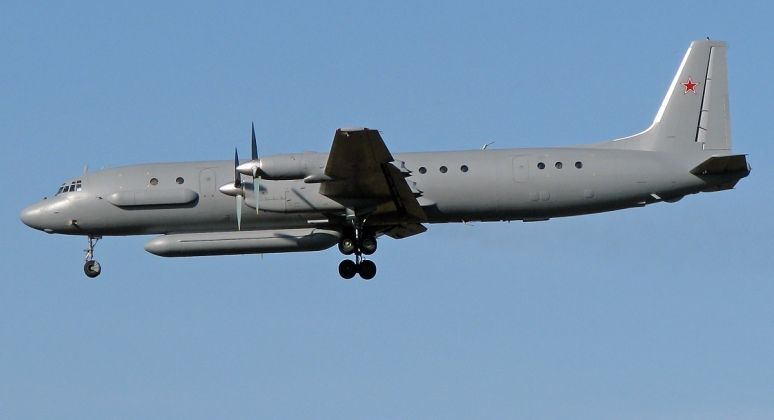
Il-20M operations provide the Russian Armed Forces with a more detailed understanding of NATO members’ and command capabilities, with the aircraft carrying side-looking radars, long-range surveillance optics and infrared sensors. The aircraft have frequently deployed from the Russian Kaliningrad enclave bordering Poland, or from elsewhere in Northern Russia, for operations near NATO territory. NATO members have themselves deployed a number of electronic intelligence aircraft, including F-35 fighters with outstanding passive sensors, for intelligence gathering operations near Russian territory on a much larger scale. The Polish Air Force is scheduled to operationalise a full strength F-35 squadron before 2030, which will revolutionise intelligence collection capabilities.
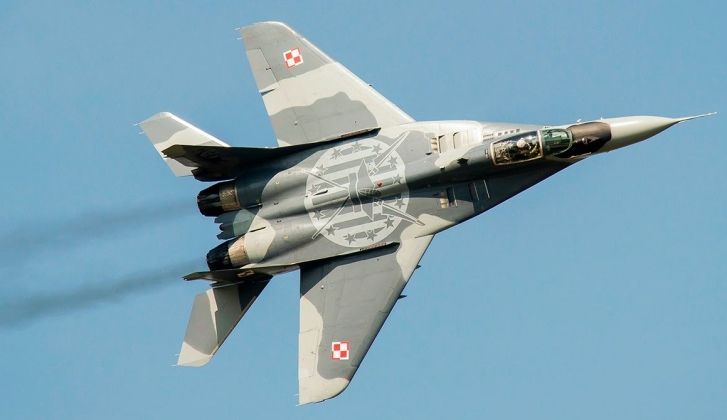
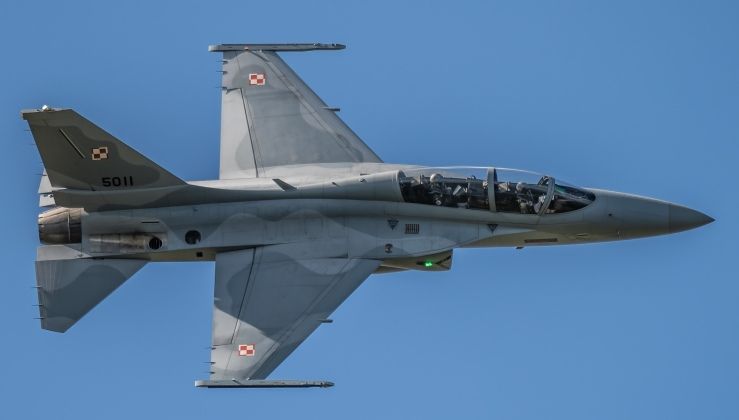
While the Russian Navy and a number of the type’s foreign operators such as Algeria and India deploy ‘4+ generation’ variants with advanced combat capabilities, Polish Air Force MiG-29s have long since been considered obsolete. The aircraft have been gradually phased out of service as the Air Force has received South Korean FA-50 lightweight fighters. The retirement of the MiG-29 has significantly reduced operational costs, and while the FA-50 has a much more conservative flight performance and carries a much smaller radar, the approximately 30 year technological gap separating them means the transition still provides a major improvement. MiG-29s withdrawn from service have gradually been delivered to the Ukrainian Air Force as aid across multiple batches.
Poland has taken a leading role in NATO efforts to escalate hostilities against Russia, procuring ground forces equipment on a scale that has not been seen elsewhere in the alliance, while deploying its new rocket artillery systems both to neighbouring countries bordering Russia, and to its own borders with Russia and Belarus for exercises. It has also deployed thousands of contractor personnel to Ukraine to engage Russian forces on the frontlines, while considering revisions to its military doctrine to vastly expand its ground forces, and developing an “active defence,” doctrine to be ready to operate “across the full operational depth of the opponent” by preparing to launch attacks across Russian territory. In February Polish President Karol Navrocki stated that his country should start developing nuclear weapons, specifying that a future nuclear arsenal would be aimed at Russia, following multiple requests by Polish officials to enter into a nuclear sharing agreement with the United States
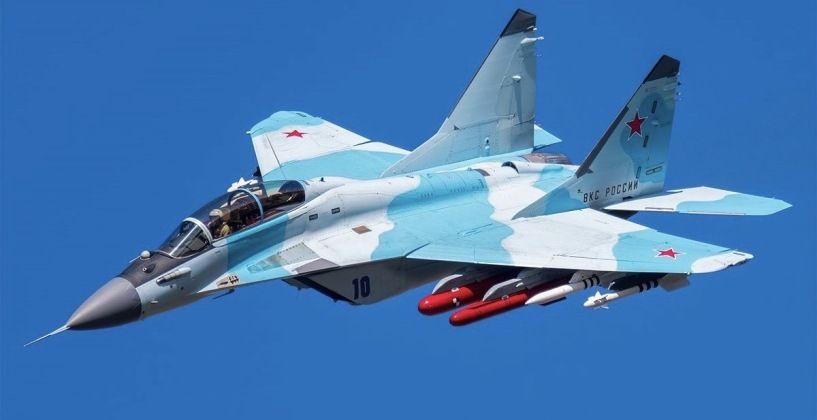
The MiG-29 is significantly lighter than the MiG-31, the Su-57, and the Su-27 and its derivatives, which between them form the backbone of the Russian fleet, integrating a much smaller radar, carrying less weapons, and having a much shorter range. Although the Su-27 and MiG-29 were designed to serve in a high-low combination, after the Soviet Union’s disintegration Russia prioritised the former, as its performance advantages were seen to compensate for its much higher procurement and sustainment costs. Reports from Russian sources in 2025 have indicated that the Russian Aerospace Forces are scheduled to begin receiving significant numbers of MiG-35 fighters, a very heavily modernised MiG-29 derivative, as a result of greater funding for fighter procurements. The scale of procurements, and the sophistication of the subsystems that will be financed, remain uncertain.
