
Poland Plans Final MiG-29 Fighter Transfer to Replenish Ukraine’s Wartime Losses
Military Watch Magazine Editorial Staff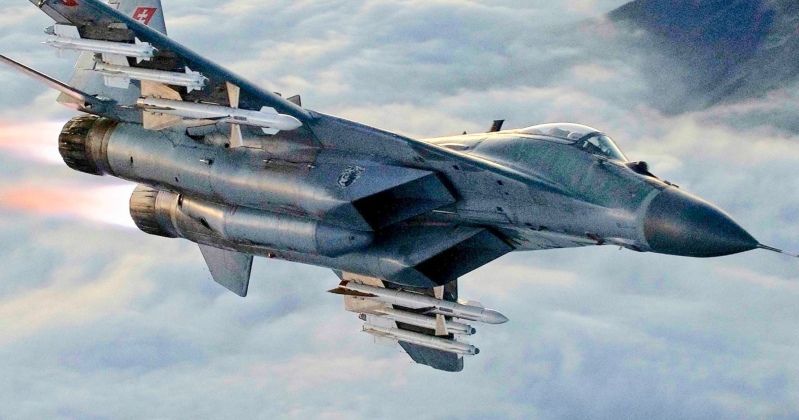
Polish Air Force MiG-29 with R-73 and R-27 Air-to-Air Missiles
The Polish Air Force’s final MiG-29 fighter aircraft in service are being considered for transfer to Ukraine, which may reportedly be made in exchange for access to Ukrainian-developed drone and missile technologies. The MiG-29s are nearing the end of their operational service in the Polish Air Force, as the service prepares to replace them with South Korean FA-50 light combat aircraft. MiG-29s have formed the backbone of the Ukrainian combat fleet for decades, and have been modified with support from the country’s strategic partners in the Western world to be able to integrate NATO standard guided weapons, including U.S. AGM-88 anti-radiation missiles. The rapid rate of losses Ukrainian fighter units have suffered has made the delivery of replenishment MiG-29s invaluable.
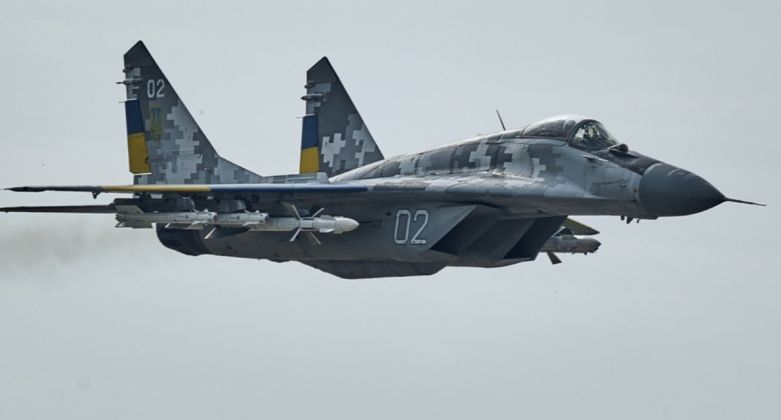
Poland became one of the first foreign operators of the MiG-29 when it received its initial aircraft in 1989, as part of Warsaw Pact military modernisation efforts, to replace its older MiG-21 fighters. With its powerful twin engines, high manoeuvrability, helmet-mounted targeting system and short-range R-73 missiles, the MiG-29 represented a major leap over earlier Soviet fighters operated by Poland. Poland has since invested in keeping the aircraft compatible with NATO operations, and expanded its MiG-29 fleet by acquiring additional aircraft from the Czech Republic in 1995 and Germany in 2004. Modernisation efforts included improved navigation systems, communications equipment and other upgrades that allowed the MiG-29 to participate in NATO air policing missions and exercises.
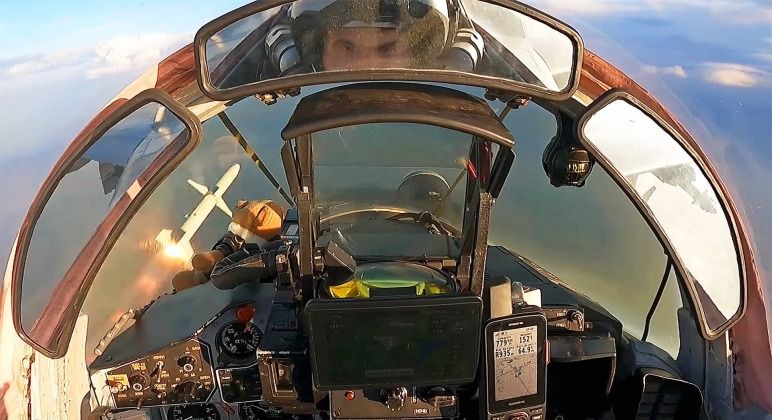
MiG-29s have suffered particularly heavy losses in air-to-air combat while achieving no confirmed kills against manned Russian aircraft. A particularly intense ten days of air battles in October 2023 reportedly saw 17 MiG-29s shot down in air-to-air engagements with Russian fighters. Despite the aircraft’s limitations, in the early weeks of the war Ukrainian government and Western media sources widely reported that a MiG-29 piloted by a local ace, named the ‘Ghost of Kiev,’ gained a tremendous number of kills against Russian fighters, although it was later widely confirmed that these narratives had been false and were propagated to boost morale.
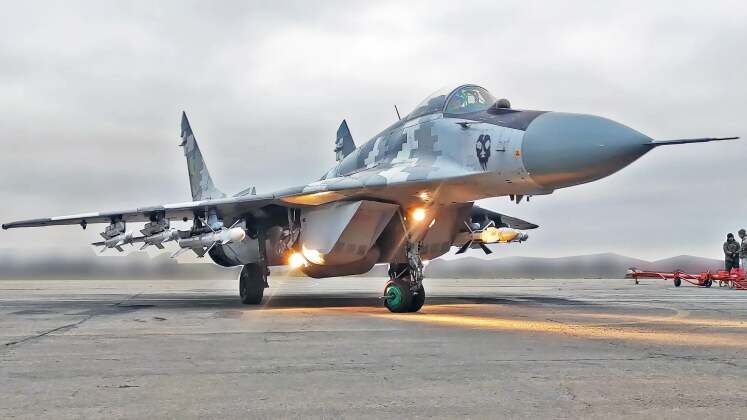
In late June it was confirmed that a Ukrainian Air Force MiG-29 fighter crashed in the Poltava region, closely coinciding with the destruction of two further MiG-29s on the ground in drone strikes. Multiple sources have indicated that a Russian Aerospace Forces Su-35 fighter was responsible for shooting down the aircraft, and did so at a range of approximately 190 kilometres, which may represent the longest successful air-to-air kill ever recorded. Assessments by open-source analysts using publicly available tracking data indicate that the Su-35S was operating well inside Russian-controlled airspace, which remains standard practice for Russian fighters to avoid being targeted by Ukraine’s ground-based air defences.
