
Pivoting to East Asia: U.S. to Cut German Military Presence By Almost 12,000 Personnel
Military Watch Magazine Editorial Staff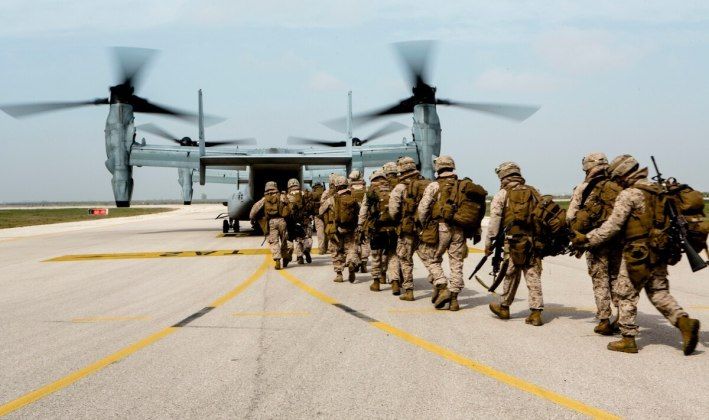
U.S. Marines Embark on V-22 Osprey
The U.S. is moving forward with plans to cut the country’s military presence in Germany by 12,000 personnel, with Secretary of Defense Mark Esper acknowledging that the years long plan will cost billions to execute. Germany has been a centre of the American military presence in Europe since the early Cold War years, with the former German Democratic Republic (East Germany) also having been a central base of operations for the Soviet military. President Donald Trump, who has been particularly vocal in his support for the initiative, said the withdrawal was taking place because Germany had consistently taken advantage of the U.S. by failing to meets its NATO target of a defence budget which reached 2% of GDP. "We spend a lot of money on Germany, they take advantage of us on trade and they take advantage on the military, so we're reducing the force," he told reporters at the White House. "They're there to protect Europe, they're there to protect Germany, and Germany is supposed to pay for it. We don't want to be responsible anymore,” he added. A rise in German defence spending was expected to take place in the first half of the 2020s, although the COVID-19 crisis is likely to at the very least postpone such plans.
U.S. troops being withdrawn will come from both Army and Air Force units, although 5,400 of them will be redeployed to other European countries such as Belgium and Italy rather than returning to the United States. The plan to reduce the American military presence in Europe comes as the country seeks to increasingly refocus its assets towards the Asia-Pacific region, with Russia notably making deep cuts to its defence budget from 2018 and failing to pose a major challenge to Western dominance even in its former sphere of influence in Ukraine and the Baltic states. Other challenges to Western power in the region such as Yugoslavia have effectively been taken out of the picture through military intervention after the Cold War. The U.S. and its allies have increasingly sought to draw down their presence in the theatre and increasingly militarise positions in East Asia, where China and North Korea continuing to challenge Western designs.
