
Pentagon Cancels Plans For a Stealth ‘Wingman’ to Support B-21 Bomber Operations
Military Watch Magazine Editorial Staff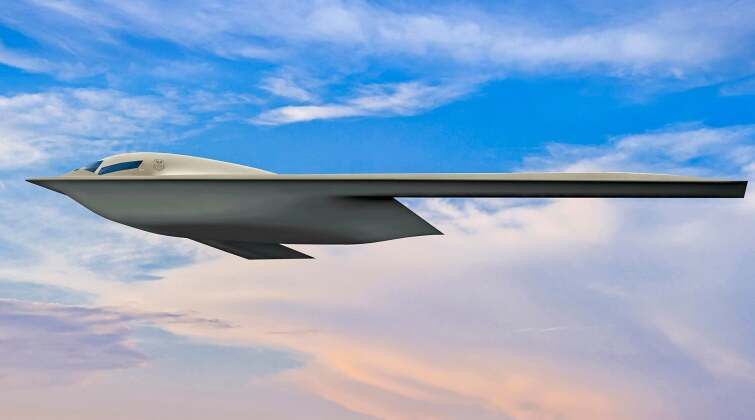
B-21 Bomber
U.S. Air Force Secretary Frank Kendal has announced that work on developing an unmanned ‘wingman’ aircraft to accompany the upcoming B-21 bomber has been cancelled. “The idea of a similar range collaborative combat aircraft is not turning out to be cost effective, so it looks like we’re not going to go that direction,” he stated, adding that the program was “less attractive than we thought it might be.” Regarding the rationale for cancellation, Kendal elaborated: “For relatively small platforms, taking a crew out can make it much cheaper. But for large platforms, you don’t gain that much because the crew is only a small fraction of the weight, a small fraction of the cost by comparison.” Other than a drone, the development of a manned fighter with a very long range capable of escorting the B-21 was also reported in 2018. The Penetrating Counter Air Fighter would be a sixth generation aircraft likely sharing significant features with the Next Generation Air Dominance Fighter currently under development, although such an aircraft is no longer expected to materialise today leaving the B-21 to rely on its own anti aircraft weapons for defence.
When first announcing a drone escort for the B-21, Secretary Kendal stated: “The B-21 is a very expensive aircraft. It has a certain payload and range. We’d like to amplify that capability it has to penetrate, which is valuable.” The bomber’s first flight has been delayed from 2021 to 2023, with its primary and most challenging target considered to be the strategic nuclear arsenal in western China. Whether the B-21 or its Chinese competitor the H-20 will fly first remains highly uncertain, but the possibility has continued to grow that the two could make their maiden flights within months of each other. The B-21 is expected to replace all B-1B and B-2 bombers in service, both of which have been highly problematic to maintain and the former which has begun retirement early. The new bomber could also form additional squadrons in both the U.S. Air Force and in allied states.
