
North Korean Official Warns U.S. Against Disregarding Pyongyang’s Deadline for Return to Negotiations
Military Watch Magazine Editorial Staff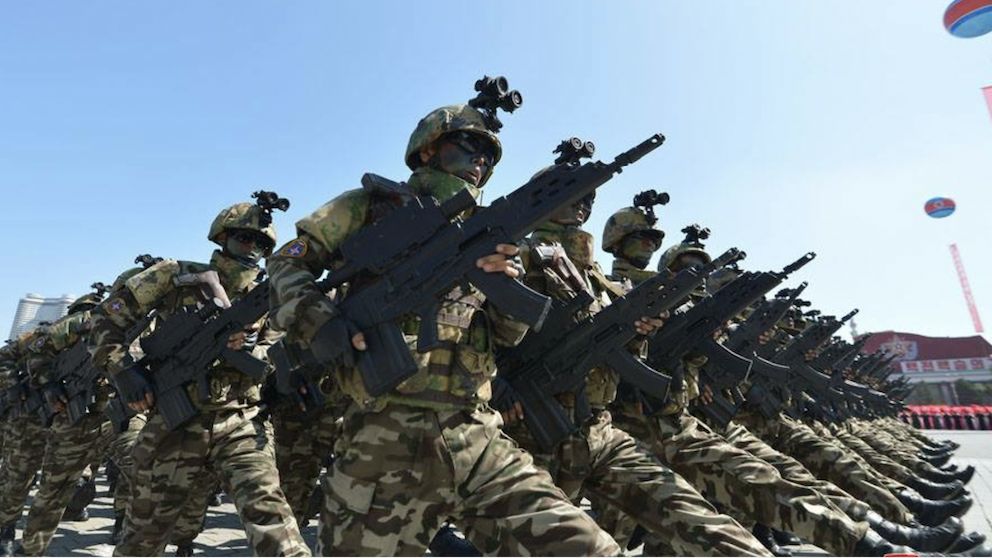
North Korean Special Forces on Parade
Senior North Korean official Kim Yong Chol, formerly the country’s top nuclear negotiator, has issued a stern warning against the use of “delaying tactics” by the United States amid stalling negotiations. The country notably ceased testing of strategic weaponry such as nuclear warheads and intercontinental range ballistic missiles (ICBMs) after three successful ICBM tests in 2017 - the last one in November. While three summit meetings were held between the leaders of both countries since, Pyongyang has expressed continued displeasure at the hardline American negotiation position and its unwillingness to compromise - likening its position to demanding terms rather than holding genuine discussions. A key example was at a summit meeting in Hanoi in February 2019, when the Korean delegation walked away after American negotiators demanded the country surrender its entire nuclear arsenal and accept intrusive inspections of all its military and nuclear sites - in return for which economic sanctions would be only partially lifted. In response to American negotiating terms, Korean Leader Kim Jong Un in April 2019 warned that Pyongyang’s patience was limited - and that the country would resume testing of strategic weaponry should the U.S. fail to return to the table in good faith by January 2020.
Speaking regarding the potential dangers should the U.S. fail to enter a genuine negotiating process, Kim Yong Chol warned that Washington would be “seriously mistaken” if it continued with its current approach and attempts at “exploiting the close personal relations” between the leaders of the two countries. “No substantial progress has been made,” leaving open the possibility of a return to “belligerent relations” which the official warned could result in war - and would force Pyongyang to take bold steps after 2019. "The U.S. is now more desperately resorting to the hostile policy towards the DPRK, misjudging the patience and tolerance of the DPRK” - referring to the Democratic People’s Republic of Korea, the country’s official name. “My hope is that the diplomatic adage that there is neither permanent foe nor permanent friend does not change into the one that there is a permanent foe but no permanent friend,” he concluded.
