
North Korea Reiterates Aggression May Be Met with Nuclear Force
Military Watch Magazine Editorial Staff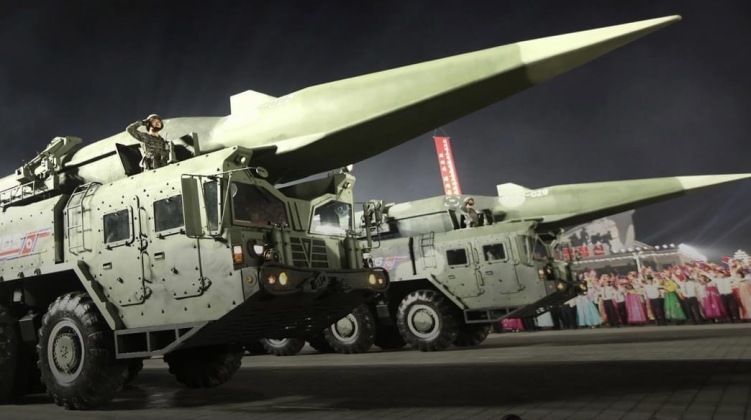
North Korean Ballistic Missiles with Hypersonic Glide Vehicles
At an event marking the 69th anniversary of the July 27 Korean War armistice, North Korean leader Kim Jong Un delivered a speech warning against possible attacks on the country by South Korea or the United States, with which Pyongyang remained technically at war for the past 72 years. "Our armed forces are thoroughly prepared to respond to any crisis, and our nation's nuclear war deterrence is also fully ready to mobilise its absolute strength faithfully, accurately and promptly to its mission," he stated, slamming threats from adversaries as infringing on North Korea's right to self defence. This comes as military exercises simulating war against the country have escalated south of the 38th parallel. Chairman Kim further highlighted that aggression against the country "will be immediately punished by our powerful strength and the Yoon Suk Yeol government and his military will be annihilated” - a reference to South Korea’s recently inaugurated president who has taken a particularly hard line against his country’s northern neighbour. Policies in Seoul and Washington, the northern leader warned, were “driving bilateral relations to the point where it is difficult to turn back, into a state of conflict.”
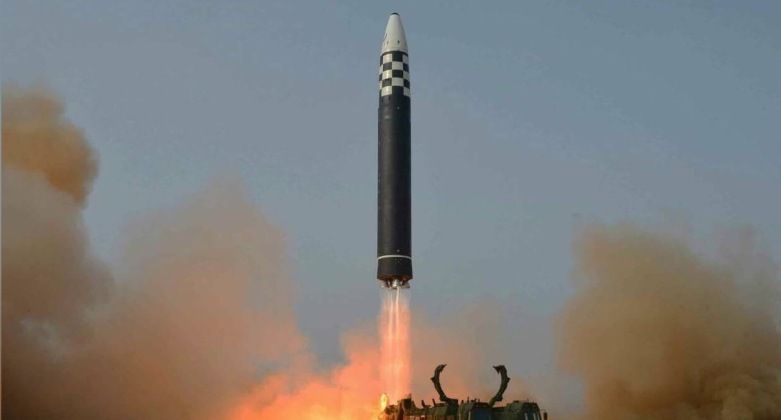
North Korea has been assessed by U.S. intelligence to have had some nuclear weapons capability since the early 1990s, although in 2017 the country unprecedentedly demonstrated the ability to deliver thermonuclear warheads to the United States mainland using intercontinental range ballistic missiles. It has since introduced a range of new missile designs that can be used for delivery of strategic nuclear strikes, including the new longer ranged Hwasong-17 which is capable of striking the entire American mainland, as well as the submarine launched Pukkuksong-4 and the Hwasong-8 missile with a hypersonic glide vehicle. It remains uncertain whether the country’s armed forces have also mounted nuclear warheads onto their tactical short ranged ballistic missiles, which are expected to target key facilities such as airfields across South Korea and American facilities in Japan in a war’s opening stages. These assets are all considered key to compensating for shortcomings in the country's conventional forces, most notably its lack of air power, which is primarily a result of arms embargoes targeting the country.
The United States has come close to launching attacks on North Korea several times since the end of the Korean War, including under both the Obama and Trump administrations in 2016 and 2017 respectively, and in the latter case drew up plans for mass nuclear strikes on the East Asian state that were expected to kill millions of its population. The demonstration of an intercontinental range strike capability placeing the United States mainland in the crosshairs is considered to have been a primary factor altering the calculus in Washington and largely taking American military options off the table.
