
North Korea Continues to Strengthen Cruise Missile Forces with Long Range Demonstration of Upgraded Hwasal-1
Military Watch Magazine Editorial Staff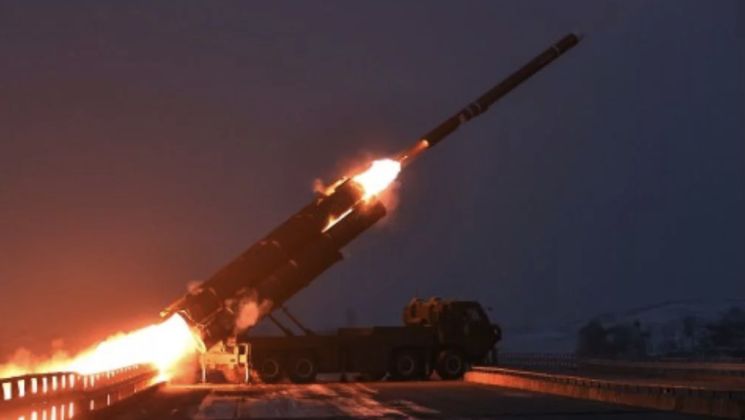
North Korean Cruise Missile Launch on December 28
The Korean People’s Army has initiated a new long-range strategic cruise missile test launch, which state media reported confirmed the integrity of its nuclear power and counter-attack readiness in the face of prevailing security threats. The test appears to have marked the debut of an upgraded variant of the Hwasal-1 missile, two of whcih were launched and demonstrated the ability to fly for close to three hours along preprogrammed routes before striking targets. The objective of the test was to assess counterstrike readiness, train personnel in manoeuvre and launch procedures, and verify the reliability of associated systems, although it also served as a significant show of force considering the Hwasal-1’s nuclear capabilities. The missile is estimated to have a range of close to 2000 kilometres, and while confirmed to be nuclear armed, it may also have conventionally armed variants in service.
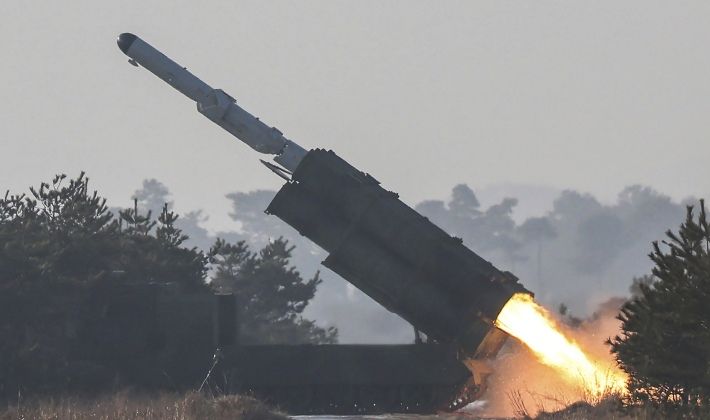
The Hwasal-1 made its first flight in September 2021, closely coinciding with North Korea’s first test flight of a hypersonic glide vehicle, and is believed to rely on an inertial navigation system and terrain contour matching for guidance, with satellite updates. This allows the missile to follow complex low altitude flight paths to exploit radar coverage gaps and thus better evade detection and interception. Supervising the tests, Chairman of the ruling Korean Workers’ Party Kim Jong Un expressed "great satisfaction" with the cruise missiles’ performance, as they flew along their orbit above the sea west of the Korean Peninsula and hit their targets. South Korea's Joint Chiefs of Staff repoeted on December 29 that its forces had detected the launch of multiple cruise missiles from the Sunan area near Pyongyang, with a southern defence ministry spokesman criticising the test as part of “activities that undermine peace and stability on the Korean Peninsula.” Although North Korean cruise missile testing and development remains entirely legal, it has consistently elicited harsh criticism from South Korean and across much of the Western world.
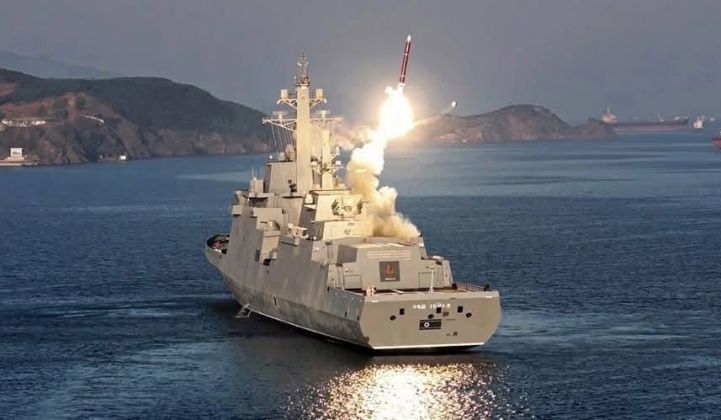
While North Korea’s deterrence capacities have long been built on its ballistic missile arsenal, which began to be built up in the late 1970s, a significant complementary cruise missile capability began to appear from the late 2010s, and demonstrated sophisticated features including the ability to conduct complex waypoint manoeuvres. Cruise missiles have begun to fulfil a wide range of roles, including nuclear strikes, precision strikes on key facilities such as airbases, and anti-shipping roles. The country demonstrated its first submarine launched cruise missile capability in March 2022, and has integrated a wide range of cruise missile types onto its new Choi Hyon class destroyers. Unconfirmed reports also indicate that the country’s H-5 bombers and Su-25 attack jets have also integrated long range cruise missiles, providing a full triad of ground, sea and air launch platforms.
