
The Su-25 Attack Jet Was Near Useless in Ukraine: North Korean Upgrades Just Made it Viable Again
Military Watch Magazine Editorial Staff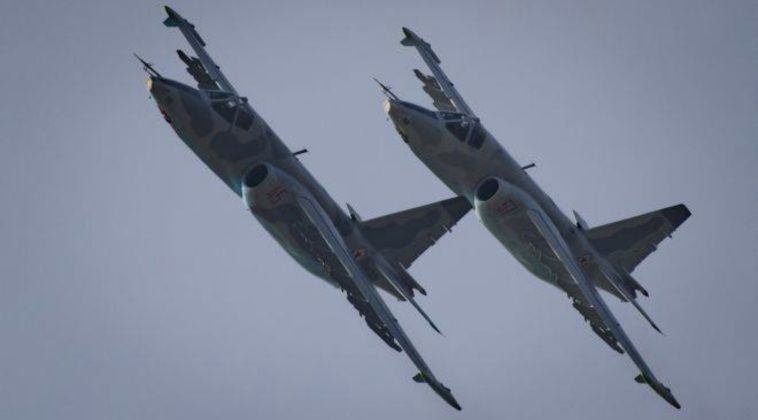
North Korean Su-25 Close Air Support Aircraft
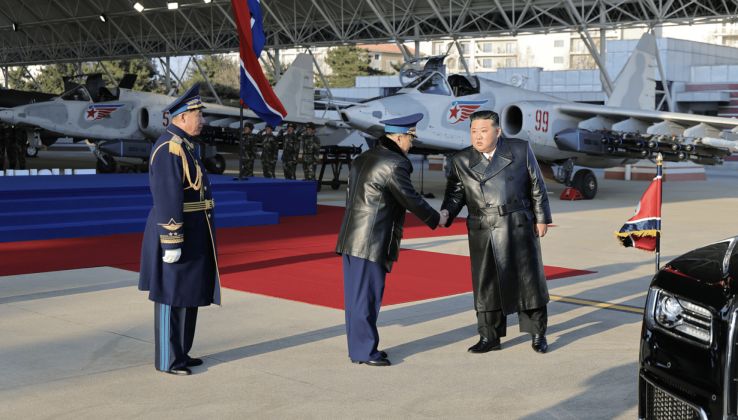
North Korea has unveiled a new type of cruise missile integrated onto its Su-25 attack jets, which were first seen during celebrations marking the 80th anniversary of the Korean People’s Army Air Force at Kalma Airfield on November 28. The missile closely resembles the German-Swedish Taurus KEPD 350 fielded by South Korea, with a similar exposed sensor in the nose, and is expected to revolutionise the capabilities of the Su-25 fleet. The utility of close air support aircraft like the Su-25 and its American counterpart the A-10 have increasingly brought to question, as advances in short range air defence technologies has limited their ability to remain survivable when flying at low speeds and altitudes near the frontlines as they were designed to. As a result, although the aircraft is fielded in significant numbers by both Russia and Ukraine, it has not played any meaningful role in either side’s current war efforts.
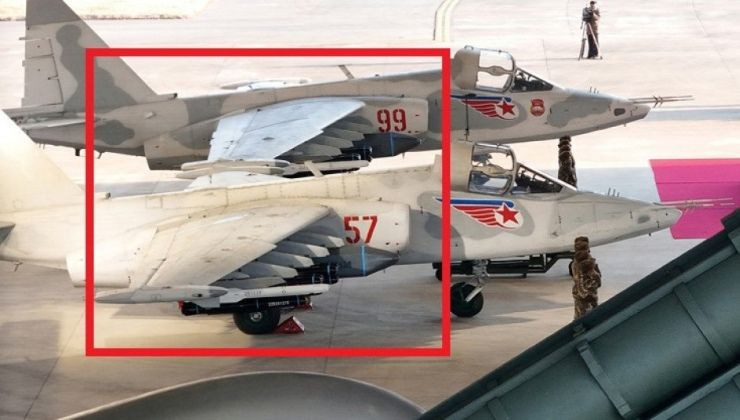
The new configuration for the Su-25 appears to integrate a layered weapons suite, and alongside carriage of two of the new cruise missiles, each also carries two triple launchers loaded with either compact precision-guided glide bombs or with short-range air-to-ground missiles similar to the American Hellfire. This arsenal indicates that the Su-25s are being equipped to be able to engage targets at both long and medium ranges, without the requirement to operate near enemy forces. A single short-range infrared air-to-air missile is also visible on each wingtip, providing a defensive air-to-air capability as well as an effective counter-drone capability, which could also be invaluable to engage adversary attack helicopters. These indigenous upgrades make North Korea’s Su-25s by far the most capable seen anywhere in the world, and potentially the only ones with viable capabilities for modern battlefields in an era where these aircraft are increasingly being sidelined.
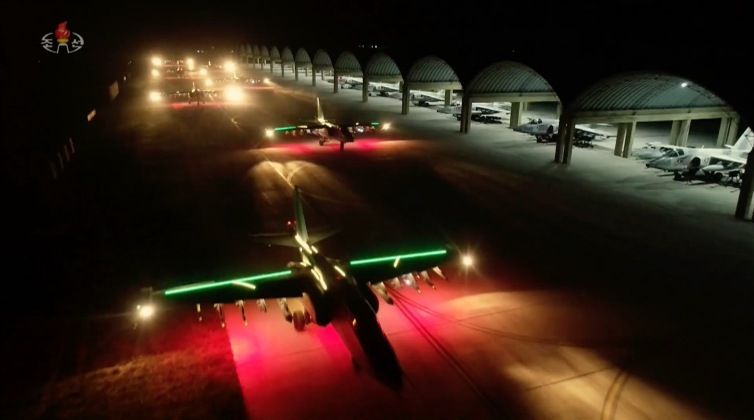
North Korea’s defence sector has developed a fast growing range of advanced air-launched weapons, which has helped to keep its ageing combat aviation fleet somewhat viable. These programs have complemented major advances in ground-based ballistic, cruise and surface-to-air missile capabilities which have revolutionised the country’s defensive capabilities over the past decade. The development of the Pyongae-6 long range air defence system in particular, which is considered a counterpart to the Russian S-400, has taken significant pressure off the country’s fighter fleet. Advanced ground-launched missile programs have provided a strong technological basis for the development of similarly advanced air-launched missiles, with the Su-25’s new cruise missile expected to use many of the same technologies as the country’s ground-launched cruise missile arsenal.
The Korean People’s Army Air Force for the first time received active radar guided air-to-air missiles in May 2025, with these seen integrated onto a MiG-29 squadron and test fired, replacing their relatively obsolete Soviet-supplied R-27 semi-active guided missiles. The missile type was first unveiled at the National Defence Development Exhibition Self Defence 2021 in October 2021, and could potentially be integrated onto the country’s MiG-23ML and MiG-21bis fighters. North Korea’s export of tens of billions of dollars worth of military equipment to Russia from 2022 has raised the possibility that the country will soon be able to phase out older fighter types and receive new aircraft from Russia, possibly including additional Su-25s which can be modernised domestically. The possibility has also emerged that North Korea could offer its new armaments package for the Su-25 to Russia and other foreign clients such as Belarus and Iran to significantly enhance their own fleets’ capabilities.
