
North Korea’s Next Generation Tank Makes Debut in Elite Capital Defence Corps’ Combined Arms Assault Drills
Military Watch Magazine Editorial Staff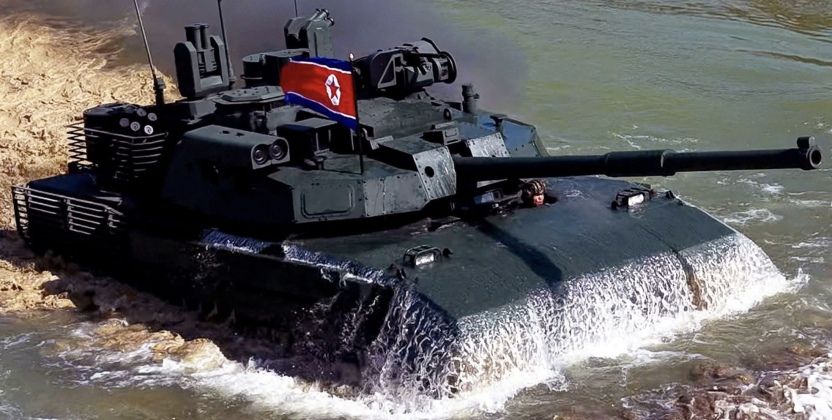
North Korean Next Generation Tank During March 19 Exercises
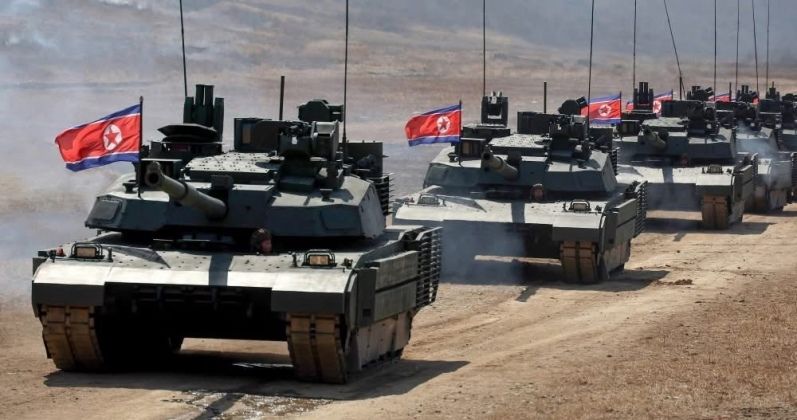
New images have revealed that the Korean People’s Army tank brigade at the Pyongyang Training Base No. 60 serving under the elite Capital City Defence Corps has been re-equipped with next generation main battle tanks, which appear to be enhanced variants of the Chonma 2 design. The unit received an inspection from multiple figures in the country’s political and military leadership on March 19, with Chairman of the Korean Workers’ Party King Jong Un personally overseeing a coordinated offensive tactical drill of infantrymen and tankmen's sub-units. A company of the cavalry regiment, a main armoured unit belonging to the reserve operational group of the General Staff, and special operations sub-units were all involved. Exercises focused on combined tank and infantry to strike and occupying an adversary’s anti-armour defence lines.
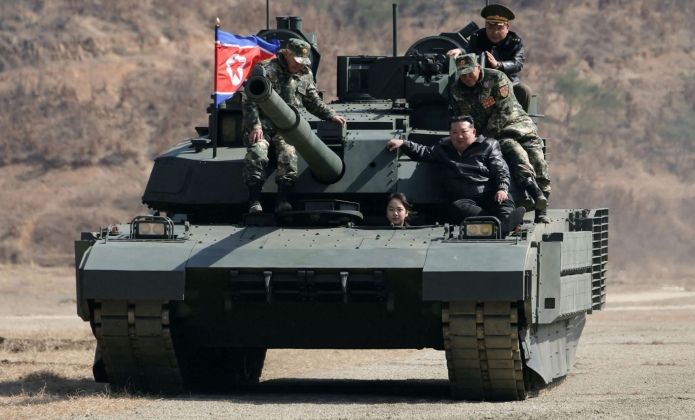
The March 19 exercises reportedly marked the debut of the new tank type, and involved a range of tests examining the new main battle tank's active protection system. Commenting on the vehicle’s performance, Chairman Kim observed: "We have attained great successes and progress in modernising the tank-building industry.” The Korean People’s Army unveiled its first fully clean sheet main battle tank design, the Chonma 2, in 2020, and has since taken this as a basis for rapid incremental modernisation. The latest variant of the design, the Chonma 20, which was first seen at a military parade marking the 80th anniversary of the ruling Korean Workers’ Party in October 2025. This followed the unveiling of the previous iteration of the design, the Tianma 2, in November 2024. Reporting on the capabilities of the new vehicle, the state run Korean Central News Agency reported: “mechanised units demonstrated the modern main battle tank Chonma 20, which has powerful strike capability and a reliable protection system.”
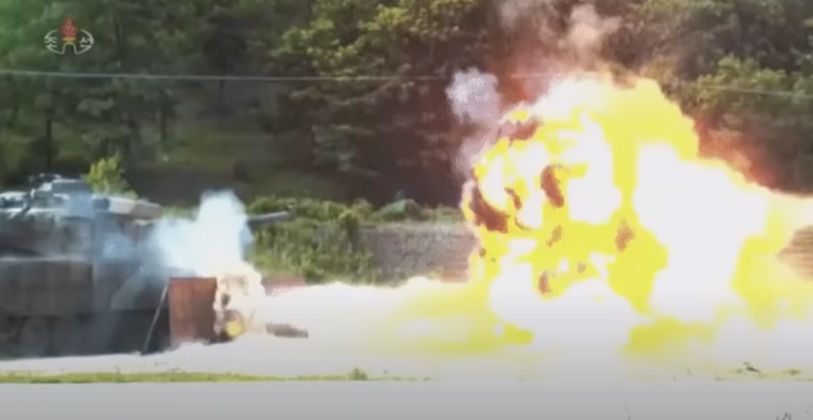
One of the most significant advances over the original Chonma 2 achieved by the Tianma 2, and inherited by the Chonma 20, was the integration of an autoloader to facilitate an increased rate of fire and reduced crew requirements from four to three. Notable ways the Chonma 20 improved on the older Chonma 2 and Tianma 2 include a redesigned driver’s hatch, the integration of a new turret-mounted remotely controlled anti-aircraft gun, a modified turret armour layout, and most notably the integration of a new active protectio. North Korea’s active protection system was first seen in use in footage released in July 2023, and uses radars to continuously monitor their surrounding environments for incoming threats, and when detecting incoming projectiles track them automatically, calculate their trajectories, and deploy protective munitions to intercept and destroy them.
In May 2025, North Korean state media unveiled a large scale new tank factory, at which time Chairman Kim stressed that replacing the Korean People’s Army’s armoured vehicles of the last century with the latest models had become a primary task of building the armed forces. It was projected at the time that the service entry rates of variants of the Chonma 2 design would accelerate considerably. Available evidence indicates that the latest North Korean tank designs have much higher standings relative to their foreign rivals than the country’s prior tanks, reflecting broader trends towards the country’s defence sector achieving achieving a standing among the world’s leaders, such as China and the U.S., in multiple key technology areas. This has been clearly demonstrated in the Russian-Ukrainian War, with a notable example being the comfortable superiority which North Korean anti-tank guided missiles have had over their Russian counterparts.
