
North Korea Demonstrates Major Advances in Network-Centric Combined Arms Warfare With Joint Tank, Artillery and Drone Assault
Military Watch Magazine Editorial Staff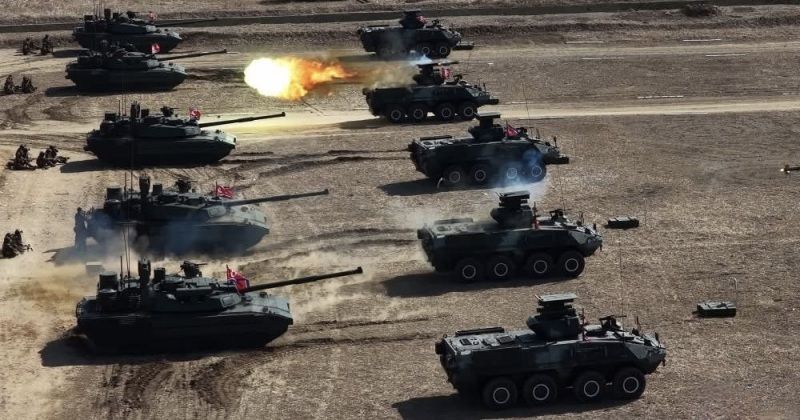
North Korean Chonma 20 Tanks and APCs in Combined Advance
New details of major Korean People’s Army exercises conducted on March 19 have indicated that major advances in network centric and combined arms warfare capabilities have been made, potentially significantly enhancing the armed forces’ ability to conduct offensives against advanced South Korean and U.S. defences. The exercises were reportedly aimed at familiarising personnel with the coordinated order and combat methods in the tactical sub-units' offensive action. Operations focused on combined tank and infantry to strike and occupying an adversary’s anti-armour defence lines. Such defence lines have been widely erected on the Korean Peninsula by the two Koreas. Various kinds of attack drones struck the enemy's commanding base and anti-armour firing positions on the basis of real-time reconnaissance data.
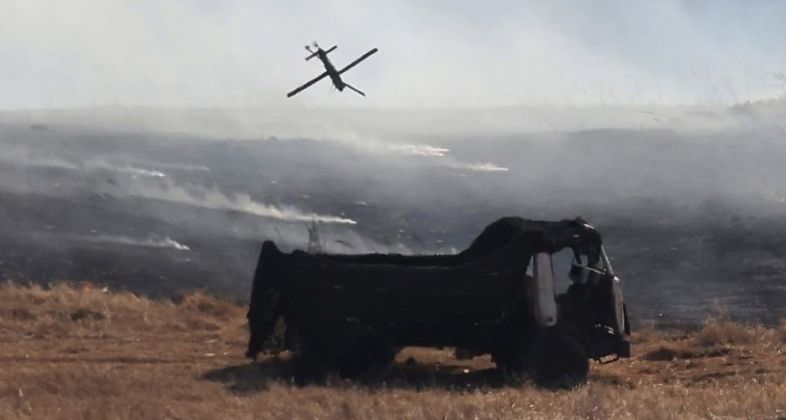
Exercises highlighted the growing ability of Korean People’s Army units to launch combined arms operations as part of a modern reconnaissance-strike complex. Commenting on the exercises, Chairman of the ruling Korean Workers’ Party Kim Jong Un stated that he had come to clearly recognise that intensifying practical training under the simulated real war exercises had been adhered to in recent training of tactical units, highlighting that all sub-units in the exercises share real-time information to to prevail under “extremely difficult combat situations.” The exercises saw anti-tank missiles of an armoured car sub-unit hit targets in salvoes to provide tactical fire support, while rear strike sub-units destroyed adversary drones and helicopters from ambush positions, before assaulting and taking over the adversary’s defence line and firing positions.
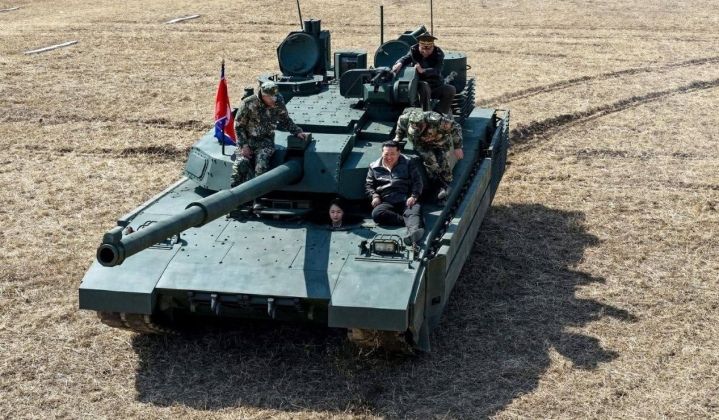
The operations of rear strike sub-units were reportedly key to allowing tanks and infantry to advance, with armoured personnel carriers shown to play a prominent role in the advance. State media referred to a subsequent “demonstration charge by the tank company of the cavalry regiment equipped with new-type main battle tanks.” “Through the drill, its aim was attained to confirm the tankmen's capabilities for an actual war and each sub-unit's combat cooperation and action methods according to different tactical missions,” the state run Korean Central News Agency reported. Chairman Kim reportedly particularly praised the capabilities of the new Chonma 20 main battle tank which made its debut during the exercises, including its firepower, mobility, and armour protection levels. The tank reportedly intercepted 100 percent of anti-tank missiles and drones attacking it from different positions and directions, demonstrating the advanced capabilities of its active protection system.
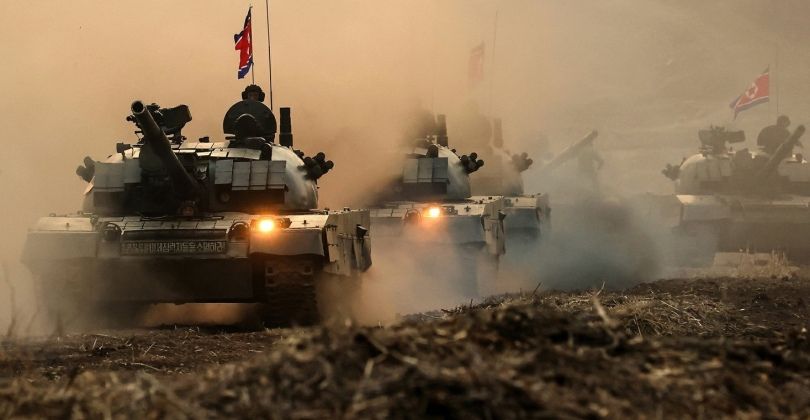
Chairman Kim was greeted by Defence Minister No Kwang Chol, Chief of General Staff Ri Yong Gil, and other senior figures in the armed forces’ leadership during the exercises, with the attendance of multiple senior leadership figures indicating a considerable degree of importance attributed to the exercises. The Chonma 20’s fire controls are reportedly significantly better suited to combined arms operations than previous types of main battle tank, which relied on Cold War era fire controls and had far more limited combat potentials. Korean People’s Army units have gained experience in frontline operations during deployments to repel advances by Ukrainian and supporting NATO members’ forces into the Russian Kursk region, with the Russian Army itself having been slow to retrain and re-equip for modern networked combined armed operations, but adapting quickly following the outbreak of full scale hostilities in February 2022.
