
North Korea Unveils New Single Use ‘Kamikaze’ Drones: Connection to Israeli Firms Suspected
Military Watch Magazine Editorial Staff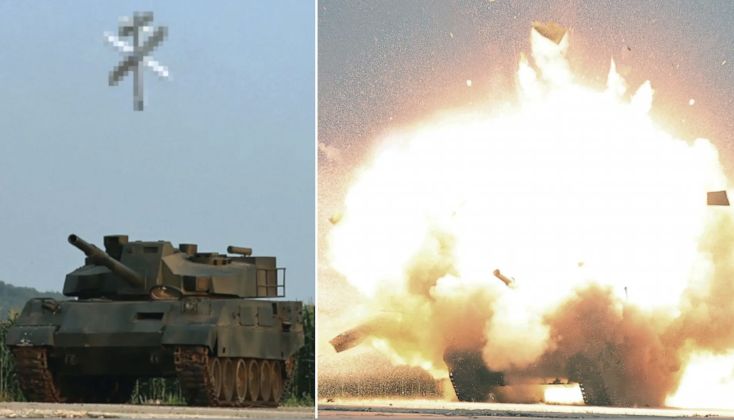
North Korean Single Use Drone Strikes Tank Mockup
North Korean state media on August 27 unveiled two new classes of unnamed single use ‘Kamikaze’ drone, which following the development of a wide range of advanced new weapons systems in the country has the potential to significantly enhanced its lower end tactical strike capabilities. Their unveiling follows the appearance of higher end combat and reconnaissance drones in July 2023, which marked a major milestone in the demonstrated capabilities of its aviation industry. Single use drones provide a means of engaging low level targets such as enemy armoured vehicles with a very high level of precision, and doing so at fraction of the cost of using ballistic or cruise missiles, while carrying smaller payloads and thus having significantly smaller blast radii. The complementary usage of ballistic missiles and single use drones has been effectively demonstrated over the past two years by Russian forces in the Ukrainian theatre, where Iranian Shahed 136 drones have played a major role from September 2022 complementing the strike capabilities of Russia’s growing arsenal of Iskander-M ballistic missiles.
Unlike Russia, North Korea has deployed a highly diverse arsenal of tactical ballistic missiles, from the compact and relatively short ranged KN-24 missiles, to the large longer ranged KN-23B missiles with oversized warheads. The country has also deployed classes of precision guided rocket artillery with much longer ranges than its Russian counterparts. This diversity was previously thought to have limited its need for single use drones, although with these now in its arsenal, the range of different tactical strike assets available is potentially the greatest in the world outside China.
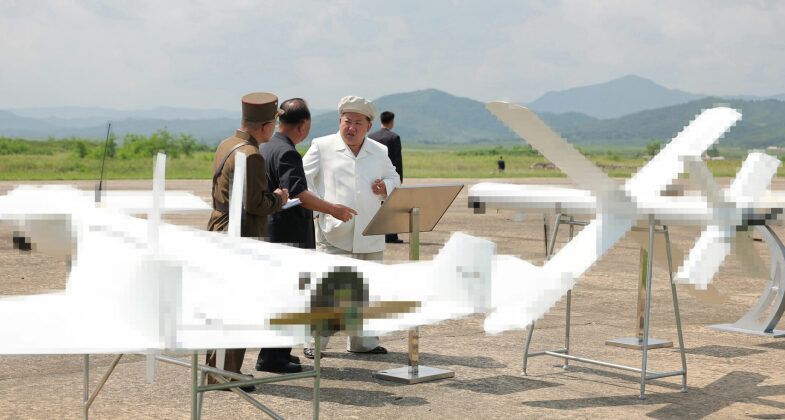
Western sources have widely compared North Korea’s new drones to the Israeli Harop and Hero-400, with the new designs appearing highly similar. This has fuelled speculation that North Korea may have gained intelligence on the Israeli drones from its close security partner the Lebanese paramilitary Hezbollah, or possibly from Iran, which have engaged in combat with Israeli forces intermittently for much of the past two decades. With Israeli Police having opened an investigation in 2021 into a group of individuals producing, and selling single use drones to an unnamed country in Asia, there has also been speculation that the technologies may have been transferred from Israel directly - possibly through a third party such as Myanmar or Vietnam which retain close ties with both Pyongyang and Tel Aviv.
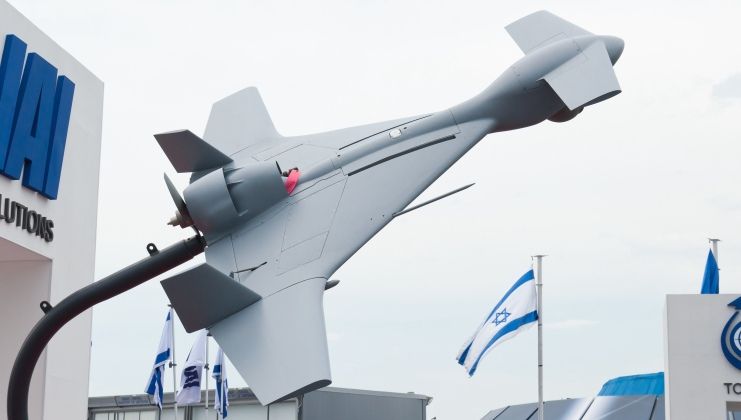
Israel has a long history of transferring advanced military drones and associated technologies to Western Bloc adversaries, including the transfer of Harop combat drones to China in the 1990s and 2000s, and provision of Russia with facilities for license production of the Forpost surveilance drone. The similarities may otherwise be coincidental. The North Korean drone resembling the Israeli Harop uses the a very similar frontal canard delta wing design with vertical stabilisers at the rear. The Israeli drone was initially designed for suppression of enemy air defences, but has taken on a wider range of roles. The second drone resembling the Hero-400 uses the same configuration of x-shaped fins along the main body and at the tail, not very different from the Russian Lancet, and was developed to be capable of striking battlefield targets such as armoured vehicles. Footage released by state media showed the drone destroying a mockup of an enemy main battle tank, which has been a primary mission for Lancet drones in the Ukrainian theatre.
