
New Sensor Could Provide America’s F-22 Raptors with ‘Super Stealth’ Capability and Zero Radar Signature
Military Watch Magazine Editorial Staff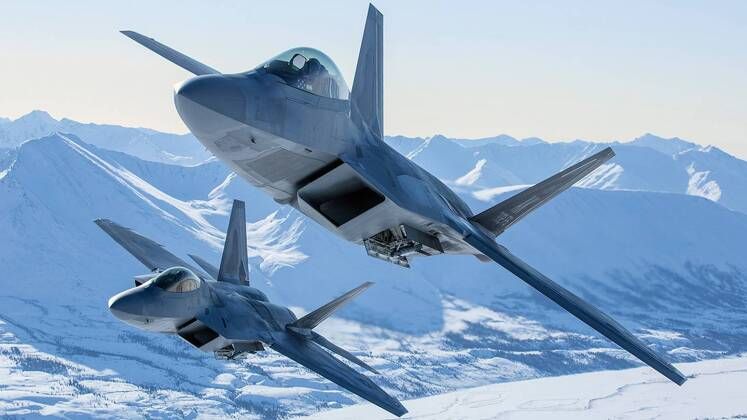
F-22 Raptor Heavy Fighters
Lockheed Martin
The U.S. Air Force has moved ahead with plans to integrate an infrared search and track system (IRST) onto its F-22 Raptor fifth generation heavyweight fighters, as part of upgrades to the fleet in the face of growing challenges posed by near peer adversaries. The F-22 first entered service in December 2005, and while initially intended to have its own IRST before this feature was cancelled, along with others such as side facing radars, in order to reduce costs. The F-22 was already very far over budget both in its flyaway cost, but more importantly in its operational cost due to its unanticipated extreme and maintenance requirements. IRSTs provide a number of advantages to fighters which deploy them, and have been deployed by all Soviet and Russian fighters since the early 1980s while becoming more common on Western aircraft from the 2000s. They allow aircraft to maintain a degree of situational awareness in a high electronic warfare environment where radars can potentially be jammed, as well as providing a more effective means of tracking enemy stealth aircraft with very low radar cross sections at medium ranges. Moreover, they allow aircraft to operate without using their radars at all, meaning without any radar signature whatsoever. With the F-22 currently having the lowest radar cross section of any Western manned combat aircraft, providing it the option to operate without any radar emissions whatsoever will only further increase its survivability in certain combat scenarios.
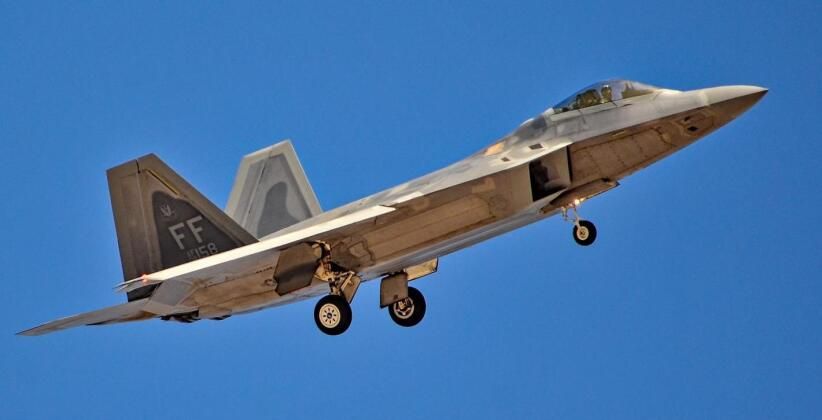
A document released under the Small Business Innovation Research (SBIR) program highlighted on January 13th regarding the possibility of integrating an IRST: “The F-22 Program Office is seeking novel hardware and software solutions that provide long-range infrared sensing and object detection capabilities.” Questions remain, however, regarding how easily news sensors can be integrated without compromising the fighter’s low radar cross section. Other improvements called for by the Air Force include cyber intrusion detection and prevention, predictive maintenance, synthetic data generation, sensor fusion, an improved radar, manned-unmanned teaming, pilot-assisted autonomy, alternative navigation to GPS, Scorpion helmet-mounted display, Red Air threat replication application, optimised intercept, real-time debriefing, and combat ID. Helmet mounted sights are an area where the F-22 is particularly behind its competition both domestically and abroad, and seriously limits its ability to engage targets within visual range as it cannot take advantage of the extreme firing angles of its high off boresight AIM-9X missiles. Modern variants of all other serving American fighter classes, and all Soviet and Russian fighters since the 1980s, use helmet mounted sights.
187 serial production F-22s were built until 2011, with production terminated ahead of schedule with just 25% of the initially planned fleet size reached. The fighter has since been considered increasingly out of date due to its troublesome computer architecture and inability to share data with other units, with avionics and electronic warfare systems being well behind those of the latest American fighters such as the F-35 and F-15EX. These issues, but more significantly the F-22’s tremendous operational costs and maintenance requirements and low availability rates, have led the U.S. Air Force to plan for a very early retirement for the F-22 while keeping the F-35 and F-15 in service and commissioning a successor sixth generation air superiority fighter under the F-X program. Due to these plans, it is likely that only part of the F-22 fleet will receive planned upgrades, if any, with costs potentially being diverted towards other programs.
