
New Footage Confirms China’s J-35 Stealth Fighters Now Operating from Aircraft Carrier Liaoning
Military Watch Magazine Editorial Staff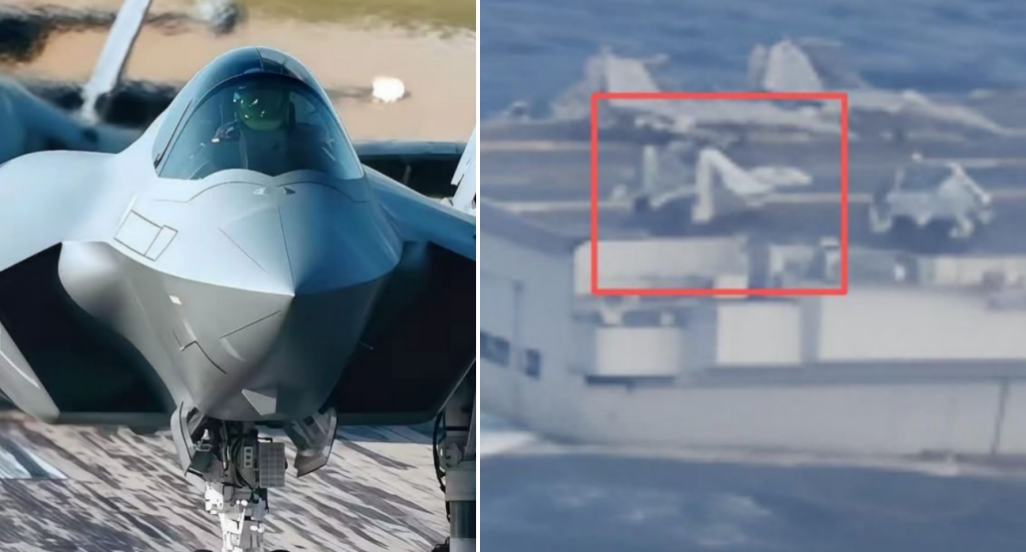
J-35 and J-35 on Liaoning’s Deck
New footage from the aircraft carrier Liaoning’s far seas operations have for the first time shown the integration of J-35 fifth generation fighters into the ship’s air wing, marking a significant expansion of Chinese carrier aviation capabilities. The J-35 is one of four fifth generation fighter types in production worldwide, and one of two in China, and was confirmed in 2026 to have entered service both in the Air Force, and as part of the air wing of the supercarrier Fujian. It was previously uncertain whether the aircraft were also intended to operate from the Navy’s two smaller aircraft carriers the Liaoning and Shandong, which are both derivatives of the Soviet Kuznetsov class design, and other than the Fujian are the largest carriers outside the U.S. Navy.
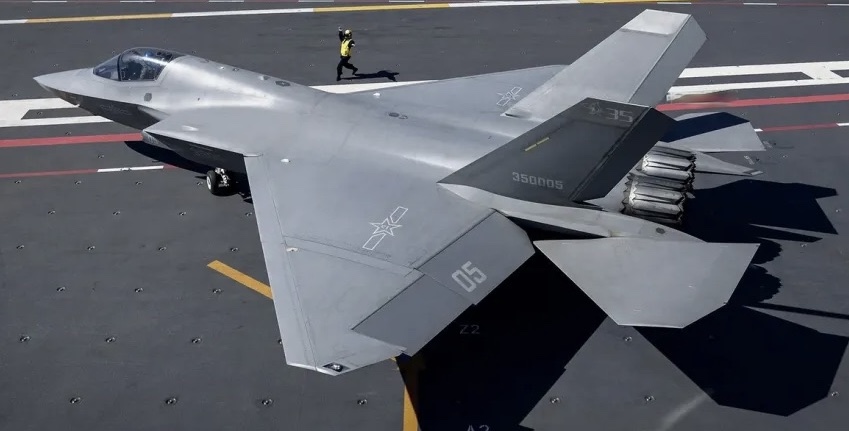
While the Fujian integrate an Electromagnetic Aircraft Launch System (EMALS), and was the first carrier in the world with such a system to operate stealth fighters, the Liaoning and Shandong use ski-jump flight decks, which present substantially different technical requirements. Although Chinese reports repeatedly indicated that the J-35 was compatible with ski-jump operations, the extent of its operational integration aboard the Liaoning was previously unclear. The integration of the J-35 into the air wing follows significant upgrades to the air wing in prior years, notably the integration of J-15B ‘4+ generation’ fighters and J-15D electronic attack jets to replace the older J-15 fourth generation fighters, which was confirmed in late 2024. The J-15B, J-15D, and J-35 have highly complementary capabilities, and together provide a much more capable and diverse air wing.
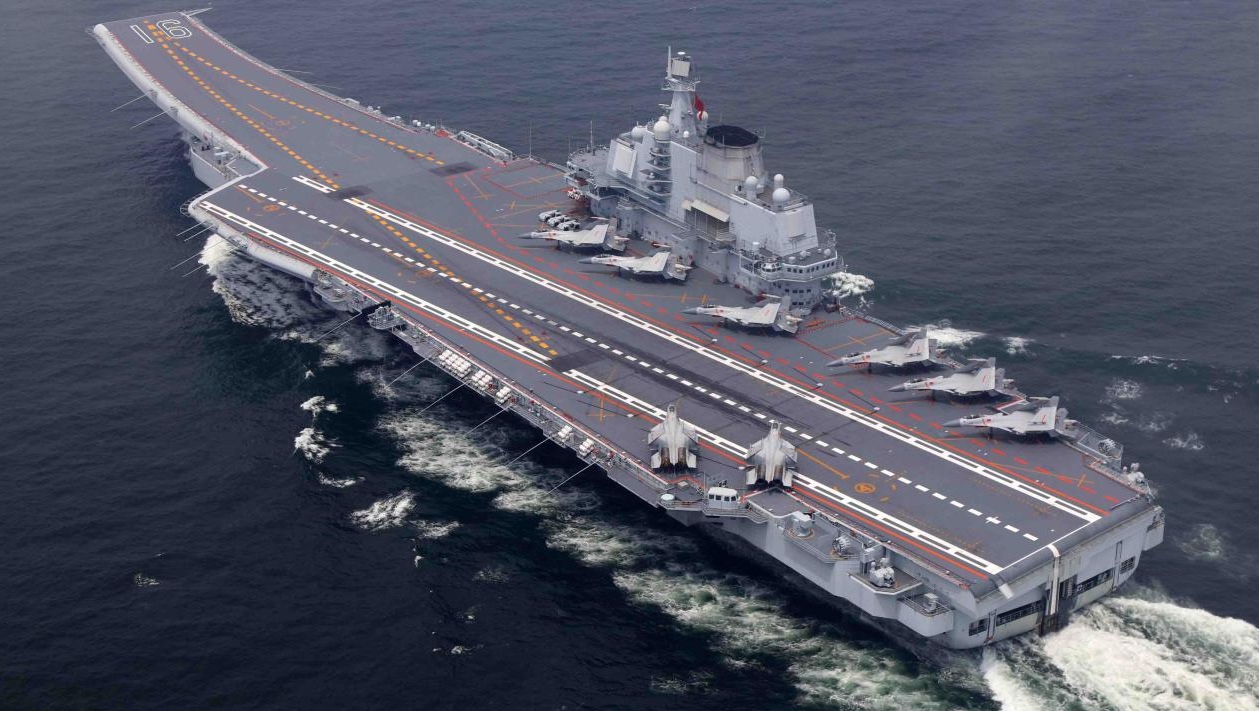
As early as February 2024, photographs taken during the Liaoning’s maintenance period showed a full-scale model resembling the J-35 on its flight deck alongside a J-15 mock-up. The models were reportedly used to evaluate deck handling, aircraft movement and other procedures associated with accommodating the new fighter. Their presence suggested that the Navy was studying the future of stealth fighter operations from the Liaoning and Shandong. State media publicly acknowledged testing the J-35 aboard the Liaoning in September 2024. Subsequently in May 2026 state media discussed the possibility of the J-35 and the J-15T built for the Fujian’s EMALS also operating from ski-jump-equipped carriers.
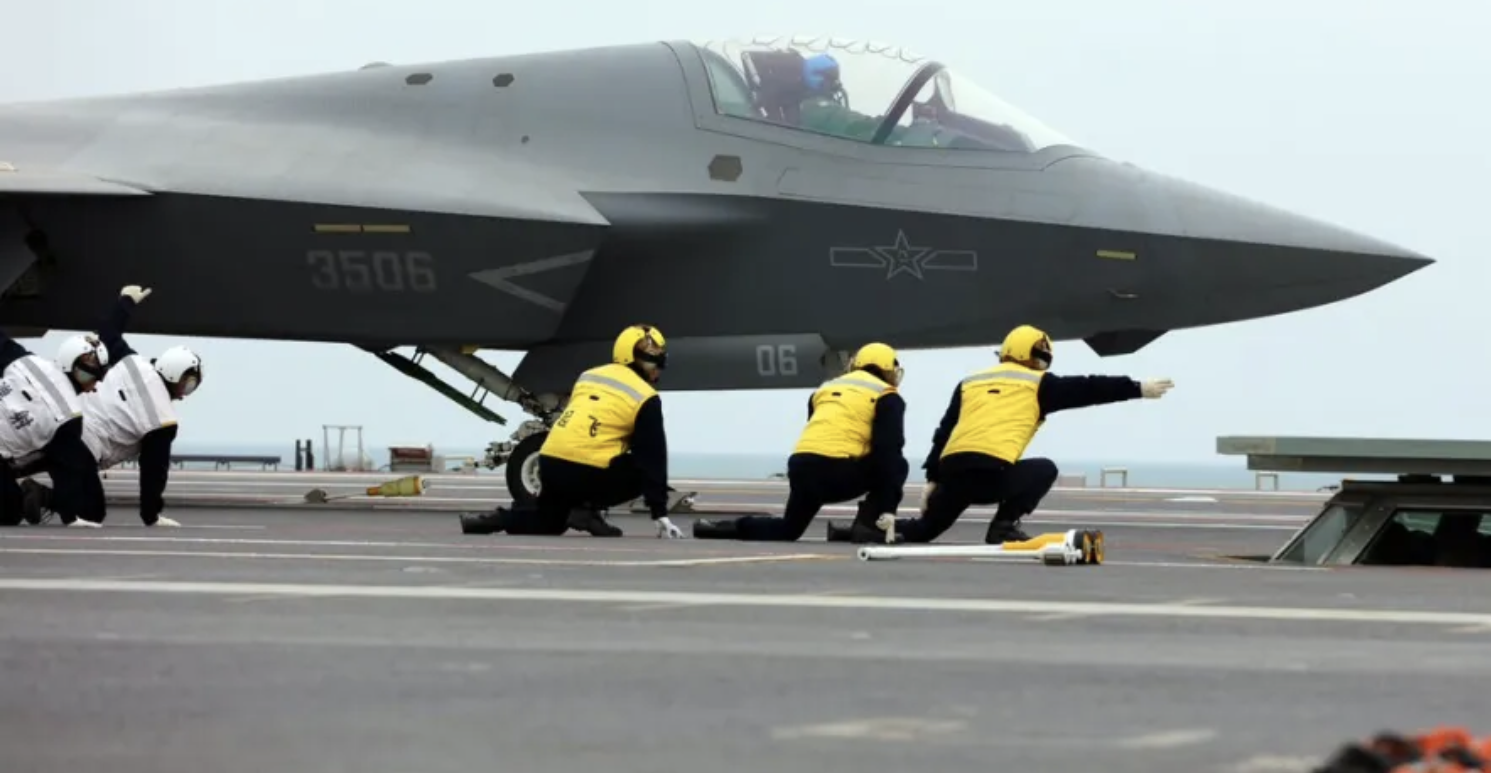
The combination of the J-35 and J-15 could substantially expand the range of missions available to the Liaoning’s air wing. Stealth fighters could be assigned to missions requiring lower radar signatures, including air superiority and attacks against heavily defended targets, while J-15s could carry larger external weapons loads for maritime strike and other missions where stealth is less important. The J-15 is a significantly larger aircraft with a longer range and more powerful radar. This could mirror the deployment of J-20 stealth fighters and heavier non-stealth J-16s by the Air Force, or the U.S. Air Force’s deployment of the F-35A and F-15EX. The J-35 is expected to be superseded in the mid-2020s by the world’s first sixth generation carrier-based fighters, which are expected to enter service close to a decade before their U.S. counterparts, providing Chinese carrier air wings with a distinct advantage. Where next generation fighters are expected to operate from supercarriers like the Fujian, however, it is less likely that they will operate from the Liaoning and Shandong.
