
New Cruise Missile Confirmed For China’s J-10C Fighter: An Anti-Ship Weapon to Boost Export Prospects?
Military Watch Magazine Editorial Staff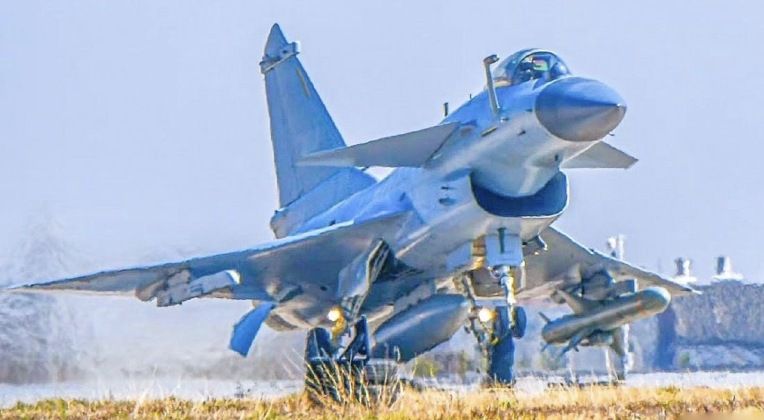
J-10C with YJ-83 Missile
The deployment of the YJ-83 cruise missile by China’s J-10C light fighter has for the first time been confirmed by publication of new images. The J-10C is one of three fighter classes in production today for the Chinese People’s Liberation Army (PLA) Air Force, alongside the J-16 heavyweight fighter which is also an advanced fourth generation design, as well as the J-20 heavyweight fifth generation platform. Entering service from 2018, over 150 J-10Cs are currently thought to be in service with the airframes being produced at a faster rate than any other Chinese design. As a lightweight single engine design, the fighter’s operational costs are considerably lower than those of other fighters in the country and are considered the lowest of any post-third generation fighter in Chinese service, making its deployment on a very large scale highly affordable. One of the fighter’s most prized features is its pairing of a high degree of situational awareness, facilitated by an AESA radar and sophisticated data links, with some of the most capable standoff missiles available for integration onto any fighter aircraft.
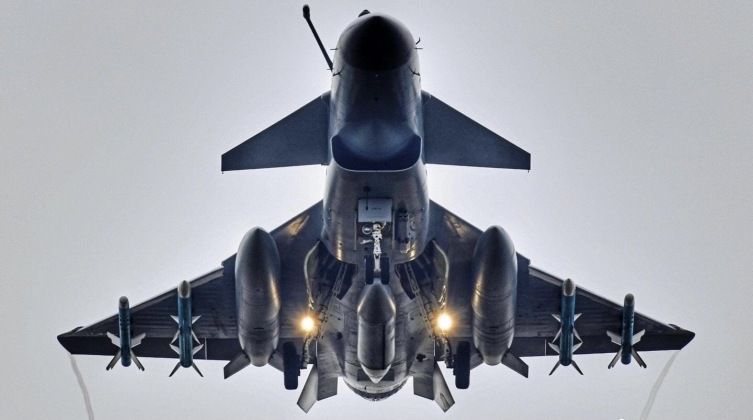
On March 3 it was confirmed that the J-10C had integrated the YJ-83K anti ship cruise missile, which had been speculated for several years but remained uncertain, when an image of a fighter carrying one of the missiles was released. The J-10C was previously prized for its access to PL-15 AESA radar guided air to air missiles, widely considered the most capable in the world, with estimated ranges of 200-300km, as well as YJ-91 cruise missiles for anti shipping and anti radiation missions. The YJ-83K complements these capabilities by providing a longer range anti shipping capability, albeit subsonically, with the latest variants benefitting from ranges exceeding 200km and capable of receiving mid-course corrections by remote link. The missile has been deployed widely by Chinese warships from the 1990s, but was confirmed to be being integrated onto fighters only from the late 2010s. It is unlikely that J-10C fighters in PLA service will widely deploy the YJ-83K considering the light aircraft’s relatively short range and the widespread deployments of heavier jets such as the J-11 series better suited to maritime strike roles. For export clients, currently Pakistan and in future very possibly Iran, such a capability could prove highly useful due to their smaller fleets and lack of longer ranged aircraft. Both face larger navies deployed by adversaries that provide a need for asymmetric means of threatening enemy warships at long distances which the YJ-83 provides.
