
NASA’s NewX-70 Test Aircraft Could Help Bridge the Gap with China in Flight Control Technologies
Military Watch Magazine Editorial Staff
NASA X-70 Artwork
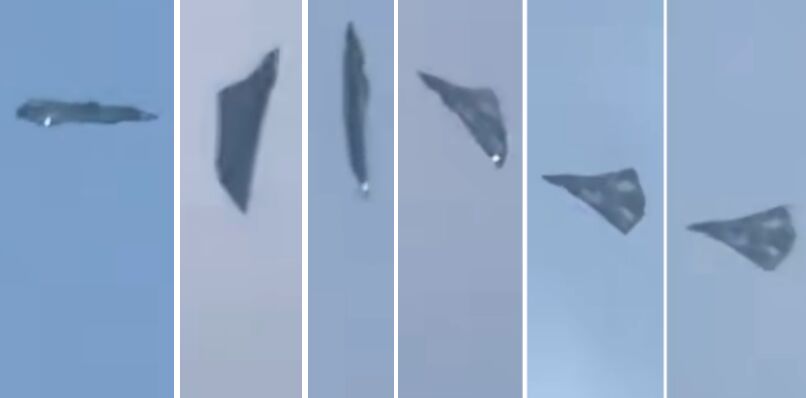
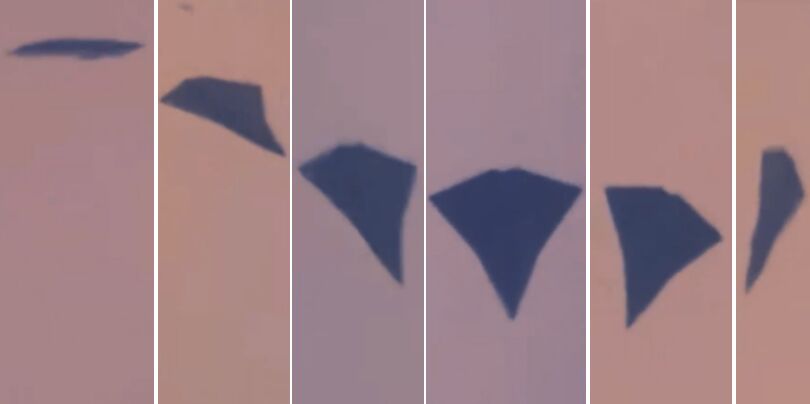
The unveiling of NASA’s X-70 Fractal experimental aircraft has fuelled speculation regarding how the design may be intended to advance flight technology, with the aircraft confirmed to have been designed to test advanced flight-control systems and explore manoeuvrability beyond what has previously been demonstrated in crewed flight. NASA expects the aircraft to fly within the next two years, although the agency has disclosed few details about its manufacturer, development history or precise configuration. The aircraft was announced shortly after one of China’s new sixth generation fighter designs demonstrated an unprecedented level of manoeuvrability with a tailless design in late June, before doing so again in August, fuelling speculation that the X-70 may be intended to support efforts by American programs to narrow the flight performance gap.
While conventional aircraft rely primarily on movable aerodynamic surfaces, including ailerons, elevators and rudders, to change their orientation and control their flight path, new approaches can reduce reliance on traditional control surfaces, improve manoeuvrability or allow aircraft to adapt their aerodynamic characteristics to changing flight conditions. One possible research area is active flow control, which seeks to manipulate airflow around an aircraft using techniques such as carefully directed jets of air rather than relying exclusively on conventional moving surfaces. Another is morphing-wing technology, in which parts of a wing change shape during flight to improve aerodynamic performance across different operating conditions. NASA has investigated related concepts through earlier research programmes, including the X-53 Active Aeroelastic Wing project, which explored how controlled wing flexibility could contribute to aircraft control. However, NASA has not confirmed which specific technologies will be tested aboard the X-70.
The X-70 is intended to serve as a flexible research platform rather than an aircraft optimised for a single experimental objective. Its modular architecture will allow researchers to rapidly reconfigure flight-control systems and exchange experimental payloads, potentially enabling multiple research programmes to use the same airframe. NASA says the aircraft can accommodate up to 2,000 pounds of experimental equipment in internal and external locations, reducing the need to develop separate aircraft for each new technology under evaluation. The subsonic aircraft has an approximately 4,500 kilogram takeoff weight and a range of over 2,000 kilometres. The aircraft’s modular design could also make it useful for testing combinations of technologies. Experimental flight-control systems often require extensive evaluation to determine how they perform under real aerodynamic loads, turbulence and rapidly changing flight conditions. A reusable platform that can be reconfigured between experiments would allow researchers to gather operational data without designing and building a new aircraft for each research objective.
