
MQ-9B SkyGuardian vs. MQ-9A: How the Republic of China Air Force’s New Recon-Strike Drones Differ From U.S. Reapers
Military Watch Magazine Editorial Staff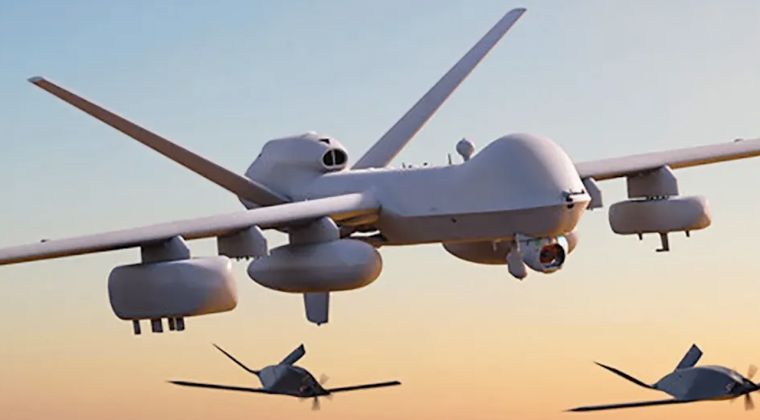
MQ-9B - Artwork
The MQ-9B SkyGuardian is the first medium weight drone type to be delivered to the Republic of China Armed Forces, with four having been ordered for over $170 million each to provide an improved reconnaissance-strike capability in the Taiwan Strait. Although its design is based on that of the MQ-9A Reaper which is widely in service with U.S. strategic partners and in the U.S. Air Force, the newer variant was extensively redesigned to be safer, more versatile, and capable of operating in environments that the MQ-9A was never intended to enter. One of the most significant differences is endurance, as while the MQ-9A can remain airborne for over 27 hours, the MQ-9B is designed for missions exceeding 40 hours. This improvement comes from a larger wingspan, aerodynamic refinements, and increased fuel efficiency. The MQ-9B’s 24 metre wingspan is substantially wider than that of the MQ-9A’s 20.1 metres, giving it greater range and an ability to loiter over distant areas.
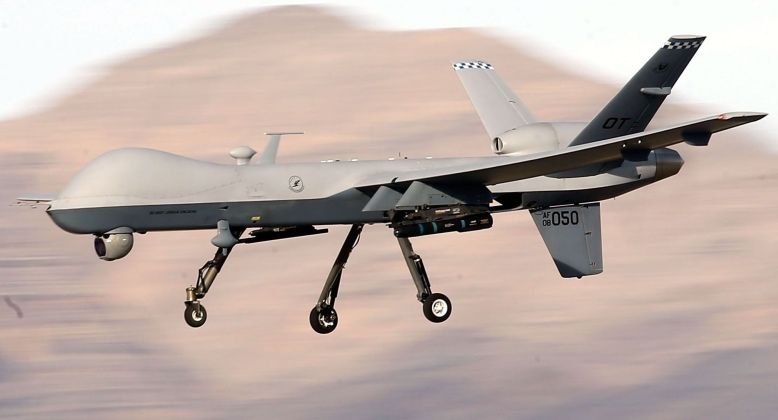
The MQ-9B features a much higher degree of automation than the MQ-9A, including automatic takeoff and landing capabilities, and was designed for fully satellite-controlled operations over extreme distances. This reduces crew workload and allows for more flexible deployments. The newer aircraft is also significantly more adaptable, having been designed as a multi-domain system able to perform maritime surveillance, anti-submarine warfare support, airborne early warning, electronic warfare, over-the-horizon targeting, and long-range strategic reconnaissance. Specialised variants such as SeaGuardian further expand its naval mission set. The MQ-9B also has increased payload flexibility. It retains nine hard points but can carry larger and more diverse sensor packages, mission systems, and weapons. Its open-architecture design makes it easier to integrate new national sensors and future weapons than earlier MQ-9A configurations.
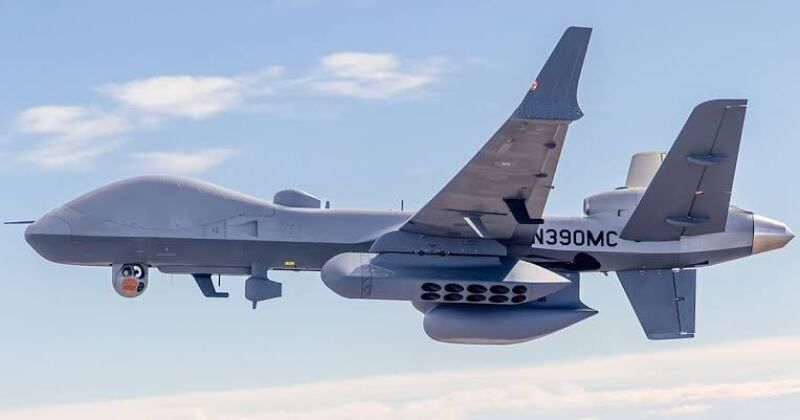
While the MQ-9A has proven to be an effective reconnaissance and strike platform, the MQ-9B program has evolved the design into a networked battlefield platform. Recent demonstrations have even shown MQ-9B variants carrying airborne early warning radar pods, effectively turning them into low-cost persistent surveillance aircraft capable of supporting fleets and air forces over wide areas. Despite its advanced capabilities, the wartime utility of the MQ-9B is expected to be highly limited, with the design having failed to address the MQ-9A’s major shortcomings in terms of survivability, and in many respects having exacerbated them with an even larger and less manoeuvrable design that lacks stealth features. This is particularly critical in the Taiwan Strait, as the Republic of China Armed Forces remain in a state of war with the Chinese People’s Liberation Army, which deploys some of the most advanced anti-aircraft capabilities in the world and on a considerable scale.
