
Key U.S. Airbase Closest to China Gets First New Air Superiority Fighters in Over 47 Years
Military Watch Magazine Editorial Staff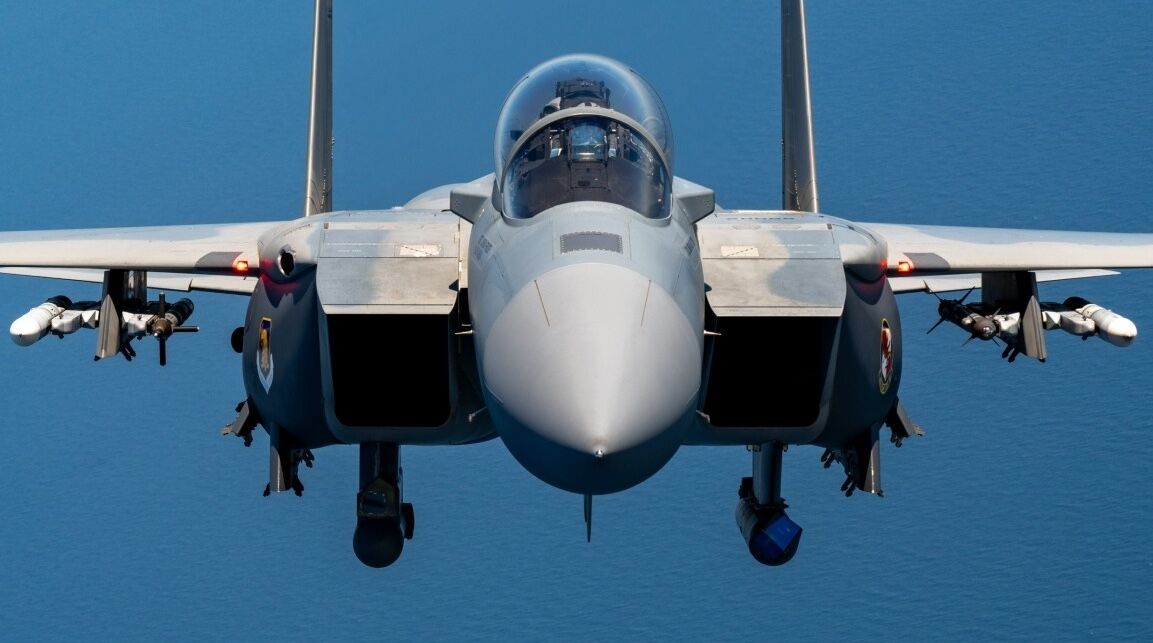
U.S. Air Force F-15EX Eagle II Air Superiority Fighter
The U.S. Air Force has begun restoring a permanent fighter presence at one of its most sensitively located facilities in the Pacific, with the arrival of the first permanently assigned F-15EX Eagle II long range air superiority fighters to Kadena Air Base in Okinawa. The facility is the closest to the Taiwan Strait, a leading potential hotspot for Sino-U.S. tensions, and has long been the crux of the American forward air presence against China. The F-15EX fighters were announced in 2022 to have been selected to replace F-15C/D Eagle air superiority fighters, which first arrived at Kadena Air Base for a permanent deployment on September 29, 1979, with the arrival of the new aircraft representing the beginning of the first new permanent presence in over 47 years.
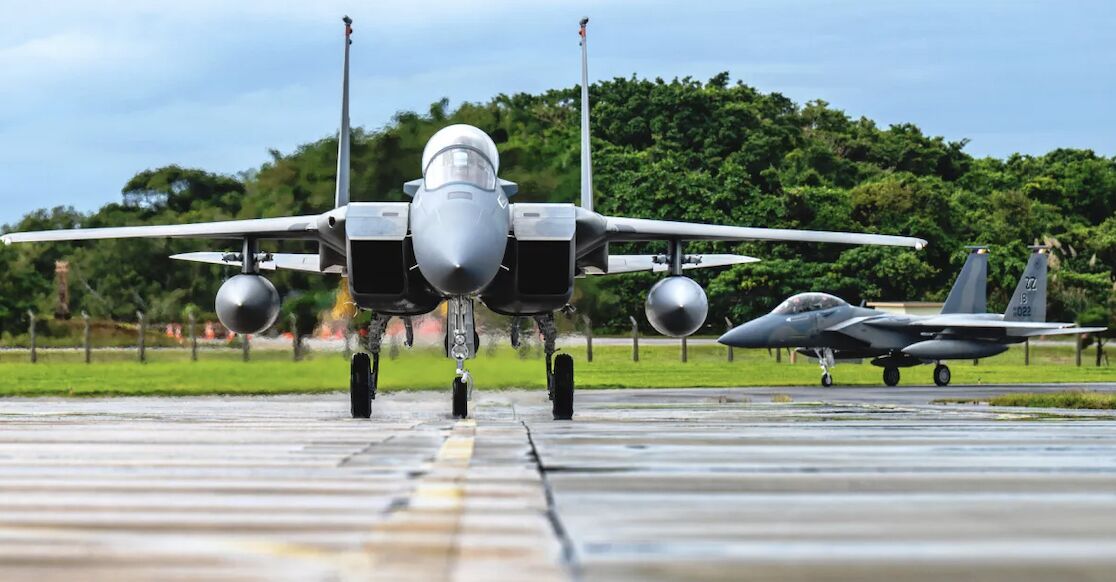
During the Cold War the initial group consisted of 16 F-15s dispatched from the United States mainland, assigned to the 18th Tactical Fighter Wing to replace its ageing F-4D Phantom II third generation fighters. The arrival marked an important milestone in the modernisation of U.S. Air Force forces in the Pacific, with the Eagle becoming the first operational F-15 assigned to the region. The Pacific was at the time a significantly lower priority, due not only to detente with China, but also to the far greater challenge to American air power posed by the Soviet Union, the Warsaw Pact, and the air forces of Soviet-aligned states in the Middle East. By contrast, China today represents the only technologically peer level competitor in the air domain today, making deployments in Northeast Asia a leading priority.
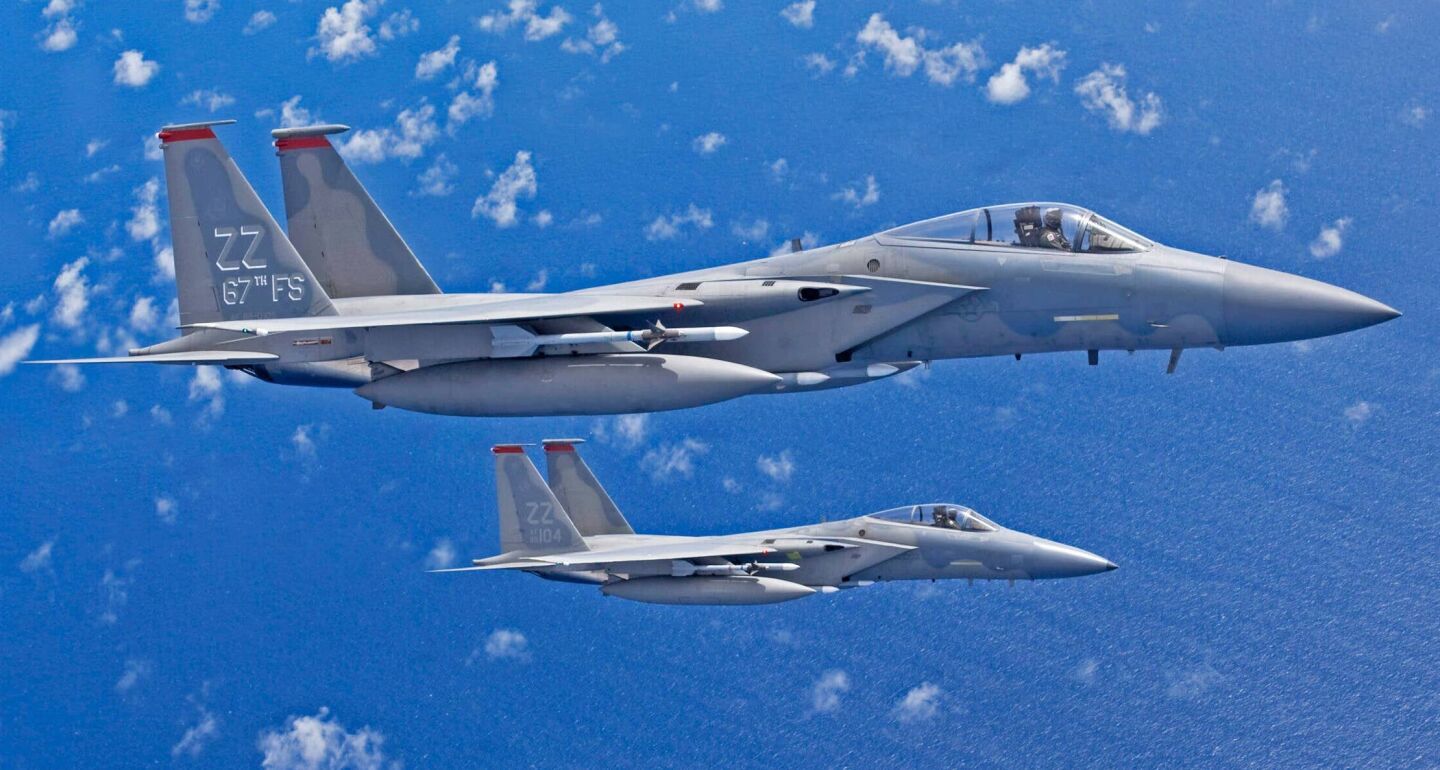
The F-15C/D represented a considerable technological advance over the F-4D Phantom II it replaced. Designed specifically to achieve air superiority, the F-15 combined powerful twin engines, a high thrust-to-weight ratio, advanced radar and a substantial air-to-air weapons load. Its AN/APG-63 radar gave pilots a much greater ability to detect and engage targets at long range, while its performance at high altitude and speed provided significant advantages against most frontline Soviet fighters such as the MiG-23 and MiG-21. The aircraft was designed around the principle that control of the air would be essential to the success of wider American military operations. Nevertheless, the F-15’s ability to tackle more capable Soviet combat jets was in serious question, in particular the MiG-25PD and MiG-31 interceptors, the former which F-15 units would struggle to tackle during the Gulf War.
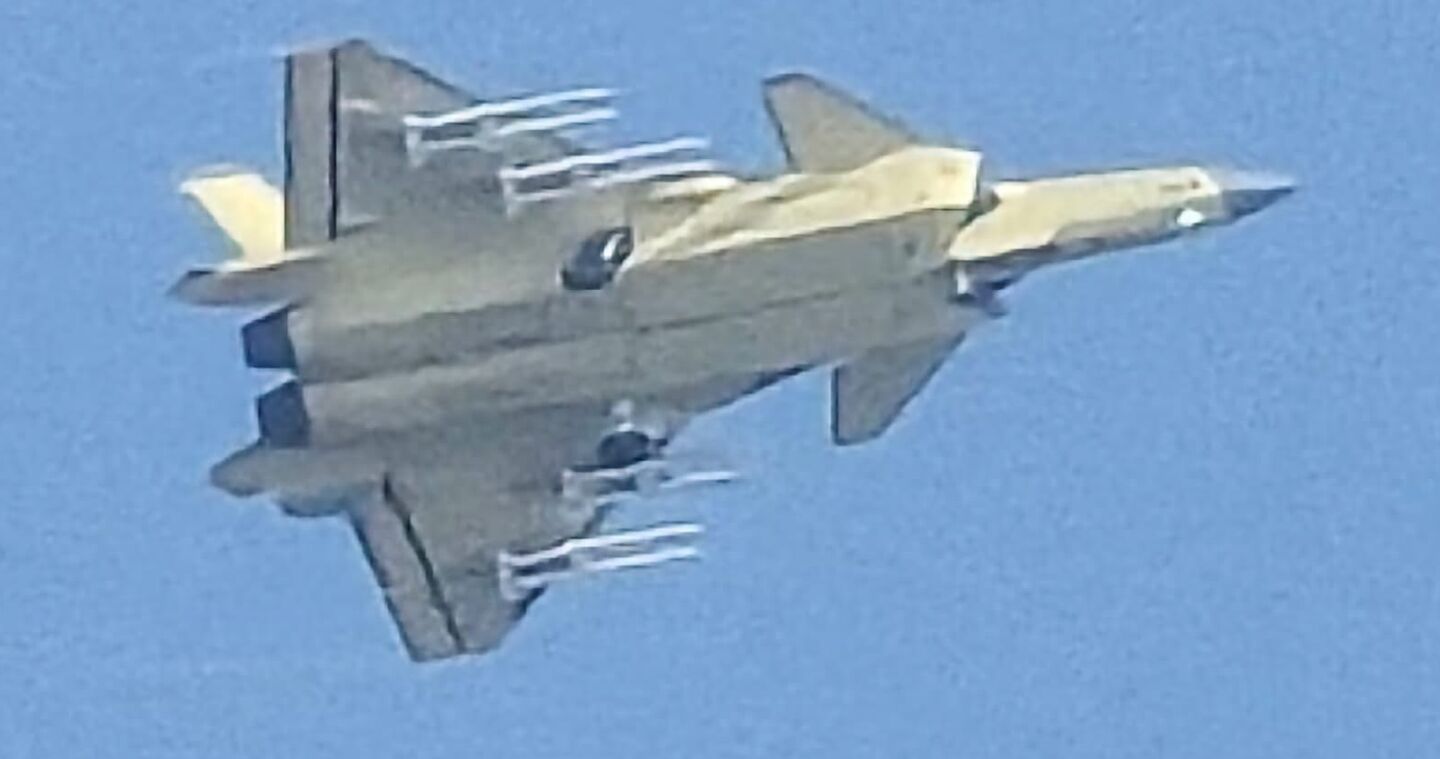
The replacement of F-15s that are close to half a century old with a newer variant of the very same aircraft reflects the failure of the F-22 fifth generation fighter program to provide a viable successor to the Cold War era type. While the F-15C/D had total dominance over Chinese fighter types during the Cold War, the F-15EX is significantly outmatched by newer Chinese fighter types, most notably the J-20 fifth generation air superiority fighter. China is set to introduce its first sixth generation fighters into service around 2030, leaving the F-15 close to two generations behind. Thus while the F-15EX represents a very significant upgrade over the F-15C/D, with newer avionics, lower maintenance needs, and access to newer generations of weaponry, reliance on the aircraft rather than a more advanced clean sheet fighter type reflects the deterioration in the standing of U.S. air power relative to that of China over the past 40 years. The survivability of non-stealth aircraft operating at a forward facility so close to China has repeatedly been brought to serious question.
