
Japan Retires Last F-4 Phantom Jets After 48 Years in Service - Only Four Phantom Operators Remain Worldwide
Military Watch Magazine Editorial Staff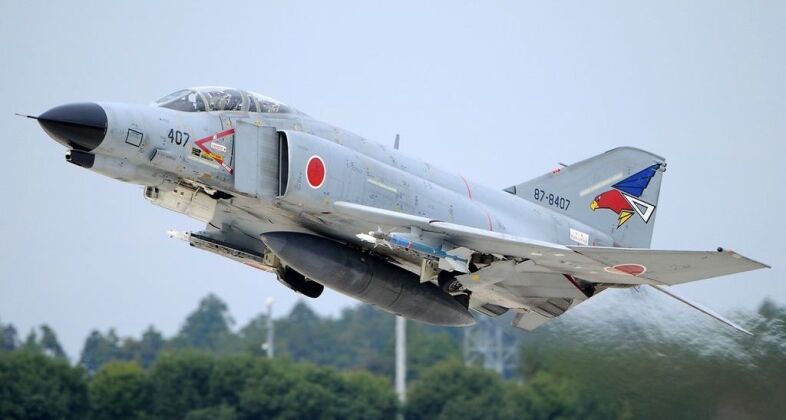
Japanese F-4EJ Phantom
The Japanese Air Self Defence Force has retired its last F-4EJ Phantom twin engine fighters after almost 50 years in service, with the aircraft officially leaving service on November 20th in a ceremony at Hyakuri Air Base 50 miles northeast of Tokyo. The F-4EJ is an enhanced derivative of the F-4E Phantom, the most capable Western third generation fighter ever to enter service, and benefitted from an improved air to air capability relative to the American original - though lacking avionics needed for air to ground missions. Japan retired its last squadron of RF-4EJ high altitude reconnaissance jets based on the same Phantom airframe design eight months prior on March 9th, and its retirement of the F-4EJ has left only four operators of the world for the venerable aircraft - South Korea, Iran, Turkey and Greece. These remaining operators are all expected to retiree the aircraft over the coming decade, with South Korea expected to replace it with its indigenous KF-X fighter, and Iran expected to purchase new foreign aircraft such as the J-10C to modernise its fleet.
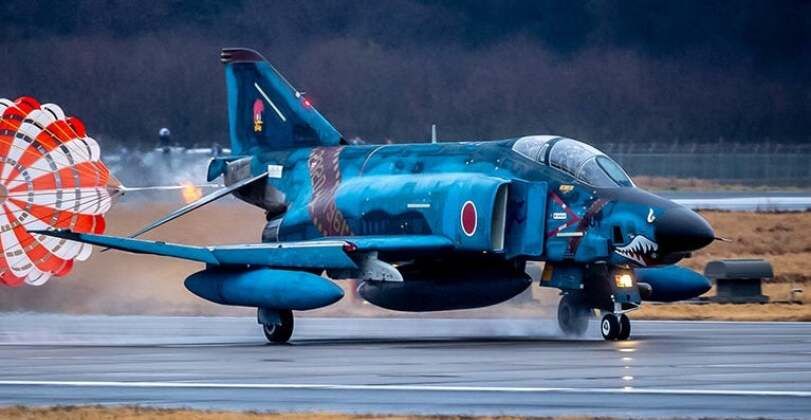
Japan selected the F-4EJ to modernise its fighter fleet in 1968, and 140 of the aircraft would be acquired with all but the first two built domestically under license by Mitsubishi Heavy Industries. The first F-4EJ unit was declared fully operational in 1973, and the last F-4 jets built anywhere in the world would leave assembly lines in Japan itself after production lines in America had closed. Enhancements to the aircraft would be applied under the F-4EJ Kai program, and included integration of the AN/APG-66J pulse-Doppler radar, closely based on that of the fourth generation F-16 Fighting Falcon, as well as the the AN/ASN-141 inertial navigation system which was derived from that used by F-15 fighters. Hands on throttle and stick (HOTAS) controls and a head up display (HUD) were also integrated, making Japanese F-4s among the most advanced ever developed and the most capable ever to be fielded on a large scale. 96 of the original 140 airframes would receive these upgrades.
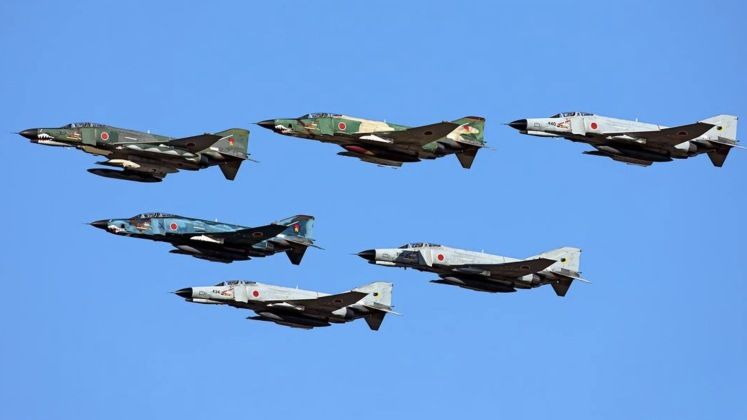
Despite keeping its F-4 jets in service longer than the vast majority of operators, Japanese investments in modernising the jets’ armaments were relatively conservative. While Germany and Greece both equipped their F-4 jets with AIM-120 active radar guided long range air to air missiles, Japanese Phantoms continued to use effectively obsolete AIM-7 Sparrow missiles. The F-4 was notably superseded in Japanese service after less than a decade of beginning operations, with the country beginning to field its successor the F-15J Eagle fourth generation fighter from 1980 and acquiring 200 of these jets - the vast majority similarly built in Japan under license. Where the majority of American defence clients were sold cheaper, lighter and lower end F-5E and F-16 jets from the respective third and fourth generations, Japan would only acquire high end heavyweight jets in the form of he F-4 and F-15. F-4 fighters were originally expected to be replaced by F-22 Raptors, their direct successor from the fifth generation which entered service in the U.S. Air Force in 2005, although America’s refusal to export these elite aircraft meant that Japan would instead acquire the Raptor's lighter and cheaper counterpart thee F-35A. As Japan continues to expand orders for F-35s, these will replace both F-4EJ Phantom squadrons in service as well as a portion of the F-15 fleet.
