
Japan’s Navy Brings First Ever Cruise Missile Destroyer Into Service to Revolutionise Recon-Strike Complex
Military Watch Magazine Editorial Staff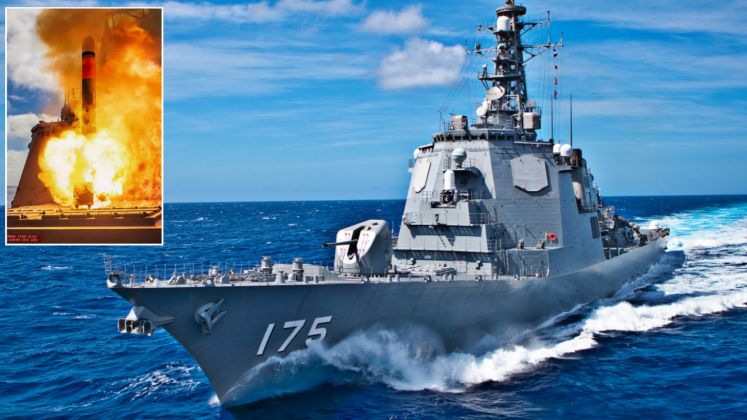
Kongo Class Destroyer and Tomahawk Missile Launch
The Japanese Defence Ministry has announced that the destroyer JS Chokai has completed crew training and ship modification to enable the employment of U.S.-supplied RGM-109 Tomahawk land attack cruise missiles, making it the first ever Japanese destroyer with an offensive cruise missile capability. The Chokai is one of four Kongo class destroyers in service, which were built from 1990-1998 and has significant similarities with the U.S. Navy’s Arleigh Burke class destroyers, which began to enter service at around the same time. With a 9,500 tons displacement, the ships, each integrate 90 vertical launch cells much like early variants of the Arleigh Burke class, with these cells previously having exclusively integrated missiles for air defence and anti-submarine warfare.
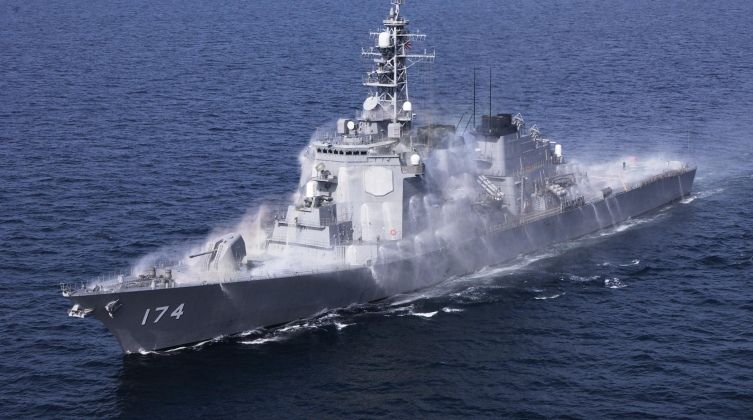
Although the United States and Australia have for decades integrated Tomahawk missiles onto their Aegis destroyers, with South Korea having integrated indigenous cruise missile types onto its own, Japanese doctrine has emphasised the use of destroyers for anti-submarine warfare and air and missile defence duties, rather than land attack roles. This has rapidly changed from the late 2010s, however, as Japan has procured assets optimised for launching deep strikes into hostile territory. These have included a wide range of land-based and air-launched cruise missiles, such as the JASSM-ER, as well as F-35 Joint Strike Fighters optimised for offensive penetration operations. Despite the intention to transition its destroyer fleet to use cruise missiles, however, the very serious depletion of the U.S. Navy’s inventory of Tomahawk missiles during hostilities with Iran from February 28, 2026, has raised the possibility of deliveries to Japan facing very serious delays.
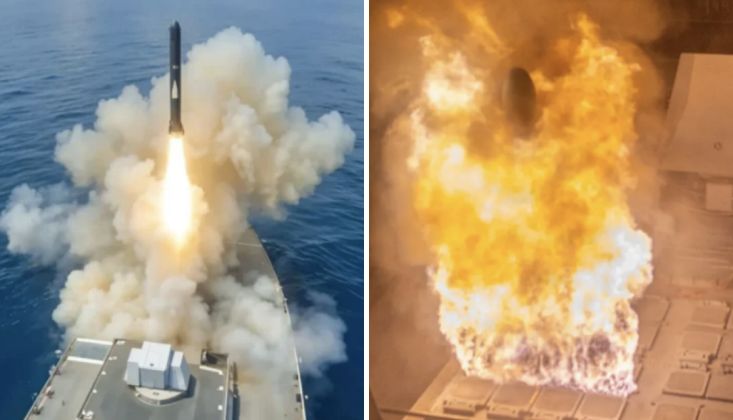
Japan’s transition towards fielding assets better optimised for offensive operations has fuelled considerable controversy domestically due to the country’s pacifist constitution. This shift has nevertheless received considerable support in the Western world due to Tokyo’s support for sustaining a Western dominated order in East Asia and containing the rise of China. The modification of the Chokai follows orders 400 Tomahawk cruise missiles in 2024, with including 200 Block IV and 200 Block V missiles. Block IV missiles feature a data link, allowing for changes in the flight pattern or target selection mid-flight, while the more costly Block V missiles improves on the Block IV’s framework with updated communications and guidance capabilities. The missiles have 1,000 kilometre ranges, and have the potential to revolutionise Japan’s reconnaissance strike complex, although their subsonic speeds and lack of stealth capabilities do leave them vulnerable to interception.
